That moment you get the estimate for a new roof can be a real gut punch. It’s a huge, often unexpected expense, but it’s also one of the most important investments you’ll ever make in your home. A roof replacement loan is really just a tool to break that intimidating lump sum into manageable monthly payments, letting you get the work done now instead of later.
Why You Need a Smart Roof Financing Plan
A failing roof isn’t just an eyesore; it’s a ticking time bomb for your home's structure and your family's comfort. Putting off a replacement because of the cost almost always leads to bigger, pricier problems down the line—think water damage, nasty mold growth, and skyrocketing energy bills from ruined insulation.This is where a solid financing plan changes the game.
Think of it as being proactive instead of reactive. Instead of emptying your savings account or crossing your fingers that a small leak doesn’t turn into a catastrophe, financing gives you the power to act. It transforms a stressful, urgent crisis into a planned, controlled investment in your property. You get to protect your home today and pay for it with predictable installments that actually fit your budget.
The Growing Need for Roof Financing
The roofing industry is booming for a reason: homes constantly need upkeep to stay safe and sound. In the U.S. alone, the roofing market hit a staggering $23.35 billion in 2023 and is only expected to climb.With the average roof replacement running anywhere from $10,000 to $20,000 (and sometimes more), it’s no surprise that financing has become a standard part of the process for most families.
A smart financing plan gives you some serious advantages:
- Immediate Protection: You can tackle urgent roof problems right away, stopping costly secondary damage before it starts.
- Budget Management: That huge upfront cost becomes a series of affordable monthly payments, leaving your emergency fund untouched.
- Increased Home Value: A new roof is a massive plus for curb appeal and a huge selling point if you ever decide to move.
- Energy Efficiency: A modern roof often means better thermal performance. You can learn more about how the right insulation of roofs works with a new roof to maximize your energy savings.
Comparing Your Main Loan Options

Personal Loans: The Quick and Unsecured Route
Think of a personal loan as a straightforward handshake deal. You borrow a specific amount from a bank, credit union, or online lender based on your credit history, then you pay it back in fixed monthly chunks over a set period.The key here is that it’s an unsecured loan—you don’t have to put your house on the line as collateral. This makes the approval process incredibly fast, and you can often have the cash in hand within a few days. The trade-off for that speed? The interest rates can be a bit higher than other options.
A personal loan often makes sense for:
- Homeowners facing an urgent roof replacement who can't afford to wait weeks for approval.
- Folks with great credit who can snag a competitive interest rate.
- Anyone who hasn't built up a lot of home equity just yet.
Home Equity Loans: The Fixed and Predictable Choice
A home equity loan is like cashing in on the value you've already built up in your house. You're borrowing a lump sum against your equity, which is the difference between what your home is worth and what you still owe on your mortgage.Because your home secures the loan, lenders see it as a much lower risk. That usually translates to a lower interest rate for you. You get all the money upfront and pay it back with predictable, fixed monthly payments over a term of five to thirty years, making it super easy to budget for your roof replacement loan.
A home equity loan is a great fit for:
- Homeowners with a good chunk of equity who know exactly how much the roofing project will cost.
- People who prefer the stability of a fixed interest rate and a consistent payment schedule.
- Borrowers who are comfortable using their home as collateral to lock in a better rate.
A new roof isn't just a repair; it’s a powerful financial move. A quality roof replacement can boost a home's value by an estimated $12,000 to $20,000, with homeowners typically recouping about 60-68% of the project's cost at resale. Lenders recognize this, which is why having a roof in good condition is often a prerequisite for approving mortgages, including FHA and VA loans. You can explore more on the economic benefits of roof replacement and see how it impacts your home's financial standing.
Home Equity Lines of Credit (HELOCs): The Flexible Option
If a home equity loan is a one-time withdrawal, a HELOC is like a credit card backed by your home's value. Instead of getting a lump sum, you’re given a revolving line of credit you can draw from as needed, up to a pre-set limit. You only pay interest on the money you actually use.HELOCs usually have a “draw period” (often 10 years) where you can borrow funds, followed by a “repayment period” (often 20 years) to pay it all back. The catch is that interest rates are typically variable, meaning they can go up or down over time.
A HELOC is ideal for:
- Homeowners who aren't sure of the final project cost or want a financial safety net for other home improvements.
- Those who value the flexibility to borrow and repay money on their own schedule.
- People who are okay with the possibility of a fluctuating interest rate.
FHA Title I Loans: A Government-Backed Solution
The Federal Housing Administration (FHA) offers a program called the Title I loan, which is designed specifically for home improvements like roof replacements. Because these loans are insured by the government, it can be easier for homeowners with less-than-perfect credit or not much equity to get approved by an FHA-lender.For smaller loan amounts (under $7,500), you might not even need any equity in your home to qualify. For larger projects, the loan is secured by a mortgage on your property. Getting a handle on these options can feel a little overwhelming, but learning about the different kinds of mortgages available can give you a solid foundation for understanding how various loan structures work.
An FHA Title I loan could be the answer for:
- Homeowners with lower credit scores or limited equity who struggle to qualify for other financing.
- Borrowers looking for the security of a government-insured loan with fixed rates.
- Anyone financing a moderate-sized repair, as there are limits to how much you can borrow.
These alternatives can be a real lifesaver, especially when a leak appears out of nowhere and you need to move fast. From working directly with us to tapping into your insurance policy, let’s explore your full financial toolkit. You might just find the perfect path forward, making the whole process feel a lot less overwhelming.
Contractor Financing: The Streamlined Solution
One of the most straightforward and hassle-free ways to pay for your roof is through contractor financing. Think of it as a one-stop-shop experience. Instead of you running around town trying to secure a loan from a bank and then finding a roofer, you can handle everything under one roof—ours. We facilitate the loan for you through our trusted lending partners.The whole approach is built for speed and simplicity. Because we already have relationships with our lending partners, the application and approval process is almost always faster than going the traditional bank route. That’s a game-changer when you’re staring at a ceiling stain or dealing with the aftermath of a big storm.
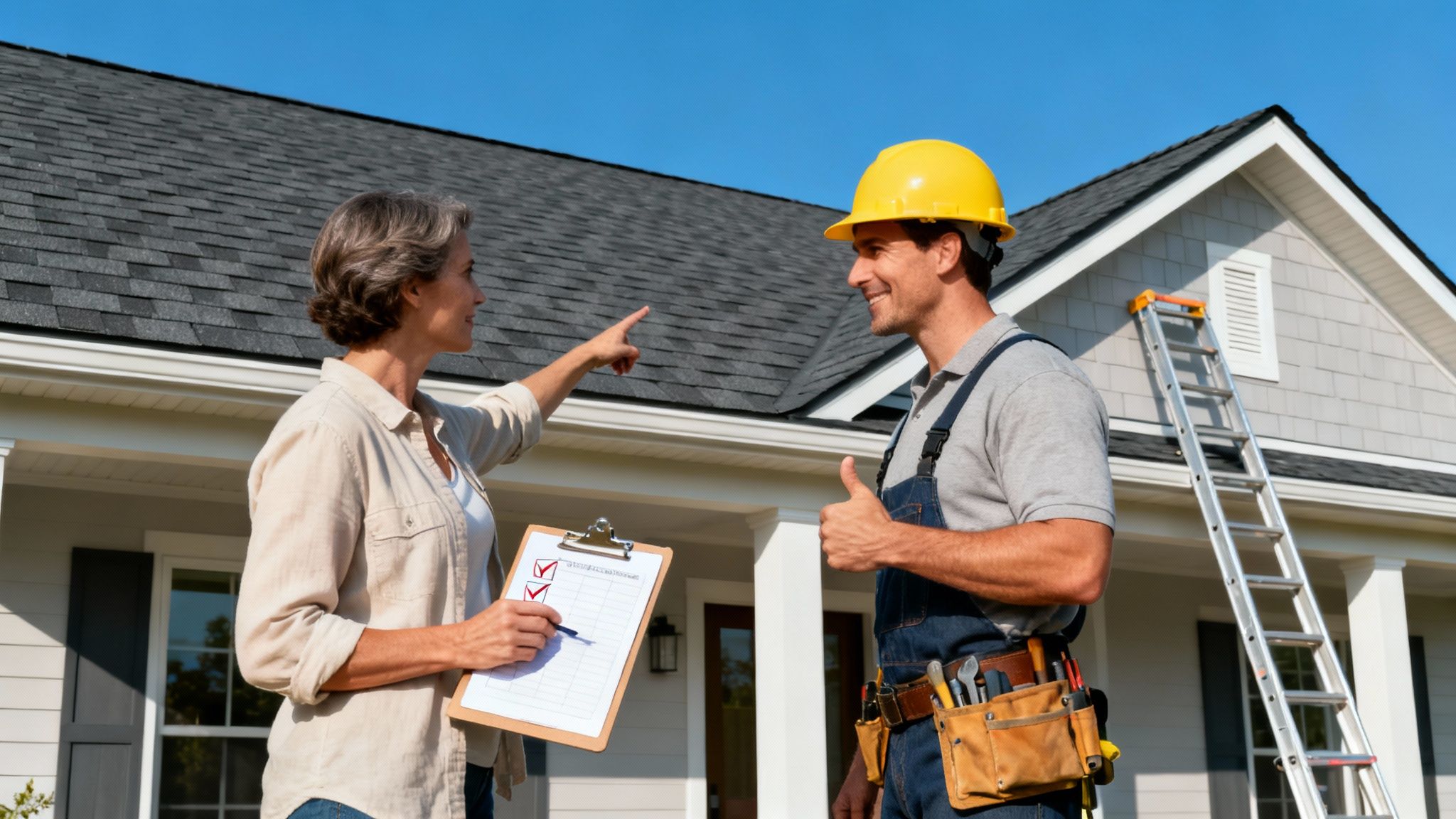
At Higher Roof Solutions, we offer simple financing options to help our neighbors in Birmingham get the protection they need without delay. We can walk you through the entire application during your free inspection and often get you an approval decision right on the spot.By bundling the project and the financing, you cut out a ton of extra steps and paperwork. The focus stays right where it should be: getting a high-quality roof installed by a team you trust, with a payment plan that fits your budget.
Leveraging Your Homeowners Insurance
Now, before you even think about signing for a loan, you have to ask the most important question: will your homeowners insurance cover the cost? Insurance won't pay for a roof that’s just old and tired. But if your roof was damaged by a specific event—think hail, high winds, or a fallen tree—you almost certainly have a strong case for a claim.The process usually plays out like this:
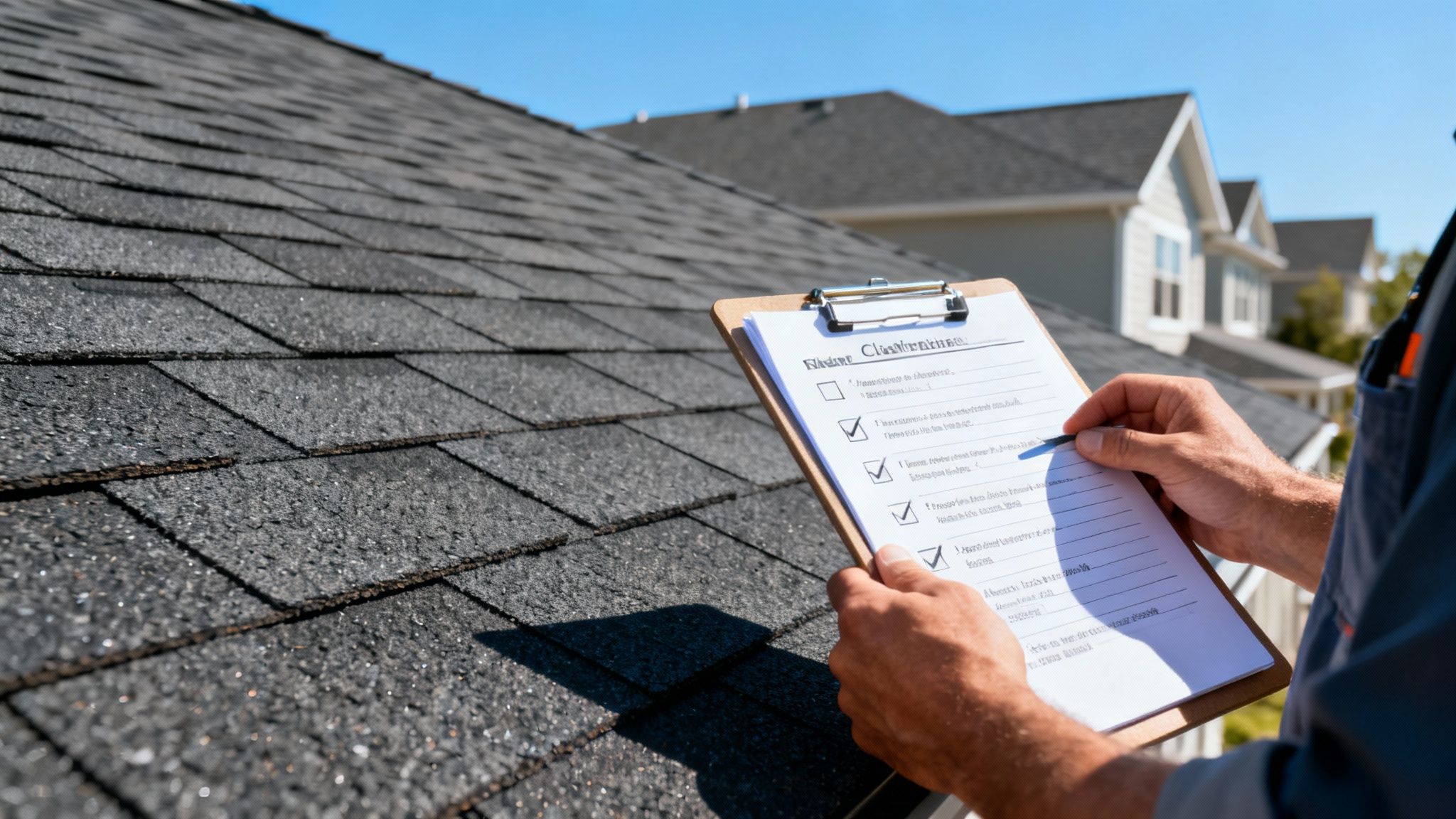
- Professional Inspection: First thing's first. Have a trusted roofer like Higher Roof Solutions perform a thorough inspection to document every bit of storm damage.
- Filing a Claim: Armed with that evidence, you'll contact your insurance provider to formally kick off the claims process.
- Adjuster Visit: Your insurance company will send out their own adjuster to assess the damage and confirm your claim is valid.
- Claim Approval: Once approved, your insurer provides the funds to cover the replacement, minus your deductible.
Using Credit Cards for Smaller Projects
For smaller, less expensive roofing jobs, a credit card can be a perfectly practical tool. If you're looking at a minor repair that’s just a few hundred or maybe a couple of thousand dollars, swiping a card gives you an immediate solution without all the paperwork of a formal loan.This strategy really shines if you have a card with a low interest rate or—even better—a 0% introductory APR offer. That promotional period gives you a window to pay off the balance over several months without racking up any interest. It’s basically a free short-term loan.
A word of caution, though: this is not the best approach for a full roof replacement. Once that promotional period ends, the sky-high interest rates can turn a large balance into a financial nightmare that’s incredibly expensive to pay down.
Other Niche Financing Avenues
Beyond the most common methods, a few other specialized options might fit your specific situation.One is the Property Assessed Clean Energy (PACE) loan, which is available in some areas. PACE loans are designed to finance energy-efficient upgrades (like a cool roof that reflects the hot Alabama sun), and you repay the loan through an annual assessment on your property tax bill.
Another route is simply negotiating a direct payment plan with your roofer. While not every company offers this, some independent contractors may be willing to break the total cost into a few installments, especially for a repeat customer. It never hurts to ask what kind of flexible payment solutions a company can offer.
How to Qualify and Apply for Your Loan

The best approach is to break it down into a few manageable steps. Before you even think about filling out an application, it helps to see things from the lender’s point of view. They’re simply trying to gauge your ability to pay back the loan, and they do that by looking at a few key financial markers.
What Lenders Look for in an Applicant
Lenders use a pretty straightforward formula to figure out their risk and your eligibility. Think of these as the three main pillars holding up your loan application.- Credit Score: This little three-digit number is basically a snapshot of your credit history. A higher score, usually 670 or above, tells lenders you have a solid track record of managing debt. That often means you’ll get offered better interest rates and terms.
- Debt-to-Income (DTI) Ratio: This is just the percentage of your gross monthly income that goes toward paying off debts. Lenders really like to see a DTI ratio below 43%, because it shows you’ve got enough cash flow to handle a new loan payment without getting stretched too thin.
- Home Equity (for secured loans): If you're looking at a HELOC or a home equity loan, lenders will check how much of your home you actually own. Most want you to keep at least 15-20% equity in your home even after the loan is approved.
Your 5-Step Application Checklist
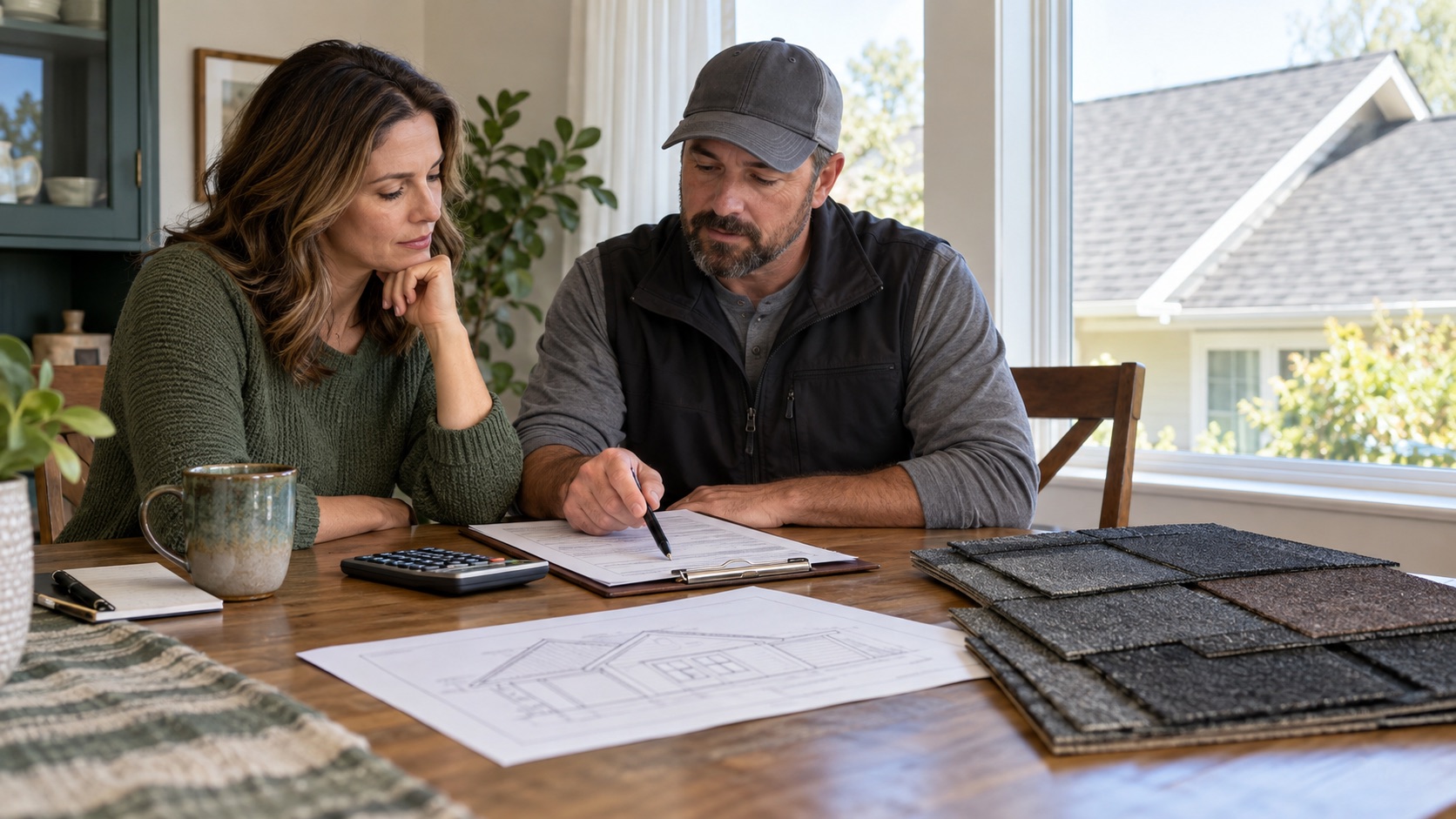
Now that you know what lenders want, you can follow this simple checklist to get prepared. Taking these steps proactively puts you in a much stronger position when you start shopping for the best roof replacement loans.- Get Accurate Roofing Quotes: You can’t ask for money until you know exactly how much you need. The first step is to call a trusted local roofer (like us here at Higher Roof Solutions) for a detailed, written estimate. That quote is the foundation for your loan amount.
- Review Your Credit Report: You’re entitled to a free credit report every year from the three main bureaus—Experian, Equifax, and TransUnion. Pull yours and check for any mistakes or inaccuracies that might be dragging your score down. If you find anything, dispute it!
- Gather Your Financial Documents: Lenders need to verify your income and get a clear picture of your finances. Having these documents ready to go will make everything move much faster:
- Recent pay stubs
- W-2s and tax returns from the last two years
- Recent bank statements
- A government-issued ID
- Pre-Qualify with Multiple Lenders: Don’t just go with the first offer you see. Most banks and online lenders have a pre-qualification process that shows you potential rates and terms without a hard hit to your credit score. This is your chance to comparison shop and find the best deal.
- Submit Your Formal Application: Once you’ve picked a lender, you’re ready for the final step: submitting the official application with all the documents you’ve gathered. Since you did all the prep work, this part should be a breeze.
Estimating Your Roof Replacement Costs
Common Roofing Costs in Birmingham
So, what does that look like in real dollars? To give you a realistic idea, let's break down some typical project costs for homes right here in our community. These are ballpark figures, of course, but they'll get you in the right zip code.- Architectural Shingles: For a standard single-story home—think somewhere in the 1,800-2,200 sq. ft. range—a full replacement with quality architectural shingles typically lands between $9,000 and $15,000. It's the go-to for most homeowners for its great mix of looks, durability, and overall value.
- Metal Roofing: If you’re looking to upgrade to a long-lasting metal roof, especially on a larger or more complex home, the price can range from $18,000 to $30,000 or more. The upfront investment is higher, no doubt, but you're paying for a much longer lifespan and better energy efficiency, which translates to real savings down the road. If you're leaning this way, it's smart to know what to watch out for—you can learn all about handling a rusted metal roof in our guide.
Remember, a professional quote isn't just a bill for shingles. It's an all-inclusive price covering labor, tearing off and disposing of the old roof, installing new underlayment and flashing, ensuring proper ventilation, and pulling all the necessary permits. It's the whole package for a job done right.
Turning a Big Number into a Small Payment
Seeing a figure like $15,000 can make anyone’s stomach drop. But this is exactly where roof replacement loans work their magic. Financing takes that big, intimidating total and breaks it down into a predictable monthly payment that doesn’t wreck your household budget.Let’s walk through a quick example to see how it plays out.
Scenario: A Modest Architectural Shingle Roof
- Total Project Cost: $12,000
- Loan Term: 60 months (5 years)
- Interest Rate: 8.99% APR
- Estimated Monthly Payment: Approximately $249
Getting a precise, no-nonsense quote from a trusted contractor like Higher Roof Solutions gives you the exact number you need for your loan application. That clarity puts you in the driver’s seat, allowing you to shop for financing with total confidence, knowing you’re securing the funds to protect your home for decades.
Making Your Final Financing Decision
Alright, we’ve walked through the options. Now comes the part where you have to decide which path is right for you. Honestly, there’s no single “best” loan for everyone. The perfect choice is the one that fits your budget, your timeline, and your comfort level.
Think of it like this: A fast, unsecured personal loan is like calling an Uber—it gets you where you need to go right now. A home equity loan, on the other hand, is like taking your own trusted car on a planned road trip. It’s a bit slower to get going, but it leverages an asset you already own for a more stable, cost-effective journey.
Key Factors to Guide Your Choice
To cut through the noise, just ask yourself three simple questions:- How much equity do I have in my home? If you've been paying your mortgage for a while, a home equity loan or HELOC will almost always give you the best interest rates.
- What's my credit score looking like? Great credit opens the door to the best personal loan offers. If your credit is still a work in progress, options like an FHA loan or our in-house financing might be a better fit.
- How fast do I need this done? If you have a bucket catching drips in your living room, you don't have time to wait. The speed of a personal loan or contractor financing is a huge plus when the situation is urgent.
Your financing decision is just as crucial as the materials you choose for your roof. The right financial partner simplifies the process, removes stress, and ensures the project moves forward without delay, protecting your home and your budget simultaneously.The last piece of the puzzle is finding a roofer you can actually trust. A great contractor doesn't just nail shingles; they act as a guide. They should be able to help you understand your options and feel confident in your decision. For more on this, check out our guide on how to choose a roofing contractor.
Ready to move forward with confidence? Contact Higher Roof Solutions today for a precise, no-obligation estimate for your project.
Common Questions About Roof Loans
Diving into the world of roof loans can definitely bring up a lot of questions. Getting straight answers is the only way to feel confident about moving forward. Here, we’re going to tackle the most common concerns we hear from Birmingham homeowners when they're figuring out how to pay for a new roof.Think of this as your personal cheat sheet. We’ll cut through the financial jargon and give you the straightforward info you need to make a smart call for your home and your budget.
Can I Finance a New Roof with Bad Credit?
Yes, you absolutely can. While a great credit score always opens more doors and gets you better interest rates, having less-than-perfect credit doesn't lock you out of the game. You just have to know where to look.For many homeowners in this situation, contractor financing is a fantastic place to start. Because we’ve built relationships with a network of different lending partners, we can often find flexible options for a wider range of credit profiles than a traditional bank might consider. Government-backed programs are also a solid bet.
- FHA Title I Loans: The government insures these loans, which gives lenders the confidence to approve applicants who might have a lower credit score.
- Contractor Financing: We can connect you with lenders who look at your whole financial picture, not just a three-digit score.
Is a Personal Loan Better Than a HELOC for My Roof?
This is a classic "it depends" situation. It really boils down to what you value most: getting it done fast and simple, or getting the absolute lowest interest rate possible.A personal loan is like taking the express lane. It’s an unsecured loan, which means your house isn’t used as collateral. The approval process is incredibly quick—sometimes you can have the money in hand in just a few days. The trade-off for that speed is usually a slightly higher interest rate.
A Home Equity Line of Credit (HELOC) is more like using a financial tool you’ve already built over time. By borrowing against the equity in your home, you can lock in a much lower interest rate. The catch is that the application is more involved, requires a home appraisal, and can take several weeks to get everything finalized.
The right choice really hinges on your priorities. If you’ve got a leak that’s turning into a waterfall and you need a new roof yesterday, a personal loan’s speed is a lifesaver. If you have some time to plan and want the most cost-effective option for the long haul, a HELOC is often the clear winner.
Will My Homeowners Insurance Pay for a Roof Replacement?
This is one of the most critical—and most misunderstood—questions in roofing. Your homeowners insurance is there to cover sudden, accidental damage. It's not designed to cover old age.Your policy will most likely cover a full replacement if the damage was caused by a specific, covered event, such as:
- A major hailstorm that pockmarked your shingles
- High winds from a tornado or severe thunderstorm that ripped sections off
- A tree limb crashing down on your house
The very first step is always to get a professional inspection to document exactly what caused the damage. An expert roofer can tell if it’s storm-related, giving you the proof you need to file a successful claim with your insurance company.
Ready to get a clear, no-nonsense quote for your project and explore your financing options? The team at Higher Roof Solutions is here to provide a free, detailed inspection and help you find a payment solution that fits your budget. Get the protection your home deserves without the financial stress. https://higherroofsolutions.com