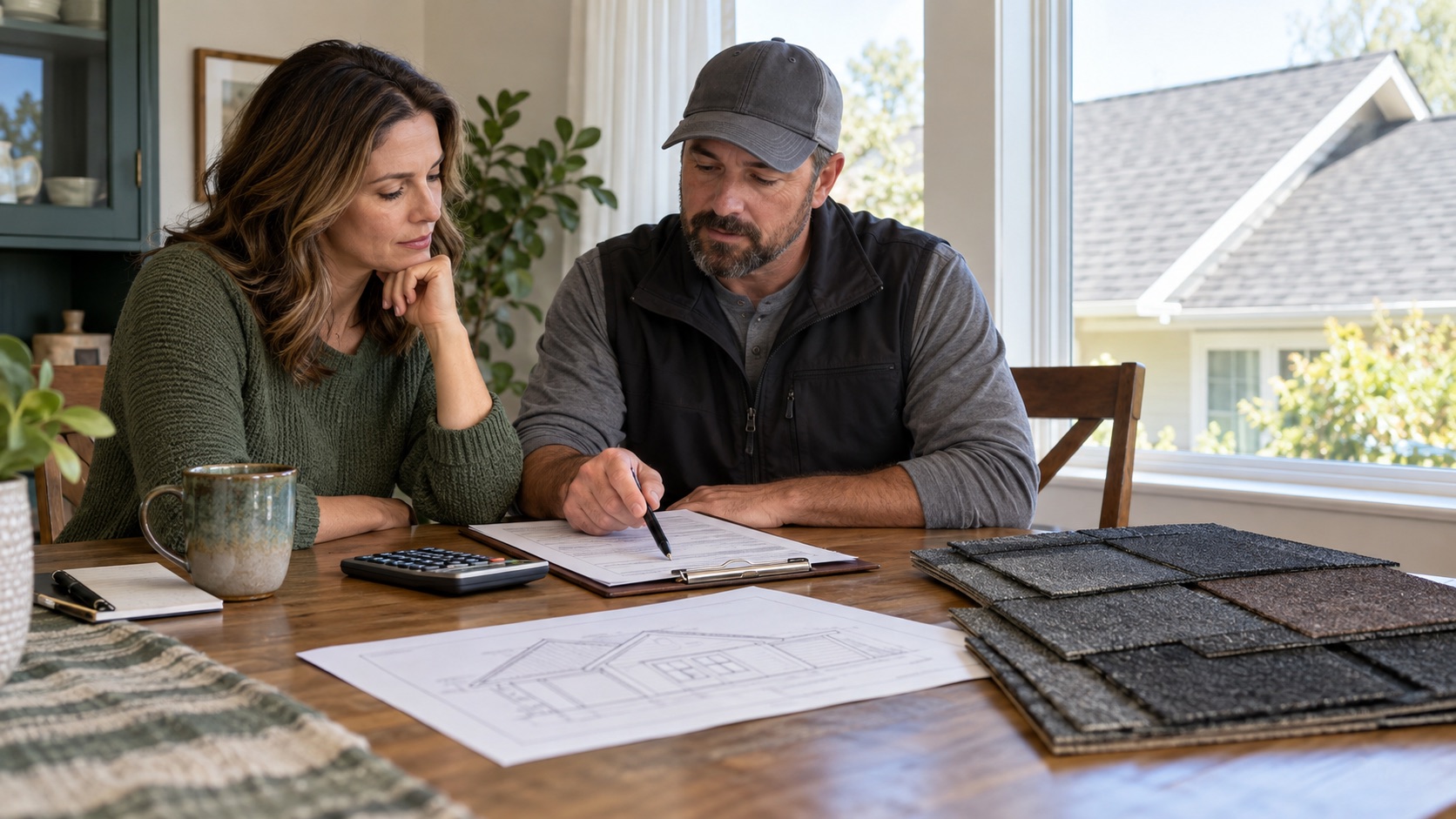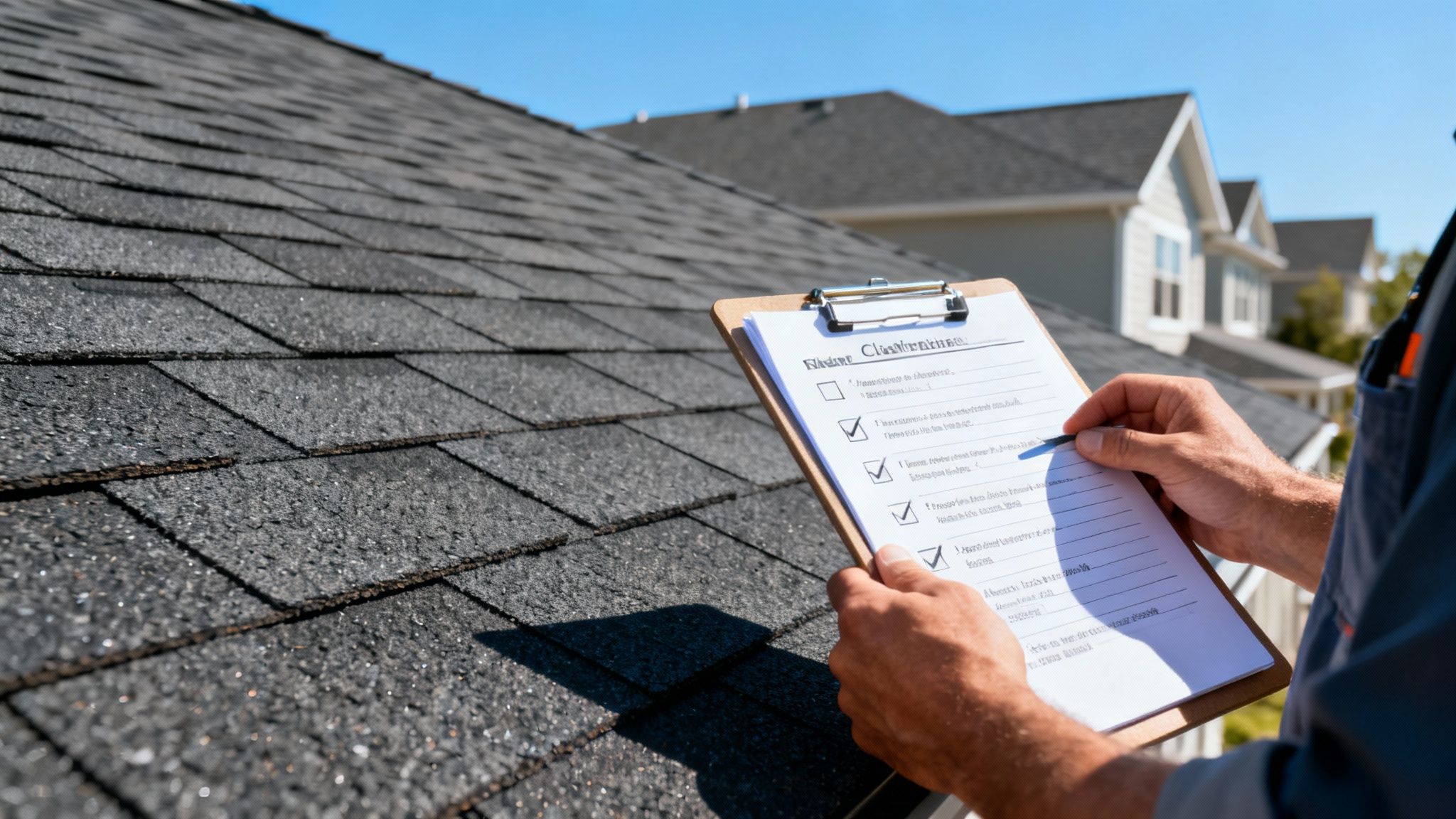
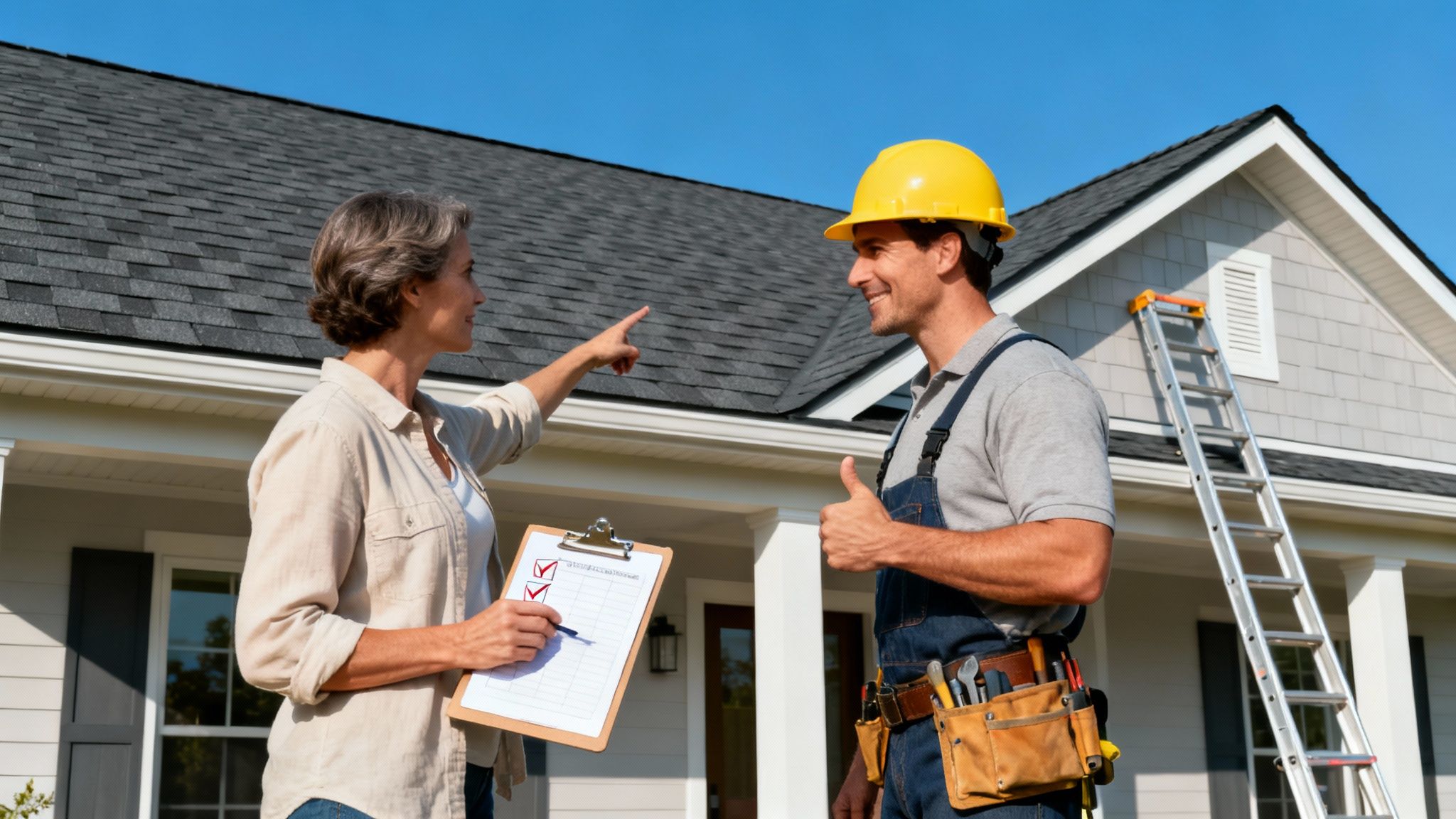
Choosing the right roofing contractor is the most critical decision you’ll make for your home’s protection. The difference between a durable, long-lasting roof and years of frustrating leaks often comes down to the questions to ask roofing contractor before signing a contract. A great roofer welcomes informed homeowners, while a questionable one may avoid detailed answers. This guide provides the essential questions every central Alabama homeowner should ask, ensuring you can confidently navigate the process of hiring a professional for a new roof, a critical repair, or a thorough inspection.
This is not just a generic checklist. We will explain exactly why each question is crucial, what a good answer sounds like, and the specific red flags to watch for in the Birmingham market. From verifying state licensing and insurance to understanding material choices suited for Alabama’s humid climate and unpredictable weather, these questions are designed to empower you. They will help you accurately compare estimates, understand the full scope of work, and ultimately partner with a contractor who values transparency and quality workmanship.
Use this listicle to vet local professionals, eliminate unqualified candidates, and make an informed decision. By asking the right questions upfront, you can ensure your roofing project is completed on time, within budget, and to the highest standard, protecting your most valuable asset for decades to come. Think of this as your roadmap to a secure, stress-free roofing experience.
1. Are you properly licensed and insured?
This is the most critical question to ask any roofing contractor and should always be your starting point. Proper licensing and insurance are non-negotiable foundations of a legitimate, professional roofing business. They serve as your primary protection against subpar work, legal liabilities, and financial loss. A "yes" isn't enough; you must verify the documents yourself.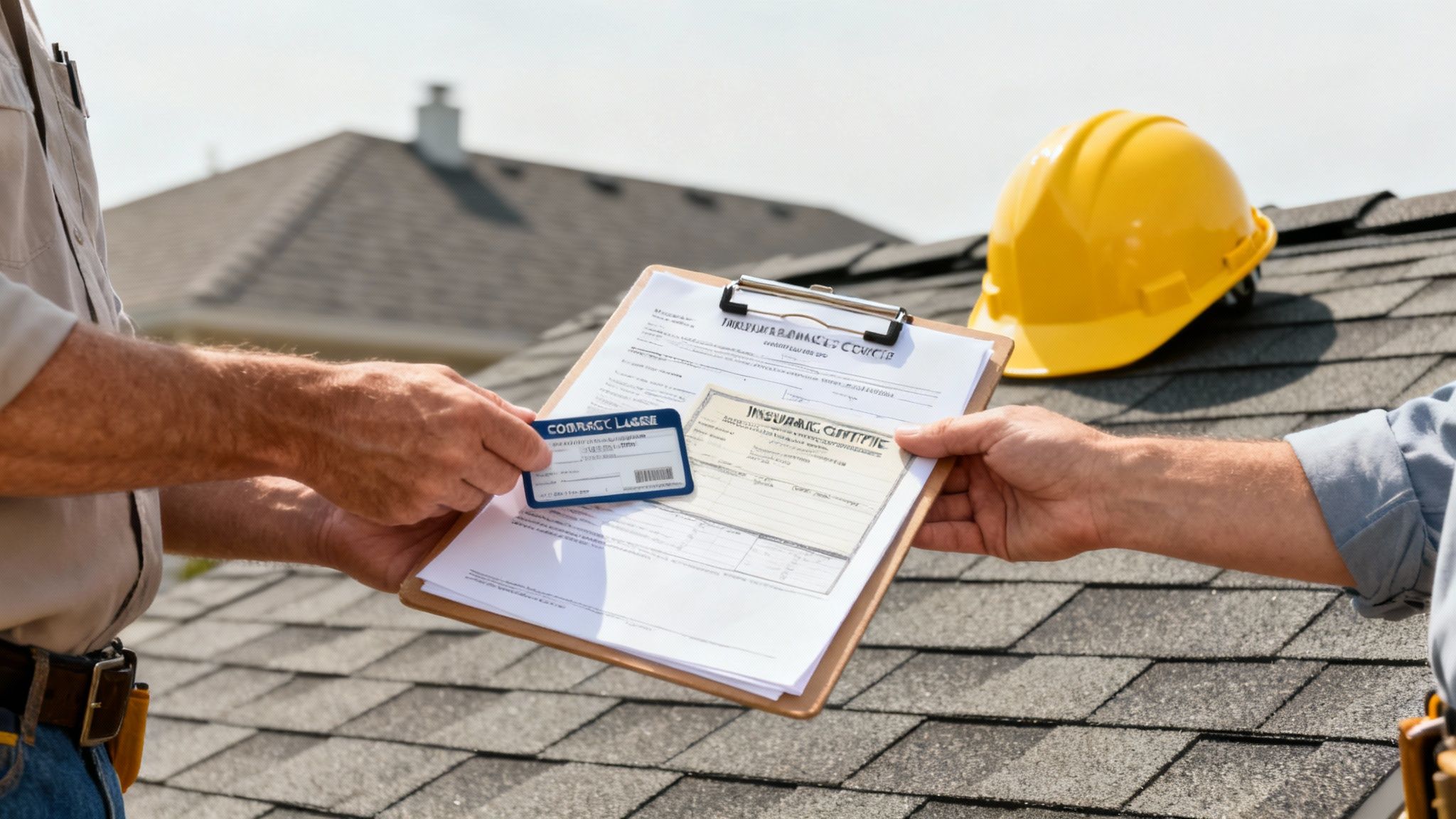
Why This Question Matters
Engaging an unlicensed or uninsured contractor exposes you to significant risks. If a worker is injured on your property, you could be held personally liable for their medical bills. If the contractor causes damage to your home (or a neighbor’s), their lack of general liability insurance means you'll be footing the bill for repairs.Key Takeaway: Licensing demonstrates a contractor's commitment to professional standards and compliance with local codes, while insurance shields you from unforeseen accidents and damages.
What to Look For
A professional contractor will readily provide their documentation. Here’s what you need to request and verify:- Alabama State License: For larger projects, ask for their license number and verify it with the Alabama Licensing Board for General Contractors.
- Proof of General Liability Insurance: Request a "Certificate of Insurance" (COI). This document should name you (the homeowner) as the certificate holder. A minimum of $1,000,000 in coverage is standard.
- Proof of Workers' Compensation Insurance: This policy covers the contractor’s employees if they are injured on the job. Without it, you could be sued for damages.
2. What roofing materials do you recommend for my home?
The type of roofing material you choose is one of the most significant decisions in a roof replacement, impacting everything from curb appeal and cost to long-term durability. A qualified contractor won't just suggest the most expensive option; they will act as a consultant, evaluating your home’s specific needs, your budget, and local climate factors to provide a tailored recommendation. This is a key question to ask a roofing contractor to gauge their expertise and customer-centric approach.Why This Question Matters
Choosing the right material is a long-term investment in your home's protection and value. An inappropriate material might fail prematurely under Alabama's weather conditions, require more maintenance, or even be structurally unsuitable for your home. Asking for a detailed recommendation allows you to assess the contractor’s knowledge of different products and their commitment to finding the best solution for you, not just making a quick sale.Key Takeaway: A professional contractor's material recommendation should be a personalized solution based on your home's architecture, local climate demands, and your financial and style preferences.
What to Look For
A good contractor will discuss the pros and cons of several options. Here’s what a thorough conversation should cover:- Asphalt Shingles: Discuss different grades, such as architectural (laminate) shingles, which offer superior durability and wind resistance compared to basic 3-tab shingles.
- Metal Roofing: Inquire about options like standing seam or corrugated panels and their benefits for energy efficiency and longevity in the Alabama heat.
- Specific Recommendations: They should explain why they recommend a certain material, referencing factors like your roof’s slope, sun exposure, and tree coverage.
- Manufacturer Warranties: Ask about the warranties that come with the proposed materials and what they cover.
3. Can you provide references from recent projects?
While a contractor’s sales pitch and portfolio can be impressive, firsthand accounts from previous customers provide the most honest and accurate picture of their work. Asking for references is a standard and essential step in the vetting process, allowing you to move beyond marketing claims and understand the actual customer experience from start to finish.
Why This Question Matters
References offer unfiltered insight into a contractor's reliability, professionalism, and craftsmanship. Speaking with past clients helps you verify a company’s claims about their timeline adherence, budget accuracy, communication style, and job site conduct. It's your best opportunity to learn how they handle unexpected issues and what the post-project support looks like.Key Takeaway: Contacting references transforms a contractor from a name on a proposal to a proven entity. It's your due diligence to confirm they deliver on their promises before you sign a contract.
What to Look For
A confident contractor will readily provide a list of recent projects. Aim for a list of at least 5-10 references from jobs completed within the last one to two years to ensure their current crews meet the same standards.- Ask Specific Questions: When you call a reference, go beyond "Were you happy?" Ask about communication, job site cleanliness, and if the project stayed on schedule and on budget.
- Inquire About Similar Projects: Request references for projects similar to yours in scope and materials, whether it's an asphalt shingle replacement or a commercial roof coating.
- The Ultimate Test: The most telling question you can ask a past client is, "Knowing what you know now, would you hire them again?"
- Request to See the Work: Ask if you can drive by the property to see the finished roof. Visual confirmation of their work quality on a real home is invaluable.
4. What is included in your estimate and warranty?
Understanding the fine print of an estimate and a warranty is crucial for avoiding hidden costs and future headaches. A vague proposal or a confusing warranty can leave you financially exposed. This is one of the most important questions to ask a roofing contractor because it clarifies expectations and establishes a clear scope of work and post-installation support. A transparent contractor will provide itemized details, not just a single bottom-line number.Why This Question Matters
A detailed estimate ensures you are comparing "apples-to-apples" between different contractors. One bid might seem lower, but it could be excluding essential costs like permit fees or debris disposal, leading to expensive surprises later. Likewise, a warranty protects your investment. You need to know precisely what is covered, for how long, and by whom - the manufacturer, the contractor, or both.Key Takeaway: A comprehensive written estimate and a clear warranty are hallmarks of a professional roofer. They prevent misunderstandings and provide you with a long-term safety net for one of your home’s most critical components.
What to Look For
A trustworthy contractor will provide clear, written documentation for both the estimate and the warranty before you sign a contract. Here’s what to examine:- Itemized Estimate: The quote should break down costs for labor, specific materials (brand and type), underlayment, flashing, ventilation, permit acquisition, and cleanup/disposal fees.
- Warranty Specifics: Request separate documents for the material warranty (from the manufacturer) and the workmanship warranty (from the contractor). Clarify the duration of each.
- Exclusions and Transferability: Ask what is not covered (e.g., damage from storms, falling tree limbs, or lack of maintenance). Inquire if the workmanship warranty is transferable to a new owner if you sell your home, as this can be a valuable selling point.
5. How long will the project take, and what's your timeline?
Understanding the project timeline is essential for managing your expectations and minimizing disruption to your daily life. A roof replacement is a significant construction project, and a clear, well-defined schedule is a hallmark of a professional contractor. This question helps you plan accordingly, coordinate with your family or tenants, and gauge the contractor's organizational skills.Why This Question Matters
A vague or open-ended timeline is a major red flag. It can indicate poor planning, overbooked crews, or a lack of experience. In central Alabama, weather is a significant factor; sudden thunderstorms can halt work and expose your home to the elements. A contractor with a tight, efficient schedule is better prepared to manage these weather risks. A clear timeline prevents your "two-day" project from stretching into a two-week ordeal.Key Takeaway: A detailed timeline demonstrates a contractor's commitment to efficiency and professionalism, protecting your home from prolonged exposure and minimizing disruptions to your household.
What to Look For
A reliable contractor should be able to provide a clear, step-by-step project schedule. Don't settle for a simple "a few days." Instead, ask for specific details:- Start and Completion Dates: Get an estimated start date and a projected completion date in writing within the contract.
- Daily Schedule: Clarify the typical daily work hours. When will the crew arrive, and when will they leave? This helps manage noise and household logistics.
- Weather Contingency Plan: Ask how they handle weather-related delays. What is the protocol for securing the job site if a storm rolls in unexpectedly?
- Project Phases: A complete timeline should include key phases like material delivery, tear-off of the old roof, installation of the new system, and final cleanup.
6. Do you handle permits and inspections, or is that my responsibility?
Navigating the world of building codes and permits can be confusing, but it's a necessary step for most significant roofing projects. This question clarifies who is responsible for managing the crucial administrative and legal requirements of your roof replacement or major repair. A professional, full-service contractor will almost always handle this entire process for you.Proper permitting ensures your new roof complies with local building codes, which are in place for your safety. Inspections are the official verification that the work was completed correctly according to those standards. Skipping this step can lead to fines, difficulties selling your home, or even being forced to remove the new roof.
Why This Question Matters
Clarifying who manages permits and inspections from the start prevents legal headaches and ensures your project is fully compliant. If a contractor asks you to pull the permit as the homeowner, it is a major red flag. This often means they are not properly licensed or insured, and they are attempting to shift legal liability onto you.In places like Birmingham and surrounding municipalities, specific permits are required for re-roofing projects to ensure they meet wind resistance and structural standards. An experienced local contractor will be familiar with the requirements for your specific area, from Jefferson County to Shelby County.
Key Takeaway: A reputable contractor considers permit and inspection management a standard part of their service, demonstrating their professionalism and accountability for the project from start to finish.
What to Look For
Your contractor should confidently state that they handle all permitting and inspections. They should be able to explain the process clearly and what it entails for your specific location.- Confirmation of Responsibility: They should explicitly agree to obtain all necessary building permits before work begins.
- Knowledge of Local Codes: The contractor should be familiar with the specific requirements in your city, whether it’s Hoover, Vestavia Hills, or unincorporated Jefferson County.
- Process Transparency: Ask them to outline the steps, including how long permit approval typically takes and when inspections will occur (e.g., in-progress and final inspections).
- Cost Inclusion: Verify that the cost of the permits and any associated fees are clearly itemized in your written estimate and contract.
- Documentation: Ensure the contract states that you will be provided with copies of the approved permit before work starts and the final inspection approval upon completion.
7. What happens if we discover damage during the project?
Even with a thorough initial inspection, what lies beneath your old shingles is often a mystery until the tear-off begins. It’s common to uncover hidden issues like rotted decking, soft spots from slow leaks, or even structural damage to trusses. A professional contractor anticipates this possibility and has a clear, pre-defined process for handling it, which is one of the most important questions to ask a roofing contractor before signing a contract.Why This Question Matters
Without a set protocol, a discovery of rotted wood can halt your project and lead to a dispute. You might be pressured into agreeing to expensive, on-the-spot repairs without a written estimate. A formal process ensures that you remain in control of the budget and scope of work, preventing a minor issue from turning into a major financial surprise.Key Takeaway: A contractor's plan for unexpected damage reveals their professionalism and commitment to transparent communication. It ensures you are informed and in control before any additional costs are incurred.
What to Look For
Your contract should explicitly detail the procedure for handling unforeseen repairs. A reputable roofer will have a straightforward process:- Immediate Stoppage and Notification: The crew should stop work in the affected area and immediately notify you of the problem, providing photo or video documentation of the damage.
- Written Change Order: The contractor must present a written "change order" that details the necessary repairs, the materials required, and the exact cost for both labor and materials.
- Your Written Approval: No additional work should proceed until you have reviewed the change order and provided your written authorization. This document becomes a formal addendum to your original contract.
8. What is your payment schedule and cancellation policy?
Understanding the financial terms of your roofing project is just as important as understanding the materials and labor. A transparent payment schedule and a clear cancellation policy protect both you and the contractor from misunderstandings and disputes. Asking this question upfront establishes clear financial expectations and ensures there are no surprises down the line.Why This Question Matters
A contractor's payment terms often reflect their financial stability and business practices. Unreasonable demands, such as requiring a large portion or even the full amount upfront, can be a major red flag indicating potential cash flow problems. A clear, phased payment schedule linked to project milestones ensures you only pay for work as it is satisfactorily completed, giving you leverage if issues arise.Key Takeaway: A professional payment structure aligns payments with project progress, protecting your investment. The final payment should only be made after a final inspection confirms the work meets all agreed-upon standards.
What to Look For
A reputable contractor will have a standard payment schedule outlined in their contract. You should never feel pressured into a payment plan that makes you uncomfortable.- Initial Deposit: Expect a deposit of 10% to 25% to cover initial material costs and secure your project on their schedule. Be wary of any request exceeding this range.
- Written Payment Schedule: The contract must clearly state when payments are due. This could be upon material delivery, at the project's halfway point, or other defined milestones.
- Final Payment: The final balance should only be due upon completion and your signed approval of the finished work.
- Cancellation Terms: The contract should detail the process and any potential penalties if you or the contractor needs to cancel the project.
- Insurance Payments: If your project involves an insurance claim, ensure the payment schedule aligns with your insurance company's disbursement process.
9. Will you handle cleanup and site restoration?
A roof replacement generates a tremendous amount of debris, from old shingles and underlayment to thousands of nails and fasteners. A professional contractor’s job isn’t finished until your property is returned to its original condition, if not better. Asking about their cleanup process is a crucial step that separates reputable companies from those who cut corners.Why This Question Matters
Inadequate cleanup isn't just an eyesore; it's a safety hazard. Stray nails can puncture car tires, injure children, or harm pets. Leftover roofing debris can kill your grass and damage delicate landscaping. Clarifying the cleanup scope in advance prevents post-project disputes and ensures you aren't left with a costly and time-consuming mess. A contractor's commitment to a thorough cleanup reflects their overall professionalism and respect for your property.Key Takeaway: A comprehensive cleanup plan is a non-negotiable part of a roofing contract. It protects your property, ensures safety, and signifies a contractor's commitment to quality from start to finish.
What to Look For
A simple "yes" isn't enough. You need to understand the specifics of their site management and restoration process. Here are key points to confirm are included in your written estimate:- Property Protection: Ask how they will protect your home's siding, windows, driveway, and landscaping (e.g., using tarps or plywood).
- Daily Cleanup: Will the crew clean the site at the end of each workday, or only upon project completion? Daily tidying minimizes disruption and safety risks.
- Nail Removal: Inquire about their method for collecting stray nails. A quality contractor will use a high-powered magnetic sweeper to meticulously scan your lawn, driveway, and garden beds.
- Final Debris Haul-Away: Confirm that the quoted price includes the rental and removal of a dumpster or trailer for all project debris. You should never have to coordinate waste disposal yourself.
10. Can you provide an explanation of the work scope and project specifications?
A verbal agreement or a one-page estimate with a single price is a major red flag. A detailed, written scope of work is the cornerstone of a successful roofing project, serving as the official blueprint for the job. This document ensures both you and the contractor have the exact same understanding of what will be done, preventing costly misunderstandings and "scope creep" down the line. It's your primary tool for accountability.This document is more than just a quote; it’s a precise agreement that outlines every component of the job, from materials and labor to cleanup and exclusions. Without it, you are left vulnerable to disputes over what was or was not included in the original price.
Why This Question Matters
Vague proposals lead to conflict. A contractor might assume you only want the main roof replaced, while you expected the shed and garage to be included. A comprehensive scope of work eliminates ambiguity and protects you from contractors who might cut corners on materials or skip essential steps like replacing flashing, knowing it wasn't explicitly listed in the contract.Key Takeaway: The scope of work is your most important contractual document. It defines the project's boundaries, sets clear expectations, and provides a legal basis for holding the contractor accountable for delivering exactly what was promised.
What to Look For
A professional contractor will provide a multi-page document that meticulously details every aspect of the project. Insist that the following are clearly specified in writing before you sign anything:- Exact Areas: The document should clearly state which roof surfaces are included (e.g., main house, dormers, attached garage, detached sheds).
- Material Specifications: It should list the exact brand, model, and color of all materials, including shingles, underlayment, starter strips, and flashing.
- Removal and Decking: Clarify if the old roofing material will be completely removed (a "tear-off") and what the procedure is for replacing rotted or damaged roof decking.
- Component Details: Ensure it includes specifics on ventilation (ridge vents, soffit vents), ice and water shield installation in valleys and eaves, and new flashing for chimneys and walls.
- Exclusions: The scope should also document what is not included in the price, such as gutter replacement or painting.
10-Point Roofing Contractor Questions Comparison
| Item | Implementation complexity | Resource requirements | Expected outcome | Ideal use case | Key advantages | Common drawbacks |
|---|---|---|---|---|---|---|
| Are you properly licensed and insured? | Low — document verification | License numbers, insurance certificates, state board check | Legal compliance and homeowner liability protection | Every roofing project; mandatory vetting | Protects homeowner, preserves warranties, indicates professionalism | May increase cost; verification takes time |
| What roofing materials do you recommend for my home? | Medium — assessment and comparison | Material samples, structural review, climate data | Material matched to climate, budget, and aesthetics | Roof replacement or new roof selection | Longer lifespan, energy efficiency, appropriate aesthetics | Contractor may upsell premium materials; higher cost |
| Can you provide references from recent projects? | Low — request and contact referees | Reference list, contact time, photo records | Verified workmanship and real-world performance insight | Final contractor selection and trust-building | Confirms quality, communication, and problem resolution | References often positive; time-consuming to verify |
| What is included in your estimate and warranty? | Medium — detailed documentation required | Itemized estimate, warranty documents, permit cost breakdown | Clear costs, responsibilities, and post-job protection | Comparing bids and avoiding surprise costs | Prevents disputes, clarifies coverage and costs | Preparing detailed estimates takes time; warranties can be complex |
| How long will the project take, and what's your timeline? | Medium — scheduling and contingency planning | Crew schedule, permit timings, weather contingencies | Realistic start/completion dates and disruption expectations | Planning around seasons, events, or other trades | Sets expectations, helps coordination, reduces surprises | Weather delays; extended disruption if timeline long |
| Do you handle permits and inspections, or is that my responsibility? | Low–Medium — depends on contractor | Permit fees, coordination with building dept, inspection scheduling | Code-compliant work with documented approvals | Projects requiring local permits or selling home later | Ensures compliance, reduces homeowner burden | Adds time and cost; inspection failures can delay work |
| What happens if we discover damage during the project? | Medium — requires change-order process | Pre-project inspection, contingency budget, repair materials | Properly documented repairs and agreed additional costs | Older roofs or unknown subsurface conditions | Prevents future failures, structured approvals | Unexpected costs and timeline extensions |
| What is your payment schedule and cancellation policy? | Low — contractual terms to agree | Deposit, milestone invoicing, payment methods, lien releases | Financial clarity and protection for both parties | All projects to manage risk and cashflow | Prevents payment disputes, ensures contractor commitment | Large deposits pose homeowner risk; complex tracking |
| Will you handle cleanup and site restoration? | Low — specify in contract | Disposal, cleanup crew time, nail removal tools, restoration supplies | Property cleared of debris and restored to condition | Properties with landscaping, driveways, and safety concerns | Reduces homeowner cleanup, prevents nail injuries | Adds time/cost; weather can affect cleanup timing |
| Can you provide an explanation of the work scope and project specifications? | High — detailed scoping and documentation | Measurements, material specs, drawings, written exclusions | Precise expectations, reduced scope creep, basis for disputes | Complex roofs or when exact deliverables matter | Accountability, clear deliverables, dispute prevention | Time-consuming to prepare; amendments required for changes |
Ready to Raise the Standard for Your Roof?
Selecting a roofing contractor is one of the most significant decisions you will make as a property owner in Birmingham. The roof is your first line of defense against Alabama's unpredictable weather, from intense summer sun and hailstorms to the occasional threat of tornadic winds. Asking the right questions to ask roofing contractor is not just about getting a quote; it's about vetting a long-term partner for one of your most critical assets. You are not just buying shingles; you are investing in safety, structural integrity, and peace of mind for years to come.This comprehensive list of questions empowers you to move beyond surface-level conversations and generic sales pitches. You are now equipped to dissect an estimate, understand the scope of work, and identify the hallmarks of a truly professional operation. A contractor who welcomes this level of scrutiny is one who is confident in their processes, materials, and workmanship. They see an informed client not as a challenge, but as a valued collaborator.
From Checklist to Confidence: Your Key Takeaways
Remember that your goal is to find a contractor who provides not just a good roof, but a great experience. The best professionals in central Alabama will be transparent, communicative, and respectful of your property from the initial inspection to the final cleanup.Key insights to carry forward:
- Verification is Non-Negotiable: Always independently verify licensing with the Alabama Home Builders Licensure Board and request a current Certificate of Insurance. This simple step protects you from immense financial and legal risk.
- Warranties are a Partnership: A strong warranty is twofold. It includes both the manufacturer’s guarantee on materials and the contractor’s workmanship guarantee. Understand the specifics of both, including what actions could potentially void them.
- The Details Define the Deal: A vague estimate is a major red flag. Your final contract should be a detailed blueprint of the project, covering everything from specific material brands and underlayment types to ventilation solutions, cleanup protocols, and the process for handling unexpected structural damage.
- Local Expertise is Crucial: A contractor familiar with Birmingham, Hoover, and Vestavia Hills building codes and climate challenges will provide superior, longer-lasting results. They understand the importance of proper attic ventilation to combat summer heat and the right installation techniques to withstand severe weather.
By mastering these questions to ask roofing contractor, you transform a potentially stressful hiring process into a structured, confident investigation. You are no longer just a passive buyer; you are an active project manager, ensuring your investment is protected and your expectations are met with precision and professionalism.This diligence pays dividends far beyond the project's completion. A well-installed roof by a reputable company enhances your property’s value, improves energy efficiency, and provides the security your family or business deserves. You have taken the first and most important step by educating yourself. Now, it's time to put that knowledge into action, secure in the knowledge that you can identify and hire a contractor who will truly raise the standard for your roof.
At Higher Roof Solutions, we believe an informed customer is our best partner. We welcome these questions because our answers reflect our commitment to transparency, quality, and local expertise. If you’re ready for a roofing experience in Birmingham that prioritizes your peace of mind from start to finish, contact us for a comprehensive, no-obligation inspection and estimate at Higher Roof Solutions.