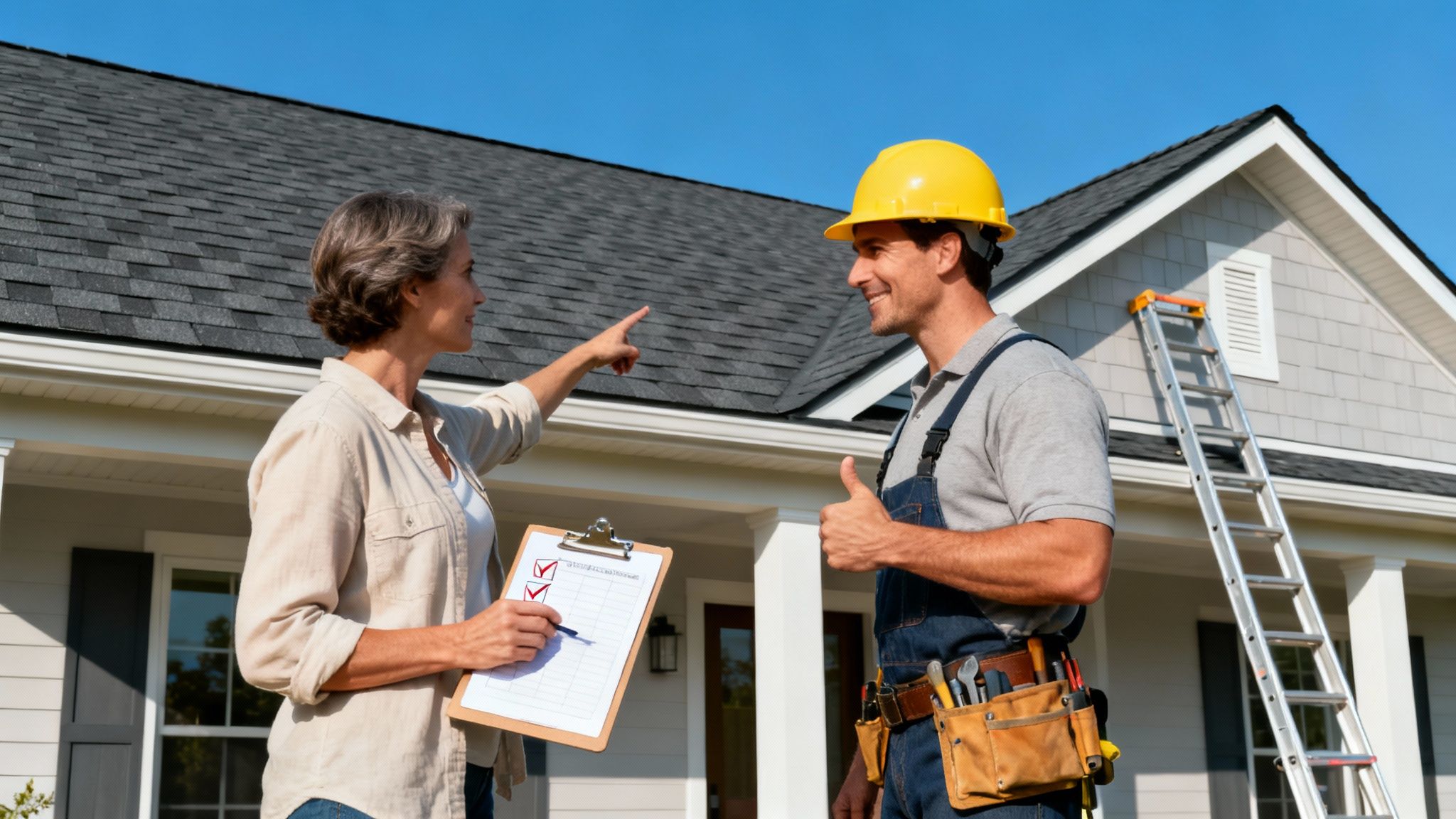
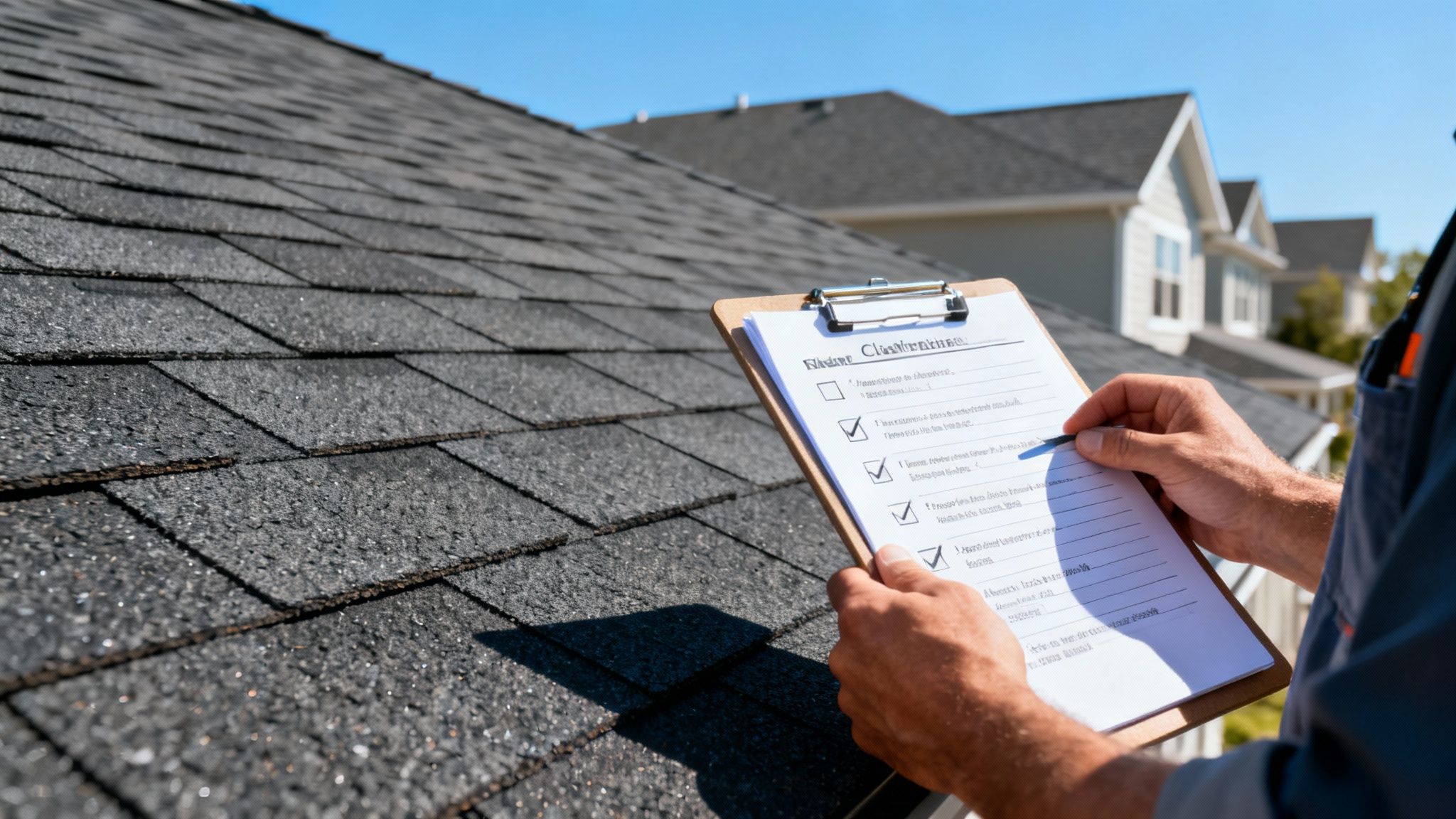
Before you even think about getting quotes, your first job is to build a small, trustworthy list of local roofers. This isn’t about calling every single company you find online. It’s about finding the handful of solid, local pros who have a real stake in our community.
Building Your Initial List of Vetted Roofers
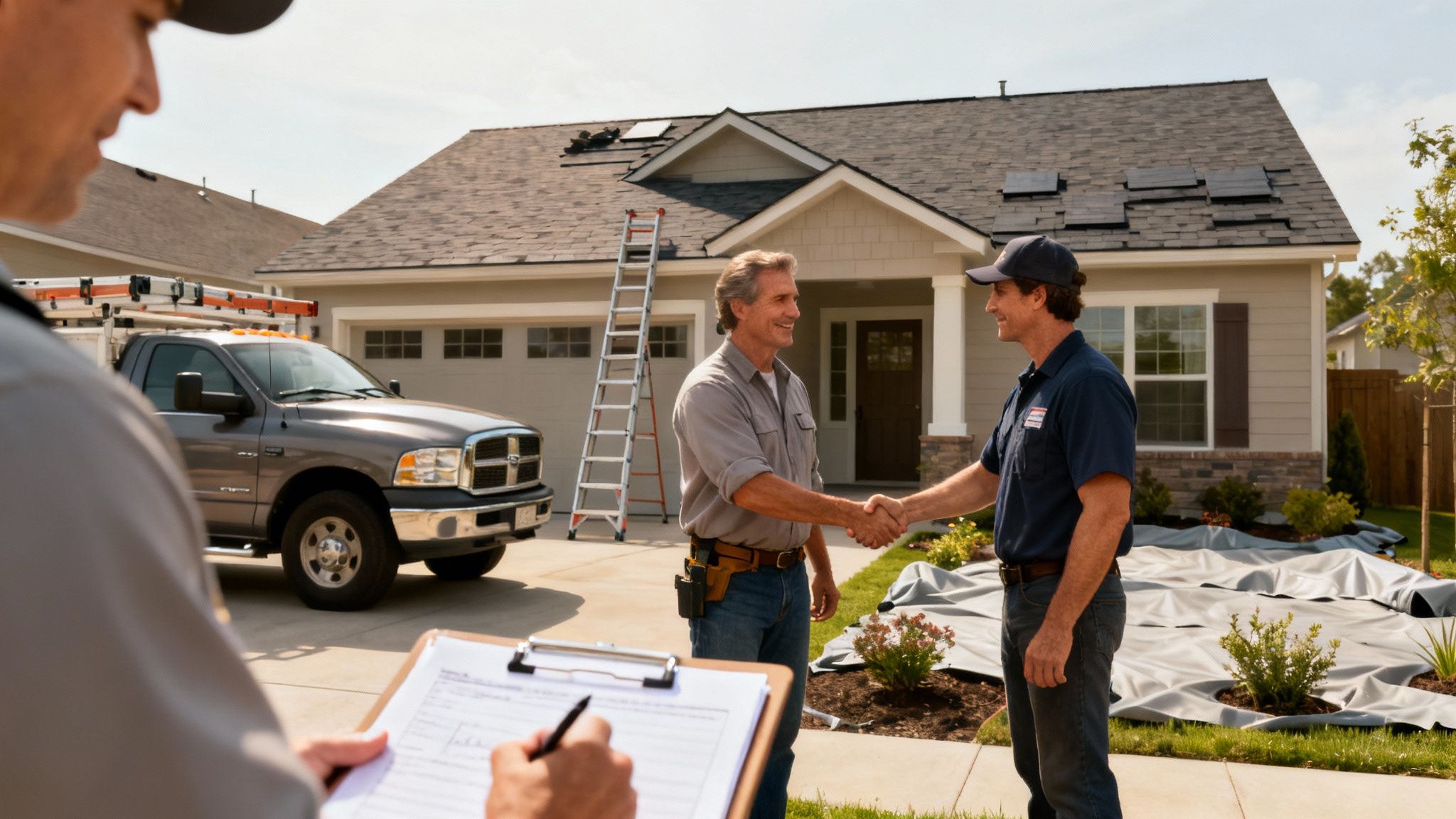
A roofer with a physical office in Birmingham, Homewood, or Vestavia Hills is accountable. They have a local reputation to protect and they understand everything from our specific building codes to the challenges of Alabama weather.
Tap into Local Knowledge and Word-of-Mouth
Your best intel often comes from right next door. Ask your neighbors, friends, and family who they’ve used for their own roof work. A personal recommendation is invaluable because you'll get the real story—not just on the quality of the work, but on the communication, the cleanup, and the overall experience.Here’s a pro tip: walk down to your local building supply or hardware store. The people behind the counter see the same local contractors day in and day out. They know who buys quality materials and, just as importantly, who pays their bills on time. That’s a huge indicator of a stable, well-run business.
Assess Their Digital Footprint
Once you have a few names, it’s time to do some online sleuthing. A professional, modern website is a good starting point. It shows they’re serious about their business and gives you a place to check out their work and credentials.Here’s what you should be looking for on their site:
- A project gallery: You want to see real photos of their work in the area, not just stock images. This gives you a feel for their craftsmanship.
- Clear service descriptions: Do they clearly explain what they do, from minor repairs to full replacements?
- A local, physical address: This helps confirm they’re a legitimate local business and not just a P.O. Box.
- Testimonials and reviews: Look for recent, detailed reviews on their site, but also check third-party platforms like Google and the Better Business Bureau.
Before you spend time scheduling inspections and comparing quotes, use this quick checklist to perform an initial screening. It’ll help you weed out any obvious non-starters.
Quick Contractor Vetting Checklist
| Vetting Criteria | Why It Matters | What to Look For |
|---|---|---|
| Local Physical Address | Confirms they are a local business, not an out-of-state storm chaser. They're more accountable. | A real street address in or near Birmingham on their website and Google Business Profile. |
| Professional Website | Shows they invest in their business and provides transparency about their services and work. | A modern, easy-to-navigate site with project photos, service details, and clear contact info. |
| Recent Online Reviews | Provides unbiased feedback on their work quality, professionalism, and customer service. | Consistent positive reviews (4.5+ stars) on Google, BBB, or Angi. Look for detailed comments. |
| Years in Business | A long track record suggests stability and experience in handling local roofing challenges. | Look for a company that's been operating locally for at least 5 years. |
Verifying Licenses, Insurance, and Certifications
Alright, you’ve got a shortlist of local roofers who seem promising. Now comes the most critical part of your homework: the background check. This isn't about liking the salesperson or being impressed by a fancy truck. This is about verifying the non-negotiable credentials that protect you, your home, and your wallet.A slick presentation means absolutely nothing if the paperwork doesn’t back it up. I’ve seen too many homeowners learn this the hard way. Skipping this verification step is the single biggest gamble you can take. Any legitimate pro will have this information ready and will never hesitate to show you.
Confirm Their State License
First thing's first: their license. In Alabama, any residential roofer worth their salt must be licensed by the Alabama Home Builders Licensure Board. This isn't just a piece of paper—it's your proof that the contractor has met the state's minimum requirements for knowledge, experience, and financial stability.Hiring an unlicensed roofer means they’re operating outside the law, and it leaves you with zero recourse if things go south. It’s easy to check. Just head over to the official board’s website and use their license lookup tool.
Dive Deep into Their Insurance Coverage
This is where things can get tricky. A contractor might say, "Sure, we're insured," but the devil is in the details. You need to know what kind of insurance they carry and confirm it’s actually active. There are two policies that are absolute must-haves.- General Liability Insurance: This is what protects your property. If a crew member accidentally drops a bundle of shingles on your AC unit or a truck backs into your garage door, this policy covers the cost. Without it, you could be on the hook for their mistake.
- Workers' Compensation Insurance: This protects the crew working on your home. Roofing is a dangerous job, and accidents happen. This insurance covers medical bills and lost wages for any worker injured on your property. If a roofer doesn't have it and someone gets hurt, you could be held liable and even face a lawsuit.
The only way to be certain is to ask for a Certificate of Insurance (COI). Here’s the key: that certificate should come to you directly from their insurance agency, not from the contractor. This prevents anyone from showing you an old, expired, or fraudulent document and proves the policies are active right now.Don’t feel awkward about asking for this. A true professional expects it and will have their agent forward the paperwork to you without any fuss.
Understand the Value of Manufacturer Certifications
Beyond the required state license, the best roofers often hold special certifications from the material manufacturers themselves. Think of it as a master's degree in roofing. They aren't required by law, but they’re a powerful sign of a contractor's commitment to quality and expertise.A perfect example is the GAF Master Elite® Contractor certification. This is a big deal—it’s a status that only 2% of all roofing contractors in North America ever achieve. To even be considered, a roofer has to prove they are:
- Properly Licensed in their state.
- Adequately Insured with the right coverage to protect you.
- Proven Reputation with a solid track record in the local community.
- Professionally Trained and committed to ongoing education.
But maybe the biggest perk for you is the access to better warranties. A certified installer can offer enhanced manufacturer warranties—like the GAF Silver Pledge™ or Golden Pledge® Limited Warranties—that cover not just the materials but the workmanship as well. That’s a level of protection most standard roofers simply can’t offer, giving you peace of mind that your new roof is safeguarded for decades.
How to Compare Roofing Estimates Like a Pro
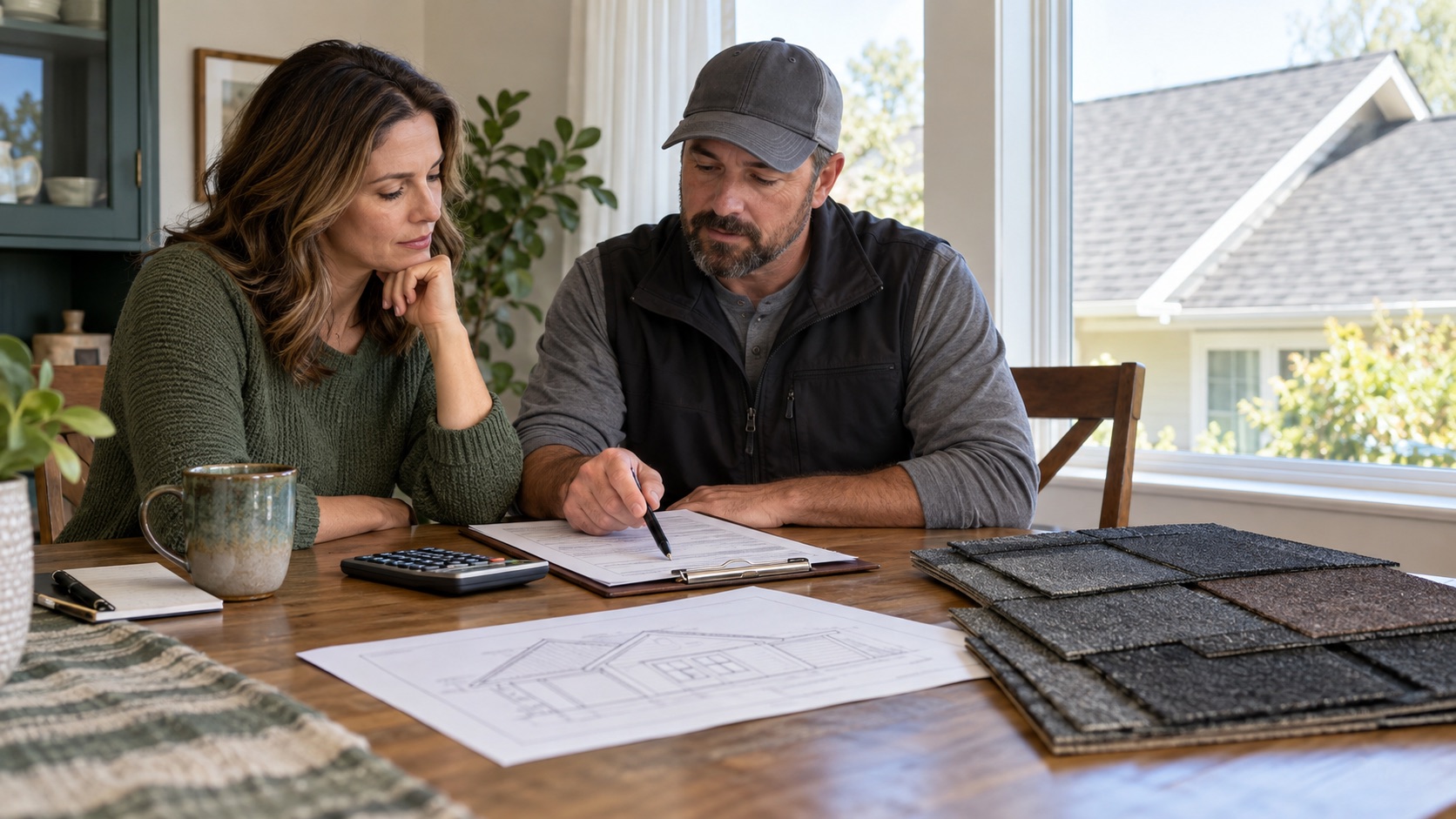
So, you’ve done the legwork, vetted a few local roofers, and now you’ve got a stack of estimates on your kitchen table. It’s incredibly tempting to just scan for the lowest number and move on, but believe me, that’s where some of the most expensive mistakes happen.The real key is learning how to read between the lines. A cheap bid isn’t a good deal if it’s built on a foundation of subpar materials, rushed work, or surprise costs down the road. You need to compare apples to apples, and that means focusing on long-term value, not just the initial price.
Break Down the Line Items
A professional estimate isn't a one-line summary; it's the blueprint for your entire project. If all you see is a vague phrase like "install new roof," that’s a massive red flag. A transparent, trustworthy quote will break everything down so you can see exactly what you're paying for.Make sure every estimate you review clearly specifies:
- Shingle Brand and Type: It’s not enough to say "architectural shingles." It should list the manufacturer (like GAF) and the specific product line (like Timberline HDZ®).
- Underlayment: Is it standard felt paper or a more durable synthetic underlayment? This is your roof's critical moisture barrier—not a place to cut corners.
- Ice and Water Shield: This sticky membrane is your best defense in vulnerable spots like valleys and eaves. The quote should detail exactly where it’s being installed.
- Flashing: This is a big one. The estimate must detail plans for new flashing around chimneys, vents, and walls. Reusing old, failing flashing is a classic corner-cutting move that almost guarantees a leak.
- Ventilation: Proper attic airflow is vital for the health of your roof and your home's energy bills. Does the quote include new ridge vents or other necessary components?
- Debris Removal: You want to see the cost of a dumpster and complete cleanup explicitly included. No one wants to be left with a yard full of old shingles and roofing nails.
Analyze Material Quality and Warranties
The materials listed in the quote are a direct reflection of your roof's future durability. Contractor A might bid $10,000 using a basic 25-year shingle, while Contractor B comes in at $11,500 but specifies a premium lifetime shingle with better impact resistance. That extra $1,500 buys you decades of superior protection.Warranties are the other half of the equation. Every quote should clearly explain two different kinds:
- Material Warranty: This comes straight from the manufacturer and covers defects in the shingles and other products.
- Workmanship Warranty: This is the contractor's promise to stand behind their installation quality. A confident, experienced roofer will offer a workmanship warranty of at least 5-10 years.
Here’s a crucial piece of inside knowledge: A GAF Master Elite® certified contractor like Higher Roof Solutions can offer special, enhanced manufacturer warranties that cover both materials and the workmanship. This is an incredible safety net that most uncertified roofers simply can't match.
A Tale of Two Bids
Let's put this into a real-world scenario. Imagine you get two quotes for your home in Homewood. One is for $12,000, the other for $13,200.At first glance, saving $1,200 sounds great. But when you dig in, you see the cheaper bid uses generic underlayment, plans to reuse your existing flashing, and only offers a 2-year workmanship warranty. The higher bid, on the other hand, specifies a top-tier GAF synthetic underlayment, all-new custom flashing, and is backed by a solid 10-year workmanship warranty.
That $1,200 you “saved” vanishes the moment that old, failing flashing causes a leak in year three. The cost of interior water damage and subsequent roof repairs will eclipse that initial savings in a heartbeat. The higher bid isn’t just a price—it’s a secure, long-term investment in protecting your home. That’s what comparing estimates like a pro is all about.
Comparing Roofing Bids Side-by-Side
To really see the difference, let’s lay out three hypothetical bids. It quickly becomes clear that the cheapest option is rarely the best value.| Feature | Contractor A (Low Bid) | Contractor B (Mid-Range Bid) | Contractor C (High Bid) |
|---|---|---|---|
| Shingles | Basic 25-Year 3-Tab | GAF Timberline HDZ® (Lifetime) | Premium Designer Shingles |
| Underlayment | Standard #15 Felt | GAF Deck-Armor™ Synthetic | GAF Deck-Armor™ Synthetic |
| Flashing | Reuse existing where possible | All new, pre-finished metal | All new, custom-bent copper |
| Ventilation | Reuse existing vents | New GAF Cobra® Ridge Vent | New Ridge Vent + Soffit Vents |
| Workmanship Warranty | 1 Year | 10 Years | 25 Years (via GAF Silver Pledge) |
| Price | $9,800 | $12,500 | $16,000 |
Spotting Red Flags And Common Roofing Scams
It’s easy to be swayed by a shiny truck or a friendly pitch in your driveway. But behind that polished exterior, some contractors use pressure tactics that end up costing you time, money, and peace of mind.Learning to spot warning signs early can keep you from hiring someone who leaves your roof leaking or vanishes before the job’s done.
High-Pressure Sales Tactics And Unbelievable Deals
One of the first red flags is a claim that “today only” pricing or “extra materials” are driving this deal. That kind of urgency is almost always a sales ploy.A reputable roofer will offer a clear, itemized estimate that stays valid for 30 days, giving you breathing room to weigh options and talk to neighbors. They know this is a big decision and won’t rush you.
Don’t let artificial deadlines force your hand. A trustworthy contractor earns your business by explaining details, not by setting traps.Watch out, too, for bids that seem too good. An extremely low price often means:
- Inferior shingles or underlayment
- Uninsured day laborers on your roof
- Skipped steps like replacing worn flashing
Demands For Large Upfront Payments
A modest deposit—usually 10% to 30%—to cover materials is normal. Anything north of 50% before work starts is a flashing-red warning.Contractors who push for huge cash deposits might be struggling financially or, worse, planning to take off with your money. Always:
- Insist on a detailed payment schedule in writing
- Avoid cash transactions—use checks or credit cards
- Verify each payment aligns with completed work
The Dangers Of Storm Chasers
After a hailstorm or high winds in Birmingham, you’ll see a surge of out-of-town crews knocking on doors. They promise quick fixes at rock-bottom prices—but vanish when warranty issues pop up.Local roofers maintain a physical shop, community ties, and a reputation to protect. Storm chasers leave you with no one to call.
These fly-by-night outfits can also drive up prices and strain local labor pools. For more on how rapid expansion can affect homeowners, check out this in-depth analysis on RoofingContractor.com: Impact Of Fast-Growing Roofing Companies On Consumers
Offers To Waive Your Insurance Deductible
Any roofer who promises to “cover,” “waive,” or “absorb” your deductible is steering you into fraud. Here’s how that scam typically unfolds:- Your insurer approves a $15,000 roof replacement; you owe a $1,000 deductible (insurer pays $14,000).
- The shady contractor submits a $15,000 invoice to the insurance company.
- You’re only billed $14,000, with the extra $1,000 quietly pocketed.
Sealing the Deal: Your Contract and Getting Ready for Installation
You’ve done the hard work and picked your roofer. Now it’s time to get everything in writing and make sure the whole process goes off without a hitch. This is where a solid, detailed contract becomes your best friend—it protects you, your home, and your wallet from any unwelcome surprises down the road.What to Look for in Your Roofing Contract
Think of the contract as the complete playbook for your project. Every single detail should be spelled out, leaving no room for assumptions.It needs to start with a crystal-clear scope of work. We’re not talking about a one-liner like “install new roof.” I mean specifying the exact shingle brand and color, the type of underlayment being used, where new flashing will be installed, and even how they’ll handle cleanup.
The payment schedule is another big one. Never, ever pay the full amount upfront. A fair contract ties payments to project milestones—a certain percentage after the materials are delivered, another after the old roof is torn off, and the final payment only after you’ve inspected the finished work and are 100% satisfied.
Here’s a quick checklist of non-negotiables:
- Scope of Work: A detailed list of every task, from tear-off to final cleanup.
- Materials List: Get specific. Include the brands, colors, and quantities of all materials.
- Payment Schedule: A clear breakdown of when payments are due, tied directly to project progress.
- Project Timeline: An estimated start and finish date, along with how things like weather delays will be handled.
- Warranties: You should have two—one from the manufacturer for the materials and a separate workmanship warranty from the contractor. Make sure you understand how to file a claim for both.
Prepping Your Home for Roof Day
A little prep work on your end can make a world of difference for the installation crew and help protect your property. It allows them to work faster, more efficiently, and, most importantly, safer.Start with the yard. If you have low-hanging branches near the roofline, now is the time to trim them back. Clear any furniture, potted plants, or decorations away from the house to create a safe perimeter.
Inside, a roof replacement can cause a surprising amount of vibration. Take down any pictures or valuables from the walls, and it’s a good idea to cover furniture in rooms directly below the work area to protect against dust.
- Protect Your Landscaping: Use tarps to cover flower beds and shrubs near the house.
- Clear the Driveway: The crew will need space for their vehicles and a dumpster. Move your cars to the street or a neighbor’s driveway if possible.
- Secure Your Attic: Cover anything stored in the attic with plastic sheeting. Debris and dust will fall through the gaps in the roof decking during tear-off.
- Talk to the Foreman: Before the first hammer swings, establish a clear line of communication. Know who the site foreman is and how you’ll check in—whether it’s a quick chat at the end of the day or a daily text update.
A little bit of open communication can prevent a lot of headaches. In my experience, it can cut down on project delays by over 50%.
Your Final Walk-Through: Inspecting the Finished Roof
Once the crew has packed up and cleaned the site, it’s time for you to do a final inspection before signing that last check. Don't be shy—get up close and look at the details.Walk the perimeter of your house. Are the shingles lying flat and uniform? Is the new flashing around the chimney and vents secure? Take a peek inside your gutters to make sure they’re clear of nails and debris, which can cause clogs and backups later.
- Check the Ridges and Vents: Make sure the ridge cap is installed straight and everything is properly sealed.
- Look at the Shingles: The lines should be straight, and you shouldn't see any overdriven or exposed nails.
- Inspect the Edges: The drip edge along the eaves should be clean and installed correctly to direct water into the gutters.
Local Tips for Birmingham-Area Homeowners
Here in central Alabama, we know the weather can turn on a dime. Always factor in a few buffer days for potential rain delays when planning your project timeline.It’s also smart to be a good neighbor. If you share a driveway or have homes close together, give your neighbors a heads-up about the upcoming work and potential for noise.
And don’t forget local rules. If you’re in a community like Homewood or Vestavia Hills, there might be specific regulations about where a dumpster can be placed.
- Noise Ordinances: Most towns have rules about how early work can begin. Make sure your contractor is aware of them.
- Historic Districts: If you live in a designated historic area, any visible changes to your roof might require special approval.
- Watch the Weather: Try to avoid scheduling a roof replacement during the peak heat of July and August or during the stormy spring season if you can help it.
Final Questions Before You Hire
Even after you've done your homework and narrowed down your choices, a few last-minute questions almost always come up. That's a good thing. Getting straight answers to these final concerns is the last step in finding a roofer you can truly trust.It’s all about making sure there are no surprises down the road. Let’s walk through a few of the most common questions we hear from homeowners.
How Many Estimates Should I Really Get?
You've probably heard the old "get three quotes" rule. It’s not bad advice, but it’s not a magic number, either. The real goal isn’t just to collect prices; it's about understanding the fair market rate and seeing how different pros approach the job.Honestly, two incredibly detailed estimates from well-vetted, reputable local roofers are worth more than five vague quotes from companies you know nothing about. If your top two choices come in with similar pricing and both have impressed you, you might not even need a third.
But what if one bid is way higher or lower than the other? That’s when a third estimate becomes a great tie-breaker. It can quickly tell you if one roofer missed something or if another is trying to overcharge. My advice? Spend your energy vetting contractors first, then get quotes from the ones you’d be happy to hire.
Is a Big Down Payment a Red Flag?
Absolutely. This is one of the biggest warning signs you can run into. A professional, financially sound roofing contractor will only ask for a modest deposit to get started, usually somewhere between 10% and 30%. That covers the initial order for your specific materials.Be very, very cautious if a contractor demands 50% or more before a single shingle has been laid. This can be a sign of major cash flow problems—they might be using your money to pay for someone else’s job. Worse, it’s a classic move by scammers who take your deposit and vanish.
Your contract should spell out the payment schedule clearly, tying payments to specific project milestones. The final check shouldn't be written until the job is done, the cleanup is complete, and you've done a final walk-through and are 100% happy with the work.And a final tip: never pay in cash. A check or credit card gives you a paper trail and a layer of protection. A contractor pushing for a large cash payment is another huge red flag.
What Happens If They Find Rotted Wood Under My Shingles?
It’s actually pretty common to pull off old shingles and find hidden damage, like rotted or soft roof decking. A seasoned pro expects this and plans for it right in the contract. Your agreement should include a contingency clause that clearly states the cost to replace any bad decking.This is usually priced per sheet (e.g., “$X for each new sheet of plywood”). This way, you know the potential cost upfront, and there are no shocking additions to your final bill.
When the crew finds rot, this is how it should be handled:
- They should stop work in that area immediately.
- They need to take clear photos to document the damage for you.
- They must contact you right away to show you the problem and explain what needs to be done.
- They get your approval for the extra work and cost before moving forward.
Should I Pick My Roofer Based on a Shingle Brand?
The quality of the shingle definitely matters, but the skill of the person installing it is ten times more important. You can have the best, most expensive shingles on the market, but if they’re installed incorrectly, they’re going to fail. The workmanship is what guarantees your roof will last for decades.Most top-tier roofers are certified by several major brands, like GAF, Owens Corning, or CertainTeed. Their loyalty isn’t to a single brand; it’s to doing the job right.
Your first priority should be finding that highly-rated, certified, and fully insured installer. Once you’ve found a contractor you trust, then you can talk about which materials are best for your home. A great roofer will act like a consultant, walking you through the pros and cons of different shingles that fit your home’s style, Alabama’s climate, and your budget.
Plus, hiring a manufacturer-certified installer, like a GAF Master Elite® contractor, often gives you access to powerful, enhanced warranties. These cover not just the materials, but the workmanship, too—giving you the ultimate peace of mind.
Ready to work with a roofing contractor who provides clear answers and exceptional results? The team at Higher Roof Solutions is here to help. We are a GAF-certified, A+ BBB-rated company dedicated to protecting your Birmingham-area home with superior workmanship and transparent communication. Request your free, no-obligation inspection today!