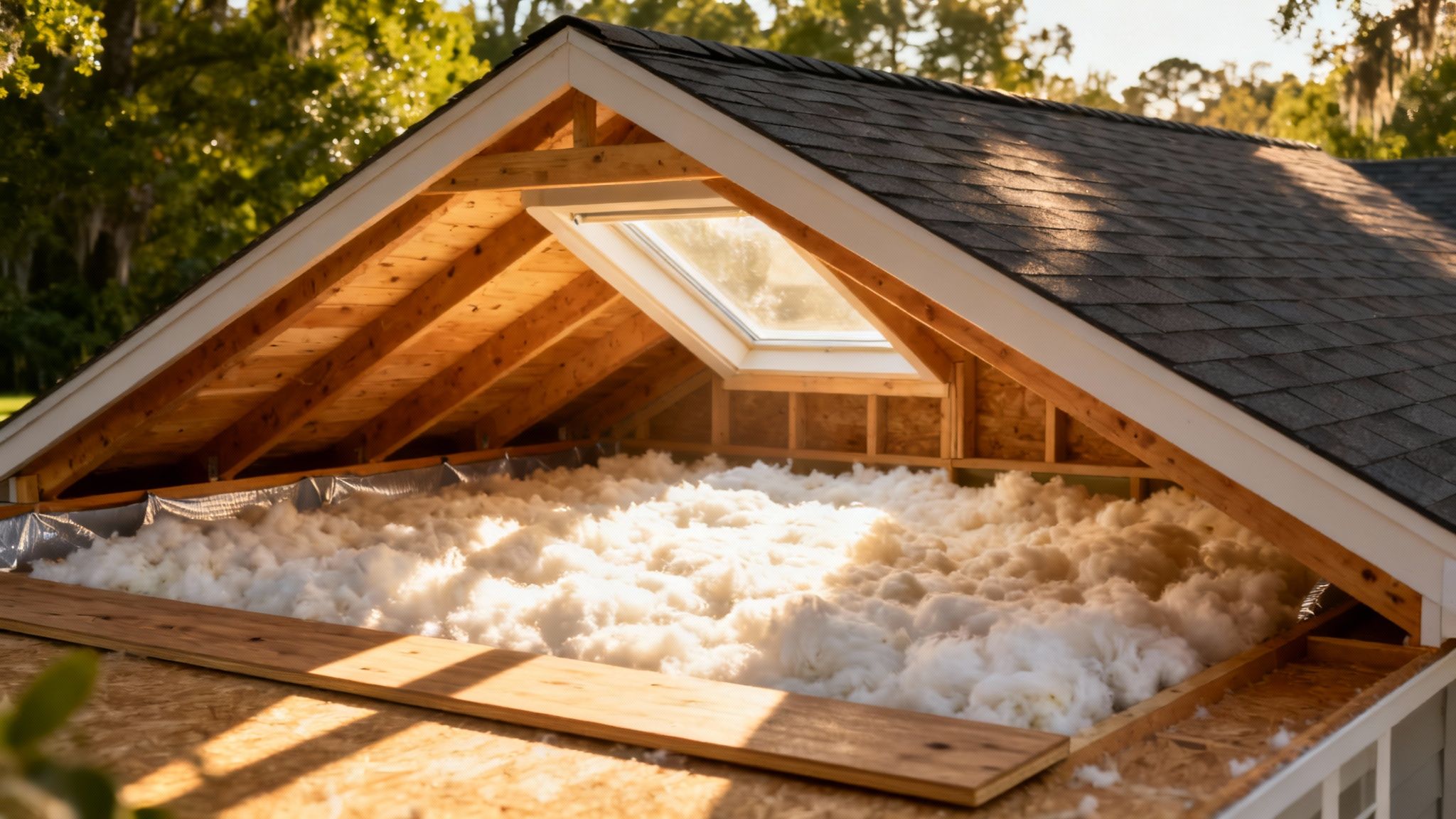
Proper roof insulation is your home’s first line of defense against the elements. It acts as a powerful thermal barrier, dramatically cutting down on heat transfer between your house and the great outdoors. Here in Alabama, that means keeping your cool, conditioned air right where you want it during those sweltering summers and holding onto precious warmth on chilly winter nights. The result? Major energy savings.
Why Roof Insulation Is a Game Changer for Alabama Homes
In Alabama, where summer temperatures soar and the humidity is relentless, an under-insulated roof lets intense solar heat bake your attic and radiate down into your living space. This forces your air conditioner to work overtime, fighting a losing battle to keep things comfortable. Then, during those surprisingly cold winter nights, a poorly insulated roof allows the heat you’re paying for to escape straight into the sky.
The Science of a Comfortable Home
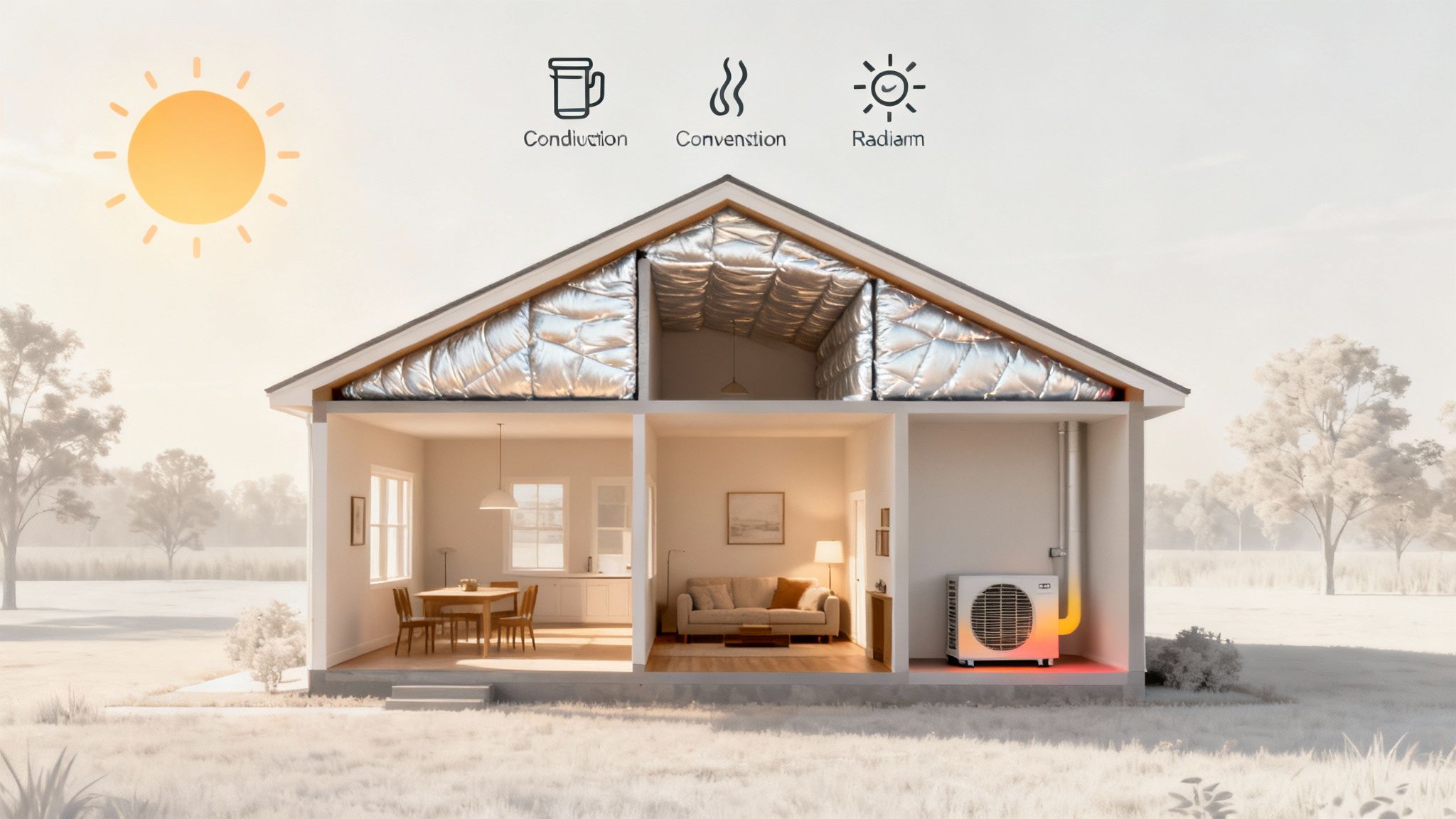
Effective roof insulation is designed to combat the three ways heat transfer sends your energy bills climbing:- Conduction: This is heat moving through solid objects, like how a metal spoon gets hot in a cup of coffee. Insulation materials are filled with tiny pockets of trapped air that slow this process to a crawl.
- Convection: This is heat moving through the air. In your attic, hot air naturally rises. Without good insulation, this cycle can easily transfer heat between your attic and your living areas.
- Radiation: This is heat traveling through space, which is how the sun warms the earth. Radiant barriers, often paired with other insulation types, act like a mirror to reflect this heat away from your home.
A properly insulated attic can save homeowners an average of 15% on heating and cooling costs. This makes upgrading your roof and attic insulation one of the smartest, most effective energy-saving moves you can make.
More Than Just Savings
Beyond the big drop in your energy bills, investing in proper roof insulation brings a host of other benefits for Alabama homeowners. It creates a far more stable and comfortable indoor environment year-round, getting rid of those frustrating hot spots in summer and chilly drafts in winter.This stability also eases the daily strain on your HVAC system, which can extend its lifespan and help you avoid costly repairs down the road. While insulation is a huge piece of the puzzle, a holistic approach is always best; you can explore other practical home energy efficiency tips to see how everything works together. When you upgrade, you’re not just cutting costs—you’re making a real investment in your home’s comfort, durability, and long-term value.
Choosing Your Roof Insulation Strategy
When you're thinking about insulating your roof, there are really two main game plans. The path you choose will completely change how your attic works and feels, and how it connects with the rest of your home. Getting a handle on this core difference is the first step toward making the right call for your property.The first strategy is insulating the attic floor. Think of this like putting a thick, warm blanket on the ceiling of your top floor. This approach separates your living space from the attic, turning the attic into an unconditioned buffer zone that gets as hot or cold as the outside air.
The second strategy involves insulating the underside of the roof deck. This is more like putting a thermal helmet on your entire house. With this method, the attic becomes part of your home’s “conditioned” space, keeping it much closer to the comfortable temperature you have in the rooms below.
Attic Floor Insulation: The Traditional Approach
Insulating the attic floor has long been the go-to method. It's often the most straightforward and budget-friendly option, especially for older homes. This is a great choice if your attic is just for storing Christmas decorations and you don't have any important equipment up there.The goal is simple: stop the heat from your living areas from escaping into the attic in the winter, and block the scorching attic heat from radiating down in the summer. Materials like fiberglass batts or blown-in cellulose are common here, as they can be easily laid between the floor joists to create a clear thermal line right above your head.
But there’s a major catch. If your HVAC unit or ductwork lives in the attic, this method leaves it out in the cold (or blistering heat). Your expensive heating and cooling system ends up working in an extreme environment—a brutal oven in July and an icebox in January. This forces it to work way harder, spiking your energy bills and causing it to wear out faster.
Roof-Deck Insulation: The Modern Solution
Applying insulation directly to the underside of the roof deck is a more modern strategy that creates what we call a conditioned attic. If you have any HVAC equipment, ductwork, or even plumbing running through your attic, this is hands-down the better choice.By insulating the roof deck, you bring all that critical equipment inside your home’s thermal envelope. Your furnace and air handler no longer have to battle extreme temperatures, so they run far more efficiently. This approach also protects pipes from freezing during a cold snap and can turn your attic into a clean, usable storage space.
Spray foam is the MVP for this job because it acts as both a thermal barrier and an air seal all at once. That airtight seal is incredibly effective at stopping energy loss. It’s a big reason why the market for these high-performance systems is booming—growing from USD 11.26 billion to a projected USD 15.58 billion by 2030.
For homeowners looking to really maximize their home’s efficiency, this method can be paired with other protective layers. Understanding how reflective Alabama roof coatings work alongside high-performance insulation gives you another powerful tool against that intense summer sun.
To help you see the differences at a glance, we’ve put together a simple comparison.
Attic Floor vs. Roof-Deck Insulation Comparison
| Feature | Attic Floor Insulation | Roof-Deck Insulation |
|---|---|---|
| Location of Barrier | On the floor of the attic | On the underside of the roof sheathing |
| Attic Environment | Unconditioned (hot in summer, cold in winter) | Conditioned or Semi-Conditioned (closer to home temp) |
| Best For | Homes with no HVAC or ductwork in the attic | Homes with HVAC, ducts, or plumbing in the attic |
| Common Materials | Fiberglass Batts, Blown-In Cellulose, Mineral Wool | Spray Foam Insulation (Open or Closed-Cell) |
| Impact on HVAC | Forces attic-based systems to work in extreme temps | Protects HVAC systems, improving efficiency & lifespan |
| Cost | Generally lower upfront cost | Higher upfront cost, but greater long-term savings |
| Attic Usability | Limited to storing items tolerant of temperature swings | Creates a clean, temperate space for storage/other uses |
| Air Sealing | Requires separate air sealing steps for effectiveness | Spray foam provides an air seal as part of application |
Decoding R-Values and Insulation Materials
A higher R-value means more heat-blocking power. It’s the difference between wearing a thin t-shirt and a thick winter coat on a chilly day. That coat has a much higher “R-value” and does a way better job of keeping your body heat from escaping.
For your home, this resistance is what keeps that brutal Alabama summer heat out of your living space and holds onto the warmth you’re paying for in the winter. The R-value isn’t just about the material itself; thickness plays a huge role. If you double the thickness of an insulation type, you’ll roughly double its total R-value.
Alabama’s R-Value Recommendations
So, how much insulation do you actually need? Your climate is the biggest factor, and experts like ENERGY STAR have already done the homework for us.For our warm, humid climate here in Central Alabama, the target for an uninsulated attic is anywhere between R38 and R60. That level of thermal resistance creates a powerful shield against our local weather, leading to serious energy savings and a massive improvement in year-round comfort.
What if you already have some insulation? The recommendation is to add R38 on top of whatever is already there. It's a cost-effective way to get your attic up to the performance level needed for our climate.Knowing this target gives you a clear goal. The next step is picking the right material to get you there.
Common Insulation Materials
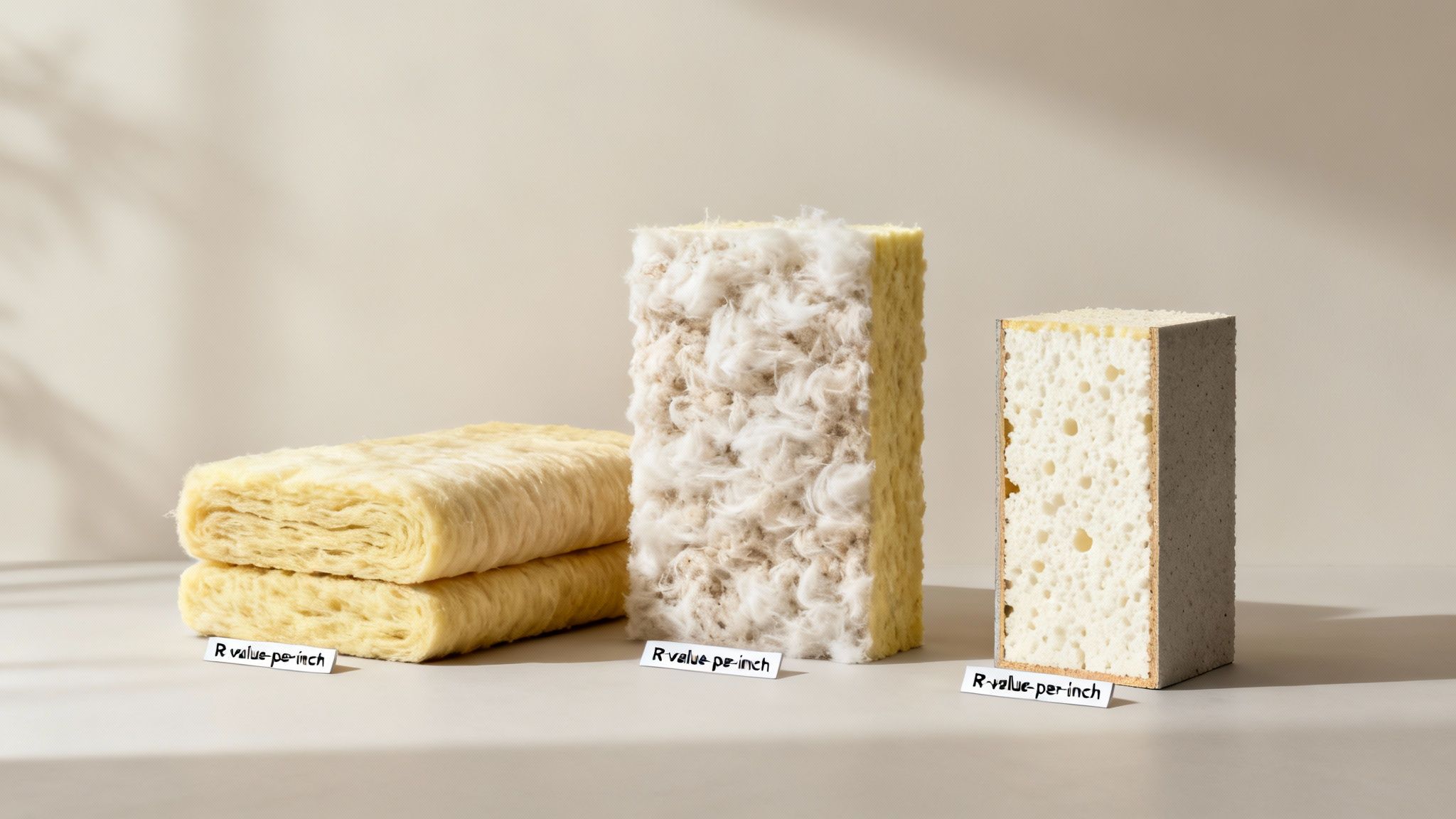
You have options, but most homes use one of three main types of insulation. Each one has its own set of pros and cons when it comes to performance, how it's installed, and what it costs.- Fiberglass Batts: These are the classic pink or yellow rolls of insulation you see at the hardware store. They're made from fine glass fibers and come in pre-cut blankets designed to fit between standard attic joists.
- Blown-In Cellulose or Fiberglass: This is a loose-fill material, made from either recycled paper (cellulose) or glass fibers, that gets blown into the attic with a special hose. It’s fantastic for filling in odd-shaped spaces around pipes and wiring, and it's perfect for adding a fresh layer over old insulation.
- Spray Foam Insulation: This is a liquid chemical that’s sprayed onto a surface, where it expands and hardens into a rigid foam. Spray foam is the undisputed champion of air sealing—it creates a seamless, airtight barrier that stops both heat transfer and air leaks in their tracks.
Comparing Your Options
Picking the right material isn't just about the R-value; it's about what makes the most sense for your home and your budget. The performance of each material is often measured by its R-value per inch of thickness.Let’s see how they stack up.
| Insulation Type | R-Value per Inch (Approx.) | Best Use Cases | Key Advantages |
|---|---|---|---|
| Fiberglass Batts | R-2.9 to R-3.8 | DIY projects, standard joist spacing, new construction. | Affordable, easy to find, manageable for homeowners in open areas. |
| Blown-In | R-3.2 to R-3.8 | Adding over existing layers, filling irregular spaces. | Cost-effective, fills gaps well, installed quickly by professionals. |
| Spray Foam | R-3.5 to R-7.0+ | Roof-deck insulation, stopping air leaks, complex roof designs. | Unbeatable air sealing, high R-value, adds structural strength, acts as a moisture barrier. |
Blown-in cellulose or fiberglass, on the other hand, offers a great balance of performance and value. It’s the go-to solution for bringing an under-insulated attic up to code because it easily fills every nook and cranny without having to disturb the old insulation.
Fiberglass batts are still a solid, budget-friendly option for simple jobs, but they can leave small gaps if they aren’t cut and fitted perfectly. With this knowledge, you can now look at an insulation product or a contractor’s proposal and understand exactly what they’re offering, empowering you to make the best decision for your Alabama home.
The Critical Role of Ventilation and Moisture Control
When you add a nice, thick layer of insulation, you’re slowing down heat transfer—which is great. But if you don’t give the air a way to move, you end up trapping warm, moist air inside the attic. That’s a recipe for disaster. Before you know it, you’ve got condensation, which can lead to mold, mildew, and even wood rot.
Getting this partnership right is a big reason the global roof insulation market is growing, expected to climb from USD 10.63 billion to USD 10.89 billion. Homeowners are realizing you need a complete system. You can explore the full roof insulation market report for more on that trend. The bottom line is, a great insulation job keeps your home comfortable without accidentally creating a moisture problem overhead.
How a Vented Attic Breathes
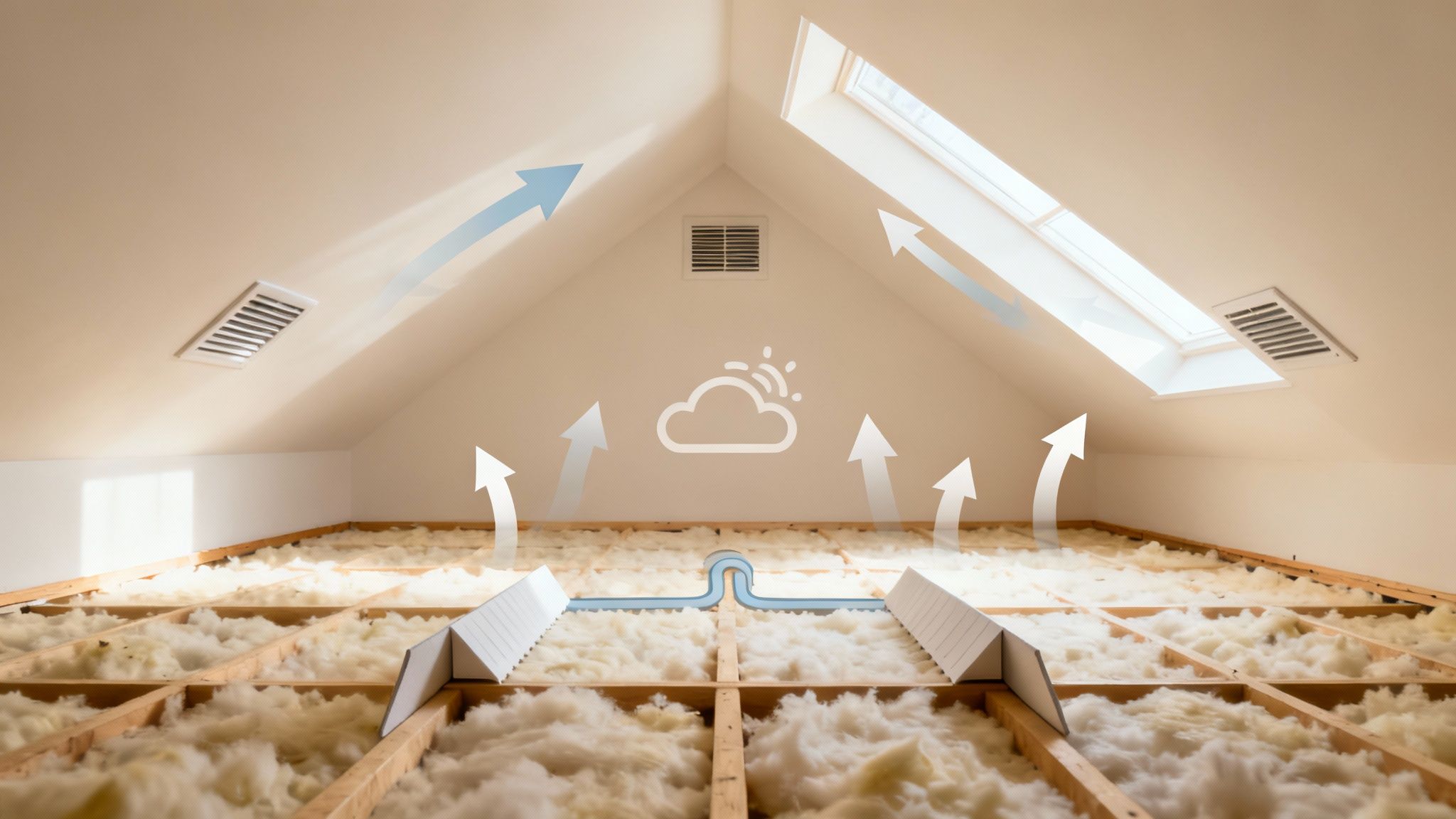
For most homes with traditional attic insulation on the floor, ventilation is the key to managing moisture. A properly designed system creates a steady, gentle airflow that pulls fresh air in and pushes stale, damp air out.It’s a simple but effective process that relies on two key parts:
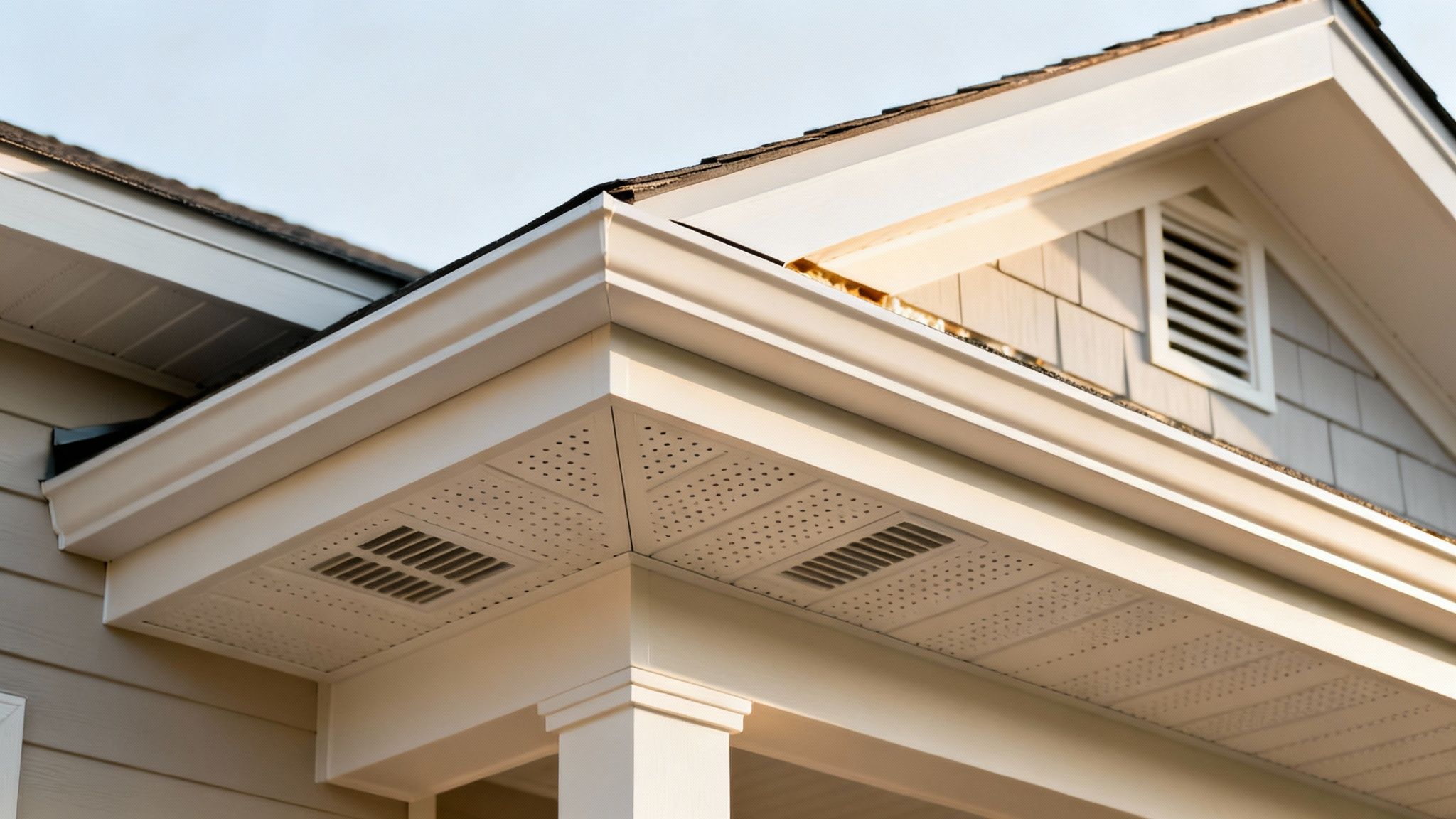
- Soffit Vents: These are your "intake" vents, located under the eaves. They draw in cooler, drier air from outside.
- Ridge Vents: Running along the very peak of your roof, these act as the "exhaust." Since hot air rises, they let the warmest, most humid air escape.
Keeping the Airway Clear
For this system to work, the path for air to flow has to stay wide open. That's where baffles come in. You might also hear them called attic vents or rafter vents.Baffles are just simple channels, usually made of cardboard or plastic, that we install between the rafters right where the soffit vents are. They create a dedicated tunnel for air, stopping your insulation from sliding down and clogging the intake. Without them, your soffit vents could get completely blocked, suffocating the attic and trapping every bit of moisture.
Trapped moisture doesn't just damage your attic; it can also saturate your insulation, drastically reducing its R-value and making it ineffective. A damp attic is an inefficient attic.
What About Unvented Attics and Spray Foam?
So, what if you use spray foam to insulate the underside of the roof deck instead of the attic floor? This changes the game completely. Now you have what's called an unvented attic.With this setup, the insulation itself becomes the barrier against both air and moisture. Closed-cell spray foam is impermeable, so it completely seals the attic off from the outside. You don’t need soffit or ridge vents because there’s no air to circulate. The attic basically becomes a conditioned part of your home, just like a bedroom or hallway.
This is a fantastic approach, but the application has to be perfect. Any little gap can compromise the entire system. That’s why if you have a spray-foamed attic, it’s smart to have it checked periodically. Professional roof inspections can identify potential issues with moisture or ventilation before they turn into major headaches.
Calculating Your Costs and Return on Investment
Let's talk numbers. Putting the right insulation in your roof isn't just another home expense; it's a smart financial move. While there’s an upfront cost, the real win is the return on investment you'll see from lower energy bills and a more valuable home.The first step is figuring out what the project might cost. The price tag can swing based on your attic’s size, the materials you pick, and how complex the job is. To get a handle on your specific situation, a good online tool can be a game-changer. You can get a personalized estimate with our Alabama roofing cost calculator to see what your home needs.
Breaking Down the Numbers
Here in Central Alabama, professional installation costs are pretty predictable. Blown-in cellulose or fiberglass is usually the most wallet-friendly route, while high-performance spray foam is a bigger investment upfront because it's so good at sealing up air leaks.- Blown-In Cellulose/Fiberglass: You can expect to invest around $1.50 to $3.50 per square foot. This is a great choice for beefing up existing insulation to meet today's standards.
- Spray Foam Insulation: This premium option typically runs between $4.00 and $7.00 per square foot. The higher cost reflects that it does double duty as both a top-tier insulator and an air barrier.
From Cost to Investment
Now for the fun part: what you get back. Upgrading your attic insulation is one of the absolute best energy-saving improvements you can make for your home.ENERGY STAR reports that homeowners can save an average of 15% on heating and cooling costs just by air sealing their homes and adding the right amount of insulation.For a typical family in Alabama, that adds up to hundreds of dollars saved every single year. The initial cost often pays for itself in just a few years. After that, the savings are pure profit, going right back into your pocket.
Below is a quick look at what you can expect in terms of costs and savings for common insulation projects in our area.
Estimated Roof Insulation Costs and Savings in Central Alabama
| Insulation Type | Average Cost per Sq. Ft. | Recommended R-Value | Estimated Annual Savings |
|---|---|---|---|
| Blown-In Fiberglass | $1.50 - $3.00 | R-38 to R-49 | $200 - $450 |
| Blown-In Cellulose | $1.75 - $3.50 | R-38 to R-49 | $250 - $500 |
| Spray Foam (Open-Cell) | $4.00 - $6.00 | R-38 to R-49 | $400 - $600+ |
| Spray Foam (Closed-Cell) | $5.00 - $7.00 | R-38 to R-49 | $450 - $650+ |
Finding Rebates and Tax Credits
To make the upfront cost even easier to swallow, there are often incentives out there to help. The federal government frequently offers tax credits for energy-efficient home upgrades, and insulation is almost always on that list.Don’t forget to check with your local utility company, too. Many power companies in Alabama offer rebates to homeowners who improve their insulation. It’s a fantastic way to save money twice—once on the installation itself, and again on every energy bill from here on out.
Finding the Right Professional for Your Project
While some home projects are perfect for a weekend of DIY, roof insulation usually isn’t one of them. This is a technical job that directly impacts your home’s energy performance and structural health. It can be tempting to tackle it yourself, but a few red flags are clear signals that it’s time to call in a professional.
If you spot signs of existing moisture, like water stains on the ceiling or damp insulation, that’s a dead giveaway of a deeper issue that needs an expert eye. A complex attic with lots of obstacles, low clearance, or a maze of HVAC ductwork also makes the job much tougher and riskier. These situations require specialized equipment and know-how to get right.
Why Partnering With a Professional Pays Off
Hiring a certified professional isn't just about convenience; it’s about making sure you get a high-quality result that lasts. At Higher Roof Solutions, we bring a specialized process to every project in Central Alabama, ensuring you get the most out of your investment.Our approach includes:
- A Thorough Home Assessment: We don’t just measure your attic. We hunt for air leaks, check for ventilation problems, and identify any moisture issues to design a complete solution that actually works.
- Customized Material Recommendations: Based on your home’s specific needs and your budget, we’ll recommend the right materials—whether that’s blowing in more cellulose to top off what you have or using high-performance spray foam for a conditioned attic.
- Code-Compliant Installation: We make sure every part of the job meets local building codes, from R-value requirements to ventilation standards. This protects your home’s safety and its value.
A professional installation prevents costly mistakes. Things like blocked vents or improper air sealing can completely wipe out your energy savings and lead to serious moisture damage down the road. Peace of mind comes standard.
Take the Next Step with Higher Roof Solutions
Investing in professional roof insulation is an investment in your home's comfort, efficiency, and future. You get the assurance of a job done correctly, backed by a warranty that protects you for years. Our team has the local experience to handle the unique challenges of Alabama’s climate, delivering results that lower your bills and make your home a more comfortable place to live.Ready to stop wasting energy and start saving money? The first step is a professional evaluation to figure out exactly what your home needs. Schedule your free, no-obligation inspection with Higher Roof Solutions today and let our experts show you how proper insulation can transform your home. We’re here to be your trusted partner in creating a more comfortable and efficient living space.
Still Have a Few Questions? We’ve Got Answers.
Even after you've got the basics down, it’s completely normal to have more specific questions pop up. Getting straight answers helps you move forward with confidence, knowing exactly what to expect.We’ve pulled together some of the most common questions we hear from homeowners right here in Alabama. Let’s clear up any lingering doubts you might have.
How Long Does Roof Insulation Actually Last?
One of the best things about modern insulation is that it’s built to last. For the most part, these materials are designed to perform for the life of your home, but how long they really last can vary.- Fiberglass and Cellulose: If they stay dry and fluffy, you can expect these to last 80 to 100 years. The big "if" is moisture and compression—if they get wet or packed down, their performance takes a nosedive.
- Spray Foam: When it's applied correctly, spray foam is in it for the long haul. It's a rigid, permanent solution that can last for the lifetime of the building without losing its R-value.
Will New Insulation Make My Home Quieter?
Yes, it absolutely will. While insulation's main job is to stop heat from moving, it’s also fantastic at dampening sound. The same pockets of air that trap heat also absorb sound waves, which means you'll notice a real difference in outside noise.A lot of homeowners are genuinely surprised by how much quieter their house is after we’re done. It can seriously muffle the sound of a classic Alabama downpour, traffic, and other neighborhood noise, making your home a lot more peaceful.How much quieter it gets depends on the material. Denser stuff like cellulose and closed-cell spray foam are especially good at soundproofing, adding another layer of comfort to your home. Proper insulation of roofs is about more than just your power bill; it’s about improving your quality of life.
How Long Does the Installation Take?
For a professional crew, attic insulation is a surprisingly quick job. The exact timeline really depends on the size of your attic, the material we're using, and how much prep is needed—like air sealing or removing old, matted-down insulation.Most of our residential attic projects are wrapped up in just one day. Blown-in insulation is particularly fast, since our equipment lets us cover the entire attic floor quickly and evenly. Spray foam might take a little longer because of the prep and curing time, but it’s still a very efficient process. Our team at Higher Roof Solutions will always give you a clear timeline before we start, so you’ll know exactly what’s happening and when.
Ready to get real answers for your home? The experts at Higher Roof Solutions are here to walk you through every step of your roof insulation project. Schedule your free inspection and get a no-obligation estimate today!