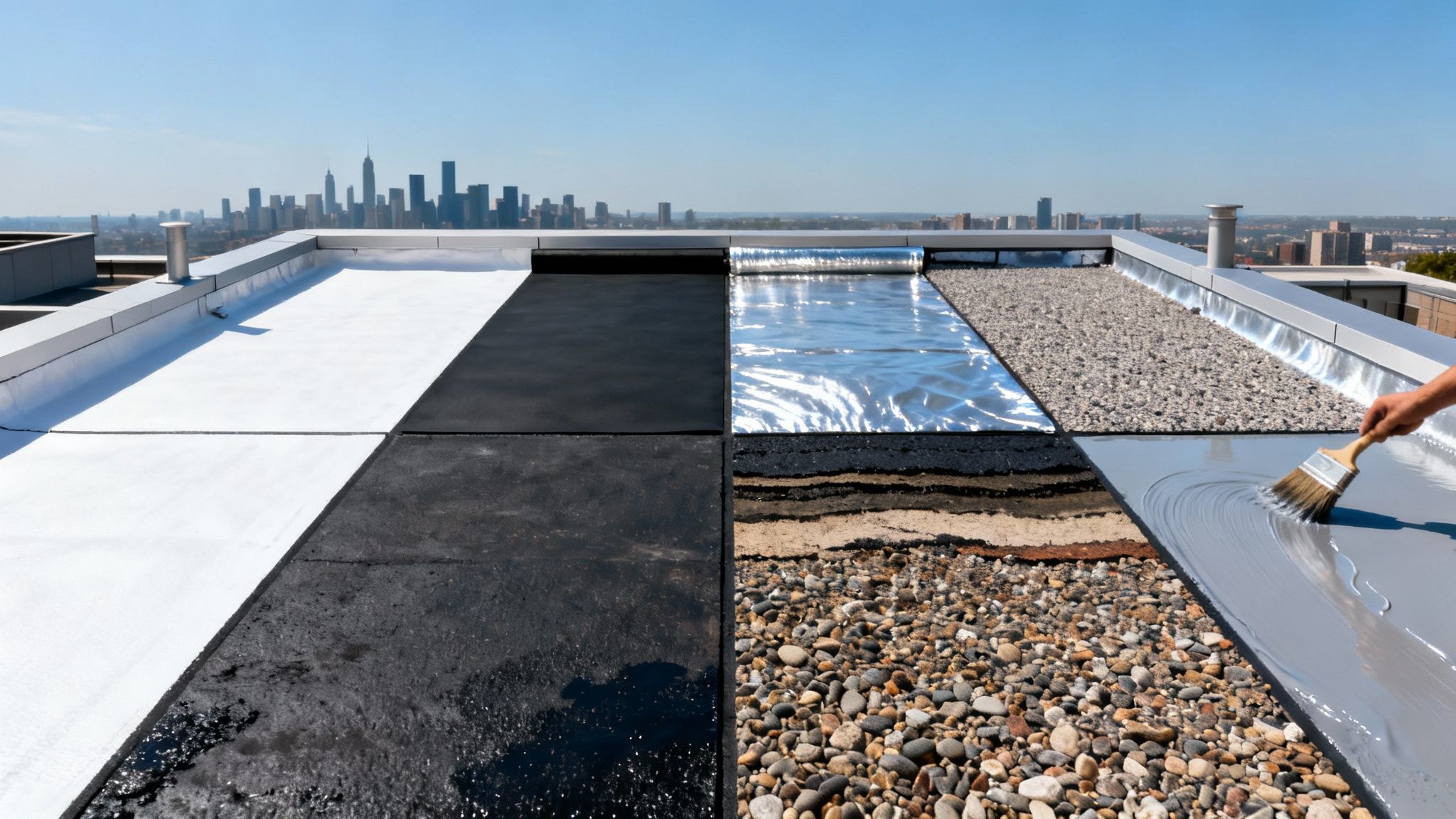
When it comes to picking a flat roof roofing material, you’re really trying to strike the perfect balance between durability, cost, and how well it stands up to our Alabama climate. Your best bets usually fall into a few key categories: modern single-ply membranes like TPO and EPDM, classic asphalt systems such as Modified Bitumen, and innovative liquid-applied coatings. Each one brings something different to the table, depending on what your building needs.
Your Guide to Selecting the Right Flat Roof Material
Diving into the world of flat roof materials can feel like a lot to take in, but the main idea is pretty simple: find the perfect match for your building's unique situation. This guide is designed to cut through the noise and give you clear, straightforward advice. We'll walk through the main players on the market, explaining why the "best" material is always the one that lines up with your local climate, budget, and what you expect from it long-term.This isn’t just a list of products; it’s a game plan for making a smart investment. Think of it like choosing the right tires for your car. You wouldn’t put racing slicks on a truck you take off-road, and the same logic applies here. A sun-baked commercial roof in Birmingham has totally different needs than a residential garage roof.
A Growing Market for Smart Solutions
The need for solid flat roofing is on the rise, thanks to all the new construction and city growth happening. The global market for these systems was valued at a huge USD 59.19 billion and is expected to hit USD 111.44 billion by 2035. That kind of growth shows just how important it is to choose a system that's built to last. You can get more details about these trends from marketresearchfuture.com's flat roofing systems report.To get you started, we put together a quick comparison table below. It lays out the key differences between the most common choices you’ll encounter.
To help you get your bearings right away, we’ve put together a quick comparison table. It breaks down the essentials for the most common materials you’ll be looking at.
Flat Roof Material At-a-Glance Comparison
| Material | Average Lifespan | Estimated Cost/Sq. Ft. | Energy Efficiency | Best For |
|---|---|---|---|---|
| TPO | 15-25 Years | $6 - $13 | High (White/Light Colors) | Commercial buildings, energy savings in sunny climates. |
| EPDM | 20-30+ Years | $5 - $12 | Low (Black), Moderate (White) | Extreme temperature fluctuations and UV resistance. |
| PVC | 20-30 Years | $7 - $14 | High (White/Light Colors) | Restaurants and industrial facilities due to chemical/grease resistance. |
| Modified Bitumen | 15-25 Years | $5 - $10 | Low to Moderate | High foot traffic areas and puncture resistance. |
| BUR (Built-Up) | 20-30 Years | $6 - $12 | Low | Durability, puncture resistance, and multi-layer protection. |
Understanding Single-Ply Membrane Roofing
If you're looking into flat roof options, you'll hear the term "single-ply membrane" a lot. What does that mean? Think of it like a giant, high-tech, waterproof blanket custom-fit for your roof. These materials come in large rolls, and we install them as a single, seamless layer over the entire surface.The biggest advantage here is the reduction of seams. Seams are almost always the weak point where leaks start. By creating one continuous sheet, we eliminate most of those potential trouble spots right from the start. It’s a far cry from the old days of layering hot tar and gravel—this is a modern, lightweight, and incredibly effective way to protect your building.
Let’s break down the three main players in the single-ply world: TPO, EPDM, and PVC.
TPO: The Modern Workhorse
TPO (Thermoplastic Olefin) has quickly become one of the most popular flat roofing materials out there, and for good reason—especially here in Alabama. Imagine a roof that actively helps lower your power bill. That's exactly what TPO does.Its standard white surface is highly reflective, bouncing the sun’s harsh rays back into the sky instead of letting your building absorb them as heat. This “cool roof” effect means your air conditioning doesn’t have to work nearly as hard. On top of that, we fuse the seams together with a hot-air welder, creating a single, rock-solid membrane that is incredibly leak-resistant.
Benefits of TPO Roofing:
- Energy Efficiency: That solar reflectivity is no gimmick. It can seriously lower your cooling costs, which is great for your budget and the environment.
- Durable Seams: Heat-welded seams are far superior to glued or taped alternatives. They are physically bonded, offering the best possible protection against water.
- Puncture Resistance: TPO holds up well against foot traffic during maintenance or debris from a storm.
EPDM: The Time-Tested Rubber Roof
EPDM (Ethylene Propylene Diene Monomer) is the seasoned veteran of the group. At its core, it’s a synthetic rubber roof, and it has been proving its worth for decades. Its standout quality is its incredible flexibility. It expands and contracts with our wild temperature swings without cracking or becoming brittle.While it traditionally comes in black (which is great for melting snow but not so much for our summers), EPDM is now available in a more reflective white. It’s also naturally resistant to UV degradation, so it won’t break down under the relentless Alabama sun.
EPDM's longevity is where it truly shines. When installed and maintained correctly, an EPDM roof can easily last 20 to 30 years or even longer, making it an excellent long-term investment.Its seams are usually sealed with specialized adhesives and tapes. While very effective, these seams aren't quite as robust as welded ones and need to be inspected regularly to ensure they maintain their waterproof seal over the decades.
PVC: The Premium Defender
If TPO is the workhorse and EPDM is the veteran, then PVC (Polyvinyl Chloride) is the heavyweight champion. This is the premium, ultra-tough option in the single-ply family. PVC membranes are reinforced with a fiberglass or polyester mat, which gives them phenomenal strength and stability.This internal reinforcement makes PVC exceptionally resistant to punctures, fire, and even chemical exposure. For this reason, it’s the go-to material for restaurants with greasy exhaust vents, manufacturing plants, or any building where maximum durability is non-negotiable.
Comparing the Big Three Membranes
| Feature | TPO (Thermoplastic Olefin) | EPDM (Ethylene Propylene Diene Monomer) | PVC (Polyvinyl Chloride) |
|---|---|---|---|
| Primary Advantage | Energy Efficiency & Welded Seams | Flexibility & UV Resistance | Chemical & Fire Resistance |
| Lifespan | 15-25 Years | 20-30+ Years | 20-30 Years |
| Seam Technology | Heat-Welded | Adhesives/Tapes | Heat-Welded |
| Best For | Commercial buildings in sunny climates | Climates with temperature swings | Restaurants, industrial facilities |
Asphalt Roofing Systems: The Original Heavyweights
While modern single-ply membranes get a lot of attention, the old-school asphalt-based systems are still the undisputed titans of durability in the flat roofing world. These aren't just single sheets of material; they're more like fortified structures built layer by layer right on top of your building, renowned for their incredible toughness.These traditional options have been battle-tested and refined for decades, offering proven, reliable performance. When puncture resistance and sheer, brute-force durability are what matter most, these are the systems you turn to.
Built-Up Roofing (BUR): The Classic "Tar and Gravel"
You've definitely seen a Built-Up Roofing (BUR) system before—it's the classic "tar and gravel" roof found on countless commercial buildings. Its incredible strength comes from the way it's built. Think of it like making a layer cake: we alternate layers of hot liquid asphalt (bitumen) with plies of reinforcing fabric.This process creates a thick, seamless slab with multiple, redundant layers of waterproofing. If one layer somehow gets damaged, there are several more underneath ready to pick up the slack. It’s this multi-ply design that makes BUR one of the toughest flat roof materials out there.
That top layer of gravel isn't just for show. It acts as a shield, providing excellent fire resistance and protecting the asphalt layers from the sun's harsh UV rays and physical damage, which is key to making the roof last.The main tradeoff for all that toughness? BUR installation can be a messy, labor-intensive job that involves hot asphalt kettles. The finished system is also extremely heavy, so we have to ensure the building's structure can handle the load.
Modified Bitumen: A Modern Twist on a Classic
Modified Bitumen (Mod-Bit) is the direct descendant of BUR. It was engineered to deliver that same legendary durability but with more flexibility and a much simpler installation process. It’s like taking the core ingredient of BUR—asphalt—and upgrading it with modern polymer technology.Manufacturers infuse the asphalt with rubber or plastic polymers, which makes the material behave more like a flexible, single-ply membrane. This “modified” asphalt is then factory-produced in large, convenient rolls. This makes the installation process much faster and safer than the old hot-mop methods used for traditional BUR.
Why Building Owners Like Modified Bitumen:
- Built-in Flexibility: Those polymers allow the roof to expand and contract as temperatures swing from hot to cold, preventing cracks.
- Serious Tear Resistance: This material is exceptionally tough, easily handling foot traffic and impacts from falling debris.
- Versatile Installation: Mod-Bit can be installed in a few different ways—torched down, set in cold-applied adhesives, or even self-adhered—giving us options for almost any project.
Asphalt Systems: Which One Is Right for You?
So, how do you choose? A Built-Up Roof is often the go-to for projects where you absolutely cannot compromise on puncture resistance and want a system with a long, proven history. That multi-ply redundancy provides a ton of peace of mind.Modified Bitumen, on the other hand, strikes a more modern balance. It gives you most of the toughness of BUR but with far better flexibility to handle building movement and thermal shock. Because it comes in rolls and has more installation options, it’s often a more versatile and cost-effective choice. With proper maintenance, both systems can be expected to last 15 to 25 years.
The Power of Liquid-Applied Roofing and Coatings
Think about being able to paint a brand-new, waterproof skin directly onto your roof. That’s the simple idea behind liquid-applied roofing, a modern solution that creates one solid, seamless barrier against the elements. Because there are no seams, you eliminate the single most common failure point where leaks start.This isn’t just one product, but a whole category of advanced coatings designed to solve specific problems. It’s a game-changer because it perfectly conforms to every single pipe, vent, and awkward angle on your roof, giving you a truly custom-fit layer of protection. We can use it to completely restore an aging roof, saving a ton on replacement costs, or as the primary system on a new build.
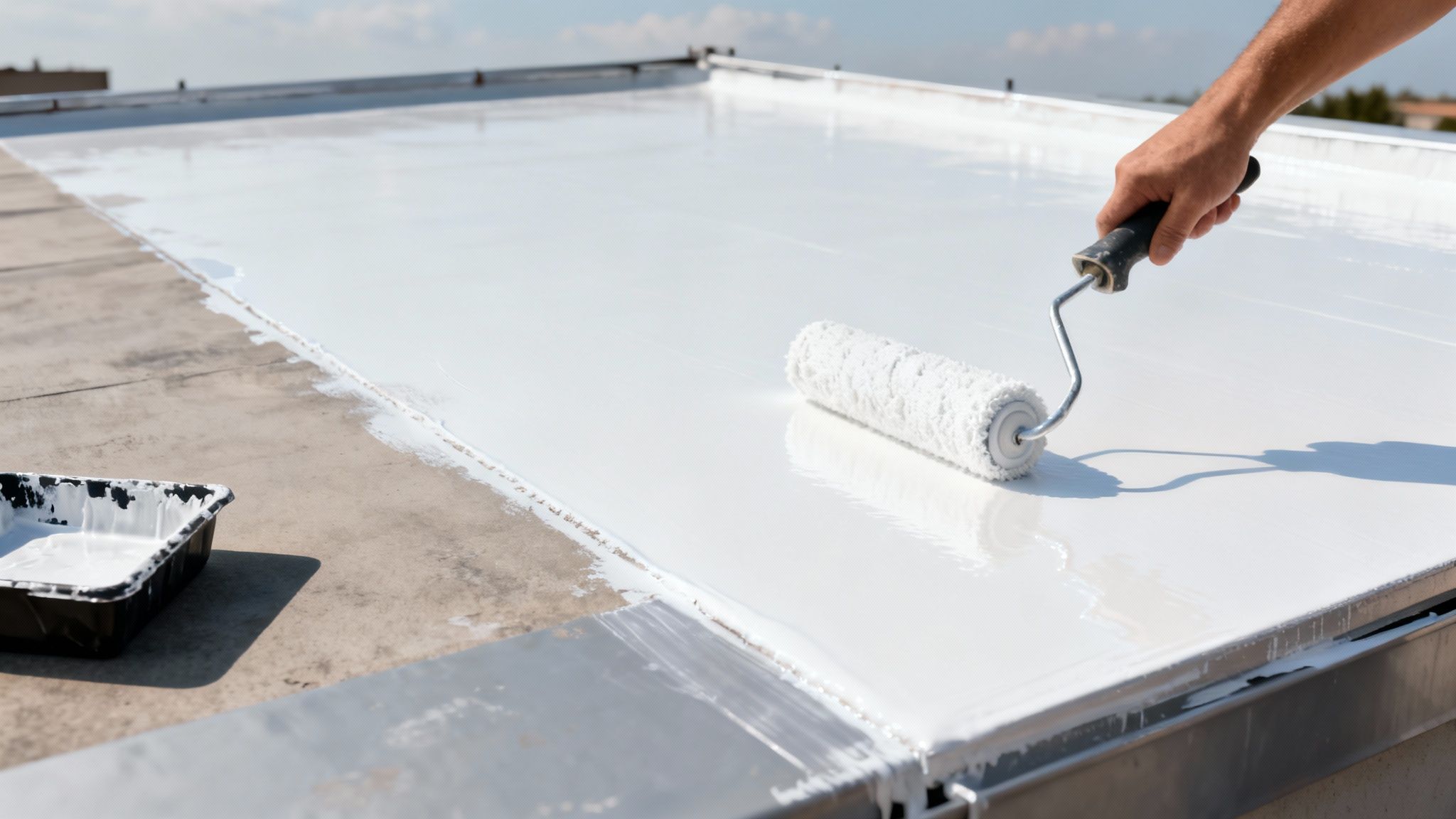
Key Types of Roof Coatings
While there are many options out there, two types of liquid-applied coatings really stand out in the commercial roofing world for their track record and reliability. Each one brings something different to the table, depending on what your building needs most.- Silicone Coatings: If you need bulletproof water resistance, silicone is your answer. It's like a permanent, heavy-duty raincoat for your building that can stand up to ponding water without breaking down—a huge problem for many flat roofs. Silicone is also incredibly stable against UV rays, so it won’t get brittle or chalky under that intense Alabama sun.
- Acrylic Coatings: These coatings are all about reflectivity. As a water-based product, they are typically bright white and are a key part of what we call "cool roof" technology. They do an amazing job of bouncing the sun’s heat away from your building, which can make a real difference in rooftop temperatures and lower your AC bills during our long, hot summers.
By forming a single, unbroken layer, a liquid-applied flat roof roofing material addresses the number one cause of roof failure which is faulty seams. This seamless protection is especially valuable around complex roof penetrations like HVAC units, vents, and skylights.
When to Use a Liquid-Applied System
Knowing the right time to use a roof coating is the key to getting the most bang for your buck. They really shine in two main scenarios.1. A Restorative Solution This is where we see coatings used most often. Let’s say your existing TPO, EPDM, or even metal roof is getting old but is still in decent shape structurally. A restorative coating can be a fantastic move. Instead of a messy, expensive, and disruptive tear-off, we can apply a liquid membrane right over the existing surface. This simple process seals up minor cracks, shores up the seams, and can add 5-15 years of life to your roof.
2. A Complete Roofing System For new buildings or when a full roof replacement is necessary, a liquid-applied system can serve as the primary roof itself. In these cases, it’s typically applied in multiple layers, sometimes with a reinforcing fabric embedded between them. The result is an incredibly durable, flexible, and completely seamless flat roof roofing material built from the ground up.
Whether we’re bringing an old roof back to life or building a new one from scratch, this technology offers a versatile, high-performance alternative to traditional roofing. It’s a customized, leak-proof solution that’s tough to beat.
How to Select the Right Roofing for Your Building
Now that you have a solid grasp of the different materials out there, let's translate that knowledge into the right decision for your property. Choosing a flat roof isn’t about picking the most popular or expensive option off a list. It's a strategic move, and getting it right means the difference between a roof that performs for decades and one that becomes a constant headache.Think of it as playing detective for your own building. We need to look at the evidence—the climate, how you use the space, and your budget—to pinpoint the perfect solution. A one-size-fits-all approach just doesn’t cut it for an investment this important.
Your Local Climate Matters Most
First things first: your roof has to stand up to the unique weather challenges we see right here in Birmingham, Alabama. Our climate throws everything at a roof, from blistering summer sun and sticky humidity to intense thunderstorms and the occasional hailstorm.- Intense Sun and UV Rays: Materials with high solar reflectivity, like a white TPO, PVC, or a specialized acrylic coating, are a must. They act like a massive shield, bouncing the sun's heat away from your building, which can dramatically lower your cooling bills. In contrast, dark materials like black EPDM or old-school BUR just soak up that heat, making your HVAC system work overtime.
- Heavy Rain and Humidity: A roof's ability to shed water is non-negotiable in our climate. Systems with heat-welded seams (found on TPO and PVC) or seamless liquid-applied coatings offer the absolute best defense against leaks. These options create a single, monolithic membrane, leaving no gaps for water to sneak in during our notorious downpours.
- Storms and Wind Uplift: How a roof is attached is just as critical as the material itself. We rely on mechanically attached or fully adhered systems to resist the powerful wind uplift that comes with severe storms.
Building Use and Daily Demands
The day-to-day function of your building directly impacts which material will serve you best. A quiet warehouse has entirely different needs than a bustling restaurant.Take that restaurant, for example. Its roof is constantly bombarded with grease and chemicals from the kitchen’s ventilation system. In that scenario, PVC is the clear winner because of its top-tier chemical resistance. A material like EPDM, on the other hand, could break down and fail quickly under those conditions.
Or, if your roof holds heavy HVAC units that require maintenance crews to walk on it regularly, you’ll want something tougher. A material like Modified Bitumen is a smart choice for its excellent puncture resistance.
Choosing a material that can’t handle the specific operational demands of your building is a recipe for premature failure. The goal is to match the material's strengths to your property's real-world environment.
Balancing Budget and Long-Term Value
While the upfront cost is always a consideration, the smartest property owners focus on long-term value. A cheaper material that needs constant repairs or a full replacement in 15 years will ultimately cost you far more than a durable system that lasts 25-30 years with minimal upkeep. A detailed breakdown can help clarify these expenses, and you can learn more about new roof costs in our comprehensive guide.This is also where the nuts and bolts of the installation come into play. Believe it or not, the market for components like flat roof fasteners is projected to hit USD 7.16 billion by 2033. That number tells you just how vital proper installation is for a roof’s longevity.
With flat roofs now accounting for over 74.6% of the commercial roofing market’s revenue, ensuring every single component is expertly installed is more important than ever. Homeowners are also catching on, making quality installation a key differentiator. Making the right choice requires a holistic view, and by carefully thinking through your climate, building use, and long-term budget, you’ll land on a material that delivers decades of protection and peace of mind.
Decision Matrix for Flat Roof Materials
To make this even easier, we've put together a simple decision matrix. Think of this as a quick-glance guide to help you weigh the most critical factors for your Birmingham property and see which materials rise to the top.| Factor | TPO | EPDM | PVC | Modified Bitumen | Coatings |
|---|---|---|---|---|---|
| Birmingham Heat | Excellent (White) | Poor (Black) | Excellent (White) | Fair (Granulated) | Excellent (White) |
| Puncture Resistance | Good | Very Good | Good | Excellent | Fair |
| Leak Resistance | Excellent (Welded) | Good (Seams Taped) | Excellent (Welded) | Good (Torch/Adhesive) | Excellent (Seamless) |
| Chemical Resistance | Fair | Poor | Excellent | Good | Varies by Type |
| Foot Traffic | Good | Good | Good | Excellent | Fair |
| Upfront Cost | $$ | $ | $$$ | $$ | $ |
| Lifespan | 20-30 Years | 25-35 Years | 20-30+ Years | 15-25 Years | 10-20 Years |
Partnering With Your Local Flat Roofing Experts
Picking the right material for your flat roof is a huge step, but it’s only half the job. The other half? Making sure it’s installed with absolute precision by a team that actually understands Birmingham’s unique climate and building codes.
That’s where a true partnership makes all the difference. It’s what turns a good material into a great, long-lasting roof that you don’t have to worry about.
At Higher Roof Solutions, we bring specialized local knowledge to every single project. We’ve installed, repaired, and maintained every system we’ve talked about in this guide, from massive commercial TPO roofs built to fight off the Alabama summer heat to durable modified bitumen systems on residential buildings with heavy foot traffic.
Our expertise isn’t just about knowing the materials. It’s about knowing how to apply them correctly to stand up to our specific weather challenges, year after year.
Why Local Expertise Matters
Choosing the right installation partner is just as critical as choosing the right material. A contractor's hands-on experience is what will ultimately determine your roof's lifespan and performance.We focus on delivering real value through meticulous inspections, transparent quotes, and superior craftsmanship that protects your investment for decades to come. To help you make a smart choice, we’ve laid out the most important things to look for in our guide on how to choose a roofing contractor.
We don’t do one-size-fits-all solutions. Instead, we take the time to really assess your property’s specific needs, talk through your long-term goals, and recommend a flat roofing material that gives you the best mix of performance, longevity, and value.
A high-quality flat roof is more than just membrane and sealant; it’s a complete system where every component works together. From proper insulation and drainage to secure flashing and robust seams, our installations are built to perform flawlessly as a unified whole.Your property deserves a roof built to last. Our commitment is to give you a seamless process and a final product that brings you total peace of mind.
Ready to take the next step toward a secure, reliable roof? Contact Higher Roof Solutions today to schedule your free, no-obligation inspection or request a detailed estimate for your project.
Answering Your Top Flat Roofing Questions
Once you start digging into the different material options, a few key questions always seem to pop up. We get it. Choosing a roof is a big decision, and you want to be sure you're making the right call.Let’s walk through some of the most common questions our team hears every day. Think of this as the practical advice you need to feel confident in your final choice.
What's the Most Energy-Efficient Option?
When it comes to pure energy savings, nothing beats the light-colored single-ply membranes. A white TPO or PVC roof essentially acts like a giant mirror, reflecting the sun's harsh thermal energy away from your building instead of absorbing it.This “cool roof” effect is a game-changer. It can slash rooftop temperatures by a staggering 50–60°F, which directly translates into lower A/C bills during those long, hot Alabama summers. Another great strategy is applying a reflective acrylic or silicone coating to boost the efficiency of an existing flat roof.
Can You Actually Walk on a Flat Roof?
Yes, you can, but how much foot traffic a roof can handle really depends on the material. Some systems are built for it, while others... not so much.Robust materials like Modified Bitumen and multi-ply BUR are designed from the ground up to withstand regular traffic. This makes them perfect for roofs that have HVAC units or other equipment that needs frequent service. You can definitely walk on single-ply membranes like TPO and EPDM for occasional maintenance, but they aren’t meant for heavy, repeated use.
If you know your single-ply roof will see regular foot traffic, we always recommend installing designated walkway pads. These simple additions distribute weight and protect the membrane from punctures and scuffs, preserving the integrity of your roof for the long haul.
How Long Does a Flat Roof Really Last?
This is the big one. A flat roof's lifespan depends on three things: the material you choose, the quality of the installation, and how well you maintain it over the years.Here’s a quick breakdown of what you can typically expect:
- EPDM & PVC: These premium membranes are the long-haulers, often lasting 20 to 30 years or even more with proper care.
- TPO & Modified Bitumen: You can generally expect a solid service life of 15 to 25 years from these materials.
- Built-Up Roofing (BUR): The classic "tar and gravel" roof is a workhorse, easily lasting 20 to 30 years.
What's the Best Way to Fix a Leak?
The right repair all comes down to the type of flat roof roofing material you have. On single-ply membranes, leaks often pop up at the seams, which can be fixed by professionally patching or re-welding the spot. For asphalt-based roofs, we use high-grade sealants or patches designed specifically for that system.But what if your roof is showing its age with lots of little issues? In that case, applying a restorative liquid coating can be a fantastic, cost-effective solution. It seals the entire surface at once, effectively giving you a brand new, seamless layer of protection and adding years to its life.
Your property deserves a roof that delivers both performance and peace of mind. The team at Higher Roof Solutions has the local expertise to help you select and install the perfect system for your needs. Schedule your free, no-obligation inspection today!