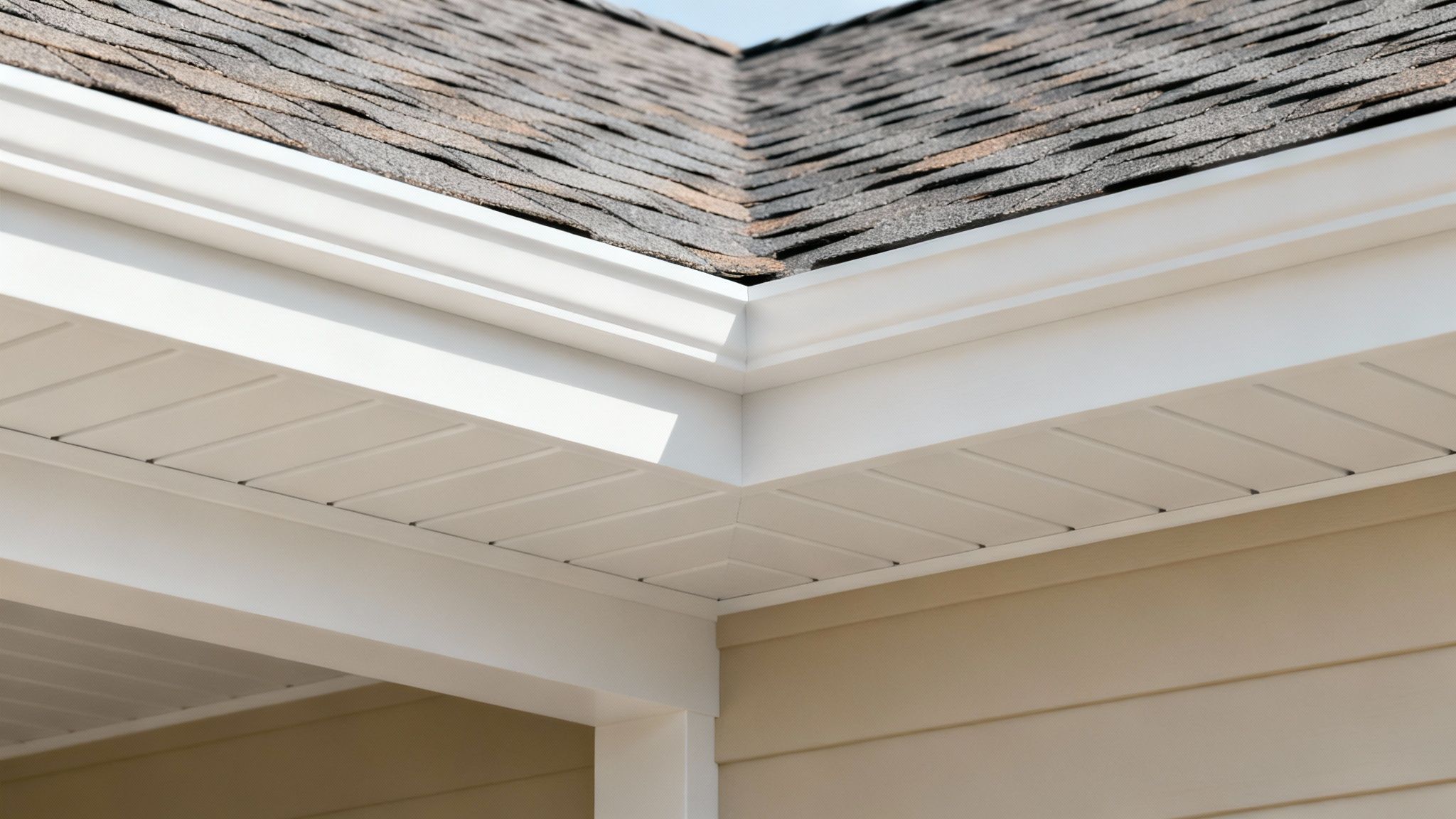
Ever looked up at the edge of your roof and noticed the material tucked underneath the overhang? That’s your soffit. It might look like simple trim, but it’s one of the unsung heroes of your roofing system.
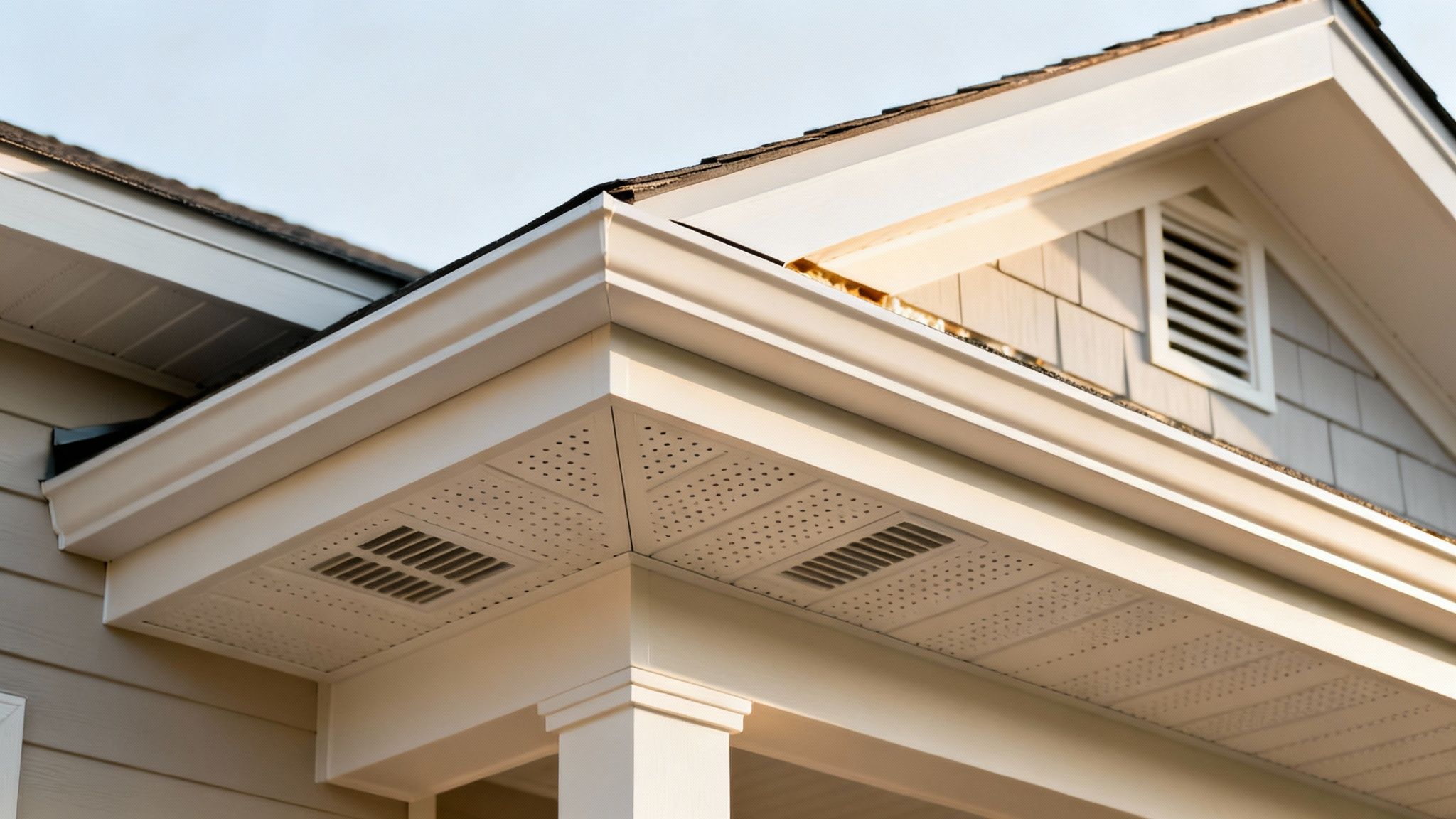
Think of it as the finished “ceiling” for that overhang. It’s the piece that bridges the gap between the edge of your roofline and the side of your house. More than just a cosmetic touch, your home’s soffit is doing two critical jobs 24/7: protecting your roof’s structure from weather and pests and, most importantly, providing essential ventilation for your attic.
Decoding Your Roof's Overhang
While it might seem like a modern feature, the concept has been around for centuries, dating all the way back to ancient Greece and Rome. In fact, evidence from sites like the Parthenon shows soffits were used in over 90% of surviving classical buildings, proving just how long they’ve been a cornerstone of smart construction. You can even learn more about the history of soffits and their architectural significance.
Key Takeaway: Soffit is the material covering the underside of your roof’s eaves. It serves the dual purpose of protecting the rafters from the elements and allowing air to circulate into your attic.
The Two Primary Jobs of a Soffit
So, what does a soffit actually do? It’s both a shield and a key part of your home’s respiratory system.First, it’s a physical barrier. The soffit seals off the underside of your roof rafters, which stops wind-driven rain from getting in. It also keeps pests like birds, squirrels, and insects from making a home in your attic. Without that cover, your roof’s structural beams would be exposed and vulnerable to moisture, rot, and infestations.
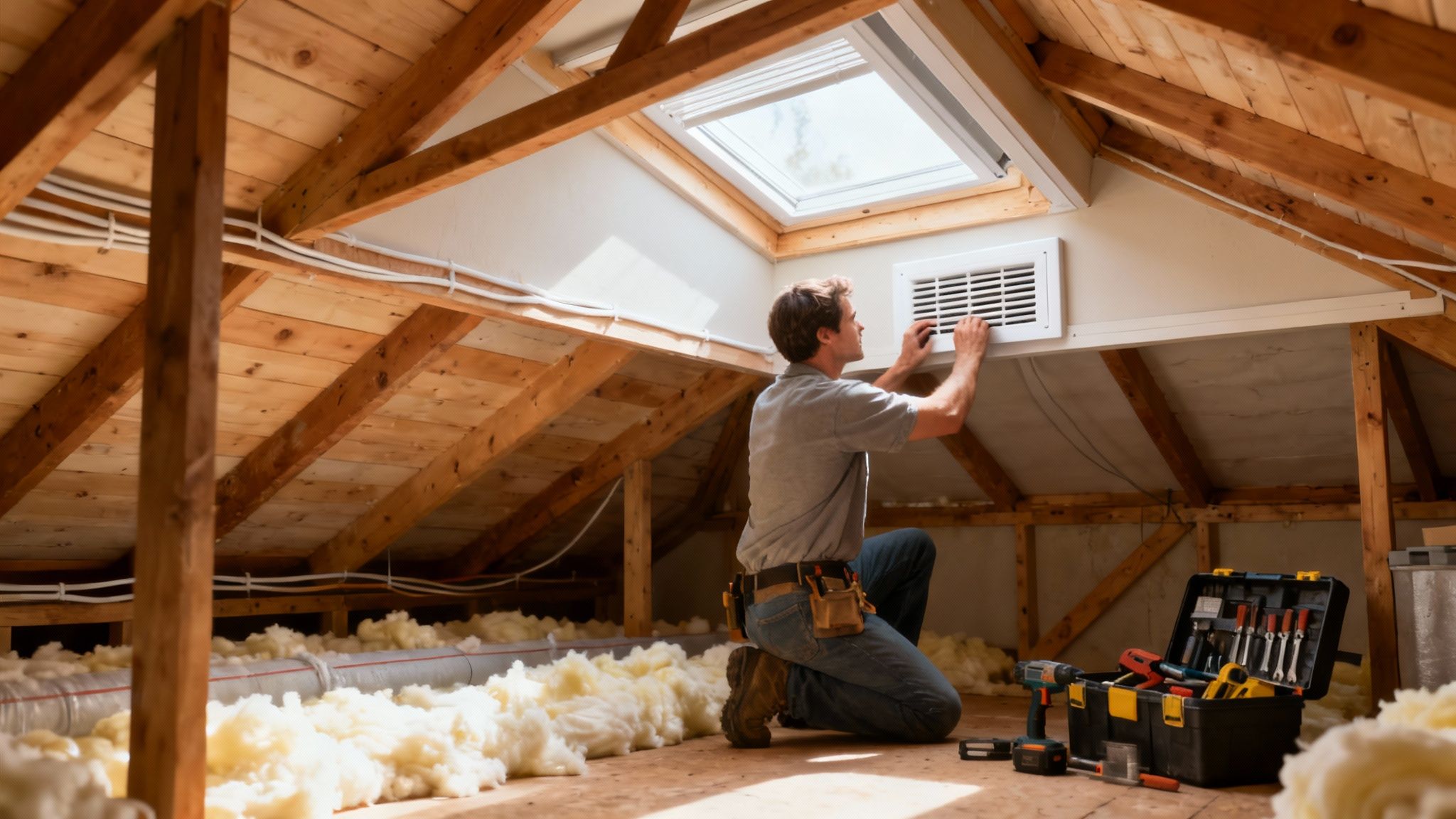
Second, and this is the big one, it helps your attic breathe. Many soffits are vented, meaning they have small holes or perforations. These vents act as the air intake for your attic, drawing cool, dry air from outside to help regulate temperature and moisture.
Soffit At A Glance
This simple component is far more than just trim; it’s an active part of your home's defense system. For a quick recap, here are the key things to know about your soffit.| Aspect | Description |
|---|---|
| Location | The underside of the roof's overhang, between the wall and the fascia board. |
| Primary Function | Protects roof rafters and provides essential intake ventilation for the attic. |
| Aesthetic Role | Creates a clean, finished look for your home's exterior roofline. |
| Common Materials | Typically made from vinyl, aluminum, wood, or composite materials. |
How Soffit and Fascia Work Together
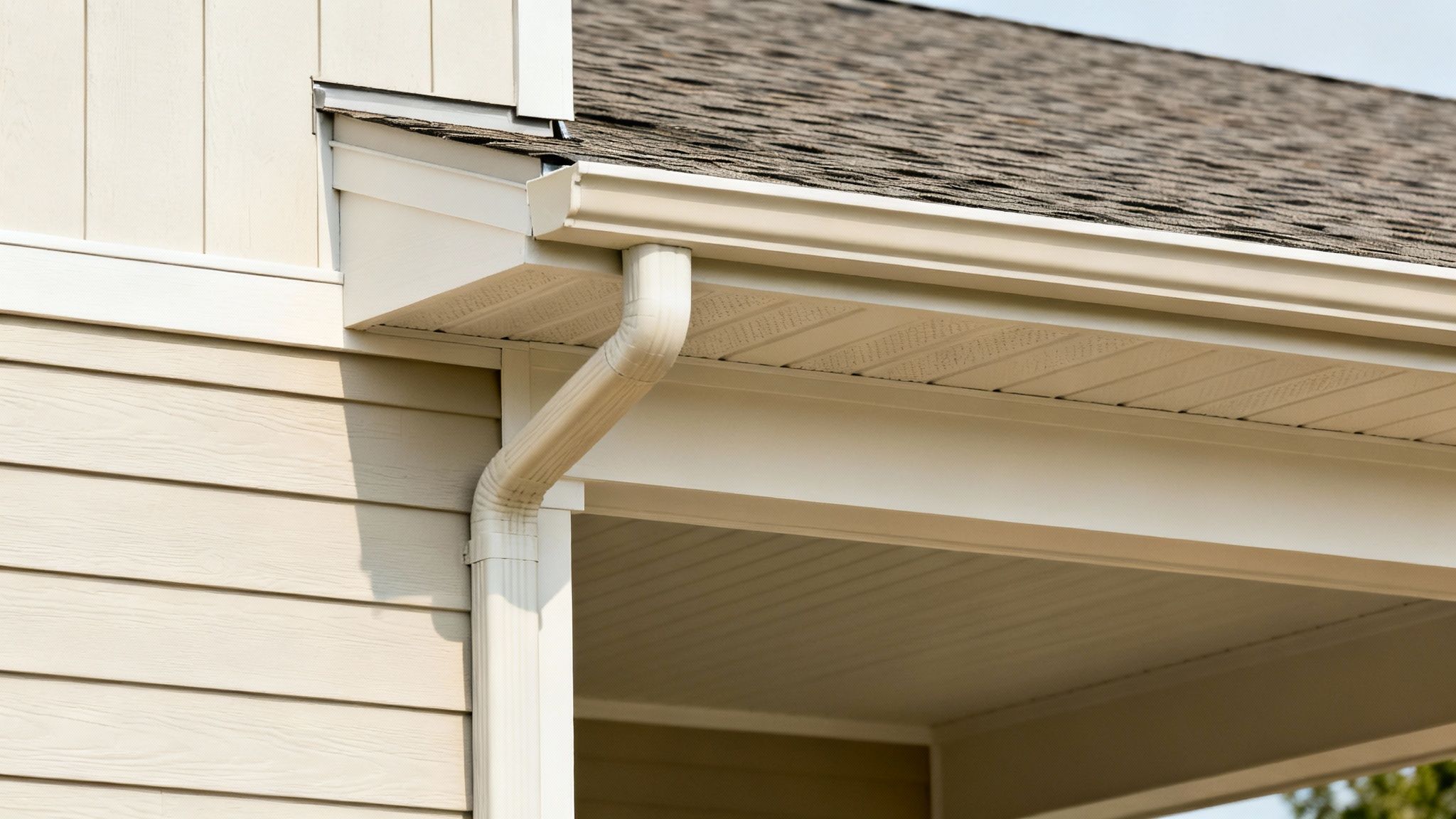
People often mix these two up, but they have distinct jobs that complement each other perfectly. They lock together to shield the exposed ends of your roof rafters, giving your home a clean, finished look while creating a tough barrier against whatever Alabama weather throws at it.
Defining the Roles of Fascia and Soffit
Once you understand their individual responsibilities, you can see how they create such a strong team. Each piece has a specific job that, when combined, gives you a secure and protective roofline.- Fascia is the Face: This is the long, flat board you see running right along the edge of your roof. It’s what your gutters are mounted to, and its main purpose is to support the very bottom row of shingles and carry the weight of that entire gutter system.
- Soffit is the Support from Below: The soffit panel is tucked neatly underneath the fascia, stretching from the back of the fascia board to the side of your house. It protects the rafters from moisture and pests from below and, if it's vented, provides the airflow your attic needs to breathe.
Here's a simple way to think about it: Imagine a countertop with a decorative front edge. The fascia is like that front edge—the visible trim piece. The soffit is the underside of the countertop's overhang. You don't always notice it, but it’s essential for a complete, solid structure.Together, they close off what would otherwise be a gaping hole into your attic. This simple but brilliant design keeps birds and squirrels from building nests, stops wind-driven rain from soaking your rafters, and prevents moisture from causing rot. Keeping both in top shape is key, because damage to one almost always leads to problems with the other.
The Importance of a Watertight Seal
For your soffit and fascia to do their jobs right, the entire roofline has to be watertight. The gutters attached to the fascia need to be completely sealed and clear of debris. If they get clogged, water will spill over the sides, saturating the wood or composite materials and inviting rot.Making sure this system stays sealed, often by using a quality roof gutter sealant, is a small maintenance task that prevents massive headaches down the road.
Without a sealed system, water can easily find its way into your roof’s structure, leading to mold, decay, and repairs that can get expensive fast. A well-maintained soffit and fascia team ensures your home stays dry, well-ventilated, and protected year after year.
Vented Soffit vs. Solid Soffit Explained
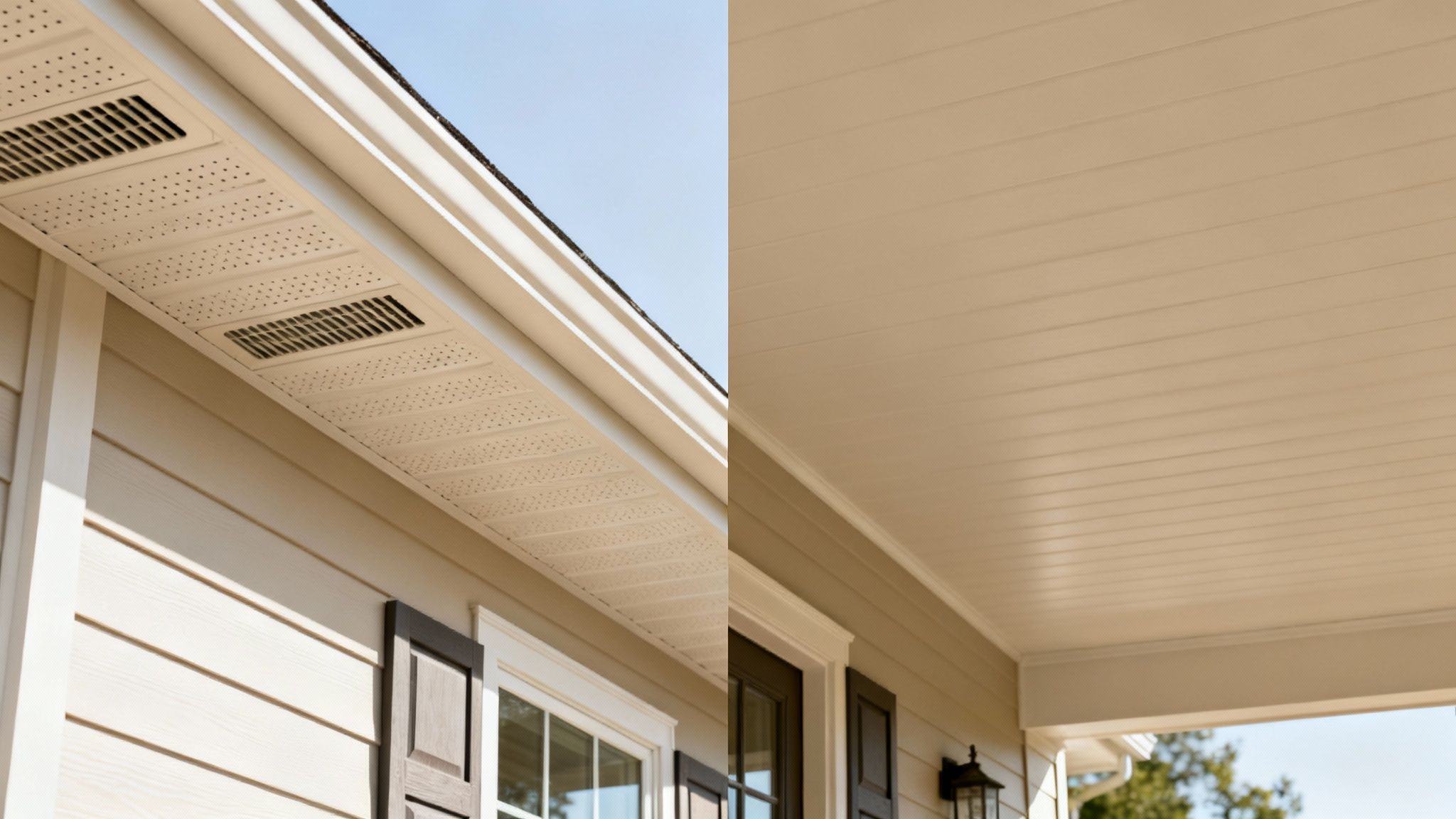
The type of soffit you install determines whether your attic gets a steady supply of fresh air or if it’s just holding its breath. Down here in Alabama, where humidity is a year-round battle, making the right choice is absolutely critical.
The Role of Vented Soffit
Vented soffits are the "intake" part of your home's attic ventilation system. You'll recognize them by the small holes or slats designed to pull cool, dry air from the outside into the attic.This simple feature creates a powerful cycle. As the cool air flows in through the soffits, it pushes the hot, moisture-filled air—which naturally rises to the top of your attic—out through exhaust vents near the roof’s peak. It’s a constant, passive airflow that protects your home from the inside out. This process is your best defense against moisture buildup, mold, rot, and even those destructive ice dams in the winter.
For almost any home with a standard enclosed attic, vented soffit isn’t just a nice-to-have; it’s a necessity. Understanding how to ventilate an attic properly is the key, and it all starts with the soffits.
When Solid Soffit Is the Right Choice
So if vented soffits are so important, why do solid soffits even exist? Simple. Solid (or non-vented) panels are for areas where ventilation into the attic isn't needed or possible.Their job is purely cosmetic and protective. You’ll often see them finishing the underside of porch ceilings, carports, and wide entryways. In these spots, they provide a clean, finished look while shielding the framing from weather and pests—no airflow required.
Key Insight: The rule of thumb is easy to remember. If the soffit is under an eave that connects to your main attic, it needs to be vented. If it's just finishing off the ceiling of a porch or carport, solid is the way to go.
Vented vs. Solid Soffit Comparison
Choosing correctly really just comes down to where you're installing the soffit and what you need it to do. To make it even clearer, here's a direct comparison.Vented Soffit vs Solid Soffit Comparison
| Feature | Vented Soffit | Solid Soffit |
|---|---|---|
| Primary Function | Provides attic ventilation and protection. | Offers protection and a finished look. |
| Airflow | Actively promotes air circulation. | Blocks airflow completely. |
| Best Use Case | Under roof eaves connected to an attic. | Porch ceilings, entryways, carports. |
| Key Benefit | Prevents moisture, mold, and heat buildup. | Provides a clean, seamless appearance. |
Choosing The Right Soffit Material
Here in Alabama, we have to think about our unique climate. The relentless humidity and surprise storms demand materials that can handle constant moisture without falling apart. Let’s walk through the most common choices so you can make a smart, lasting investment in your home.
Vinyl: The Low-Maintenance Workhorse
For a huge number of homeowners, vinyl soffit is the easy answer, and for good reason. It’s budget-friendly, a breeze to clean, and you’ll never have to pick up a paintbrush. Since vinyl is a type of plastic, it naturally shrugs off rot, moisture, and bugs—all major wins in our neck of the woods.It also comes in a ton of different colors and textures, even mimicking the look of real wood without any of the headaches. If you’re looking for a “set it and forget it” solution that won’t break the bank, vinyl is tough to beat.
Aluminum: The Durable Champion
If you want to step up the durability, aluminum soffit is another fantastic, low-maintenance choice. It’s light but surprisingly tough, and it won't rust, crack, or rot when it’s getting soaked by rain and humidity. This makes it an especially great option for homes near the coast or anywhere the weather gets nasty.A key advantage of aluminum is how well it holds paint, which gives you a lot more freedom if you have a specific custom color in mind. While it can dent a bit easier than vinyl if it takes a hard hit, its overall strength and weather-fighting ability make it a reliable choice that will protect your home for the long haul.
Wood: The Timeless Classic
You just can't deny the classic, handsome look of a wood soffit. It brings a natural warmth and traditional character that can really elevate a home’s design. Popular options like cedar, pine, and redwood each have their own unique beauty.But that beauty comes with a catch: upkeep. Wood demands regular staining or painting to shield it from moisture, rot, and insects. If you fall behind on maintenance, especially in a damp climate like ours, wood soffits can go downhill fast.
Expert Insight: Wood is gorgeous, but it's a commitment. If you go this route, be ready to inspect it regularly and plan on repainting or re-staining every few years to keep it sealed up and safe from the elements.
Composite and Fiber Cement: The Modern Alternative
For those who want the best of both worlds, composite and fiber cement soffits are the modern solution. These engineered materials are designed to give you the rich look of wood but with far better performance. They’re incredibly durable and stand strong against fire, rot, moisture, and pests.The entire construction industry has been moving in this direction for a while. Think about this: by 2020, over 85% of new homes in North America were built using aluminum or vinyl soffits. That’s a massive leap from just 15% back in 1980, all because homeowners are demanding materials that can truly handle the weather. You can explore more about the history of roofing construction materials and see how much things have changed.
Common Soffit Problems and How to Spot Them
It’s easy to overlook the soffit tucked away under your eaves, but ignoring it can open the door to some seriously expensive headaches for your home. Even what looks like a small issue can quickly snowball into major structural damage if you don’t catch it in time.
Think of your soffit as a crucial gatekeeper for your roof’s framework. Once it’s compromised, your home is left wide open to water damage, rot, and all sorts of unwanted pests. Learning to recognize the early warning signs is the best way to protect your investment.
The good news? You don’t need to be a roofing pro to give it a quick visual check. A simple walk around your house is often all it takes to spot the tell-tale signs that your soffits need attention, saving you from much bigger problems down the road.
A Homeowner's Inspection Checklist
Making a habit of inspecting your soffits is a vital part of home maintenance. For a closer look at why this matters so much, check out our guide on the benefits of regular roof inspections. Here’s what you should be looking for.- Peeling or Flaking Paint: This is often the first red flag. While it might just seem cosmetic, peeling paint usually signals a deeper moisture problem, often stemming from a hidden roof leak or backed-up gutters.
- Visible Cracks or Gaps: Any break in a soffit panel is basically a "welcome" sign for pests. Tiny cracks can let wasps, bees, and spiders move in, while larger gaps are an open invitation for squirrels and rodents.
- Water Stains or Discoloration: Dark streaks, mold, or mildew spots are impossible to ignore. This is a clear sign that water is repeatedly getting behind the soffit, likely from clogged gutters or failing flashing on the roof.
- Evidence of Pests: Be on the lookout for wasp nests tucked into corners, rodent droppings, or even chew marks. Damaged soffits are easy entry points, and learning about effective mouse proofing your home can help you secure these vulnerable spots.
Key Takeaway: Soffit damage is rarely a standalone problem. It's almost always a symptom of a bigger issue, like a clogged gutter system, poor attic ventilation, or a leak starting somewhere higher up on your roof.
From Wood Rot to Modern Materials
Historically, a lot of soffit problems came down to the material itself. When soffits became common in American homes in the late 19th and early 20th centuries, wooden beadboard was the go-to choice. It looked great, but wood is incredibly prone to rot when it gets wet.In fact, historical records from 1880 to 1930 show that over 70% of new homes were built with these wooden soffits, making maintenance a constant battle against the elements. Thankfully, modern materials like vinyl and aluminum have made life a lot easier, dramatically cutting down on these old maintenance headaches.
Got Questions About Soffits? We've Got Answers
Once you get the basics down, you're bound to have a few more practical questions about keeping your soffits in good shape. Let's tackle some of the most common ones we hear from homeowners around here, giving you clear, straightforward answers to manage your home with confidence.Can I Paint My Soffits?
You sure can, but how you do it depends entirely on the material. Vinyl and aluminum soffits are tricky—they need special primers and paints designed to stick to those slick, non-porous surfaces. Wood, on the other hand, is much more straightforward and can be painted traditionally after a good sanding and priming.Here’s the most important rule, though: never, ever clog the holes in vented soffits. If you gum up those little openings with thick paint, you’ll cut off the airflow to your attic. That completely defeats the purpose of your ventilation system and can quickly lead to trapped moisture and heat damage.
How Often Should They Be Cleaned?
As a general rule, give your soffits a good inspection and cleaning at least once a year. The easiest way to remember is to just tack it onto your annual gutter cleaning.Living in a humid climate like ours in Alabama—or in an area with a lot of pollen and dust—you might find you need to do it twice a year. Usually, a simple mix of mild soap and water with a soft brush is all it takes to clear away dirt, mildew, and cobwebs. Keeping those vented soffits clear is absolutely vital for proper airflow.
Pro Tip: When you're up there cleaning, pay extra attention to where the soffit meets the wall. This is a favorite spot for wasps and other pests to start building nests. A quick scrub can head off a much bigger headache down the road.
Does Every Single House Need Soffits?
Most homes with roof overhangs (the technical term is "eaves") need soffits. They're what closes off the underside of that overhang, protecting your roof's rafters from bad weather, birds, and bugs.That said, some modern architectural designs have “zero-eave” or “no-overhang” roofs. On these homes, the roofline sits flush with the exterior walls, so there’s simply no space or need for a soffit. For the vast majority of traditional homes you see every day, though, soffits are a standard and essential part of the structure.
What's the Average Cost to Replace Soffit?
The cost to replace your soffits can really swing one way or the other based on the material you pick, the size of your house, and what local labor rates are running. Just to give you a ballpark idea, here are some typical ranges:- Vinyl or Aluminum: These are the most common and budget-friendly choices. You can expect to pay somewhere between $20 to $30 per linear foot for a full replacement, all-in.
- Wood: As a premium material, wood will cost you more. Prices often start around $30 to $50 per linear foot and can go up from there, depending on the type of wood and the finish you want.
Your soffit is a small but mighty part of your home’s defense system. If you’ve spotted any signs of damage or just want an expert opinion on its condition, don’t wait for a small issue to become a major repair. The team at Higher Roof Solutions is here to help. Schedule your free, no-obligation inspection today and get the peace of mind that comes with a healthy, well-maintained roof.