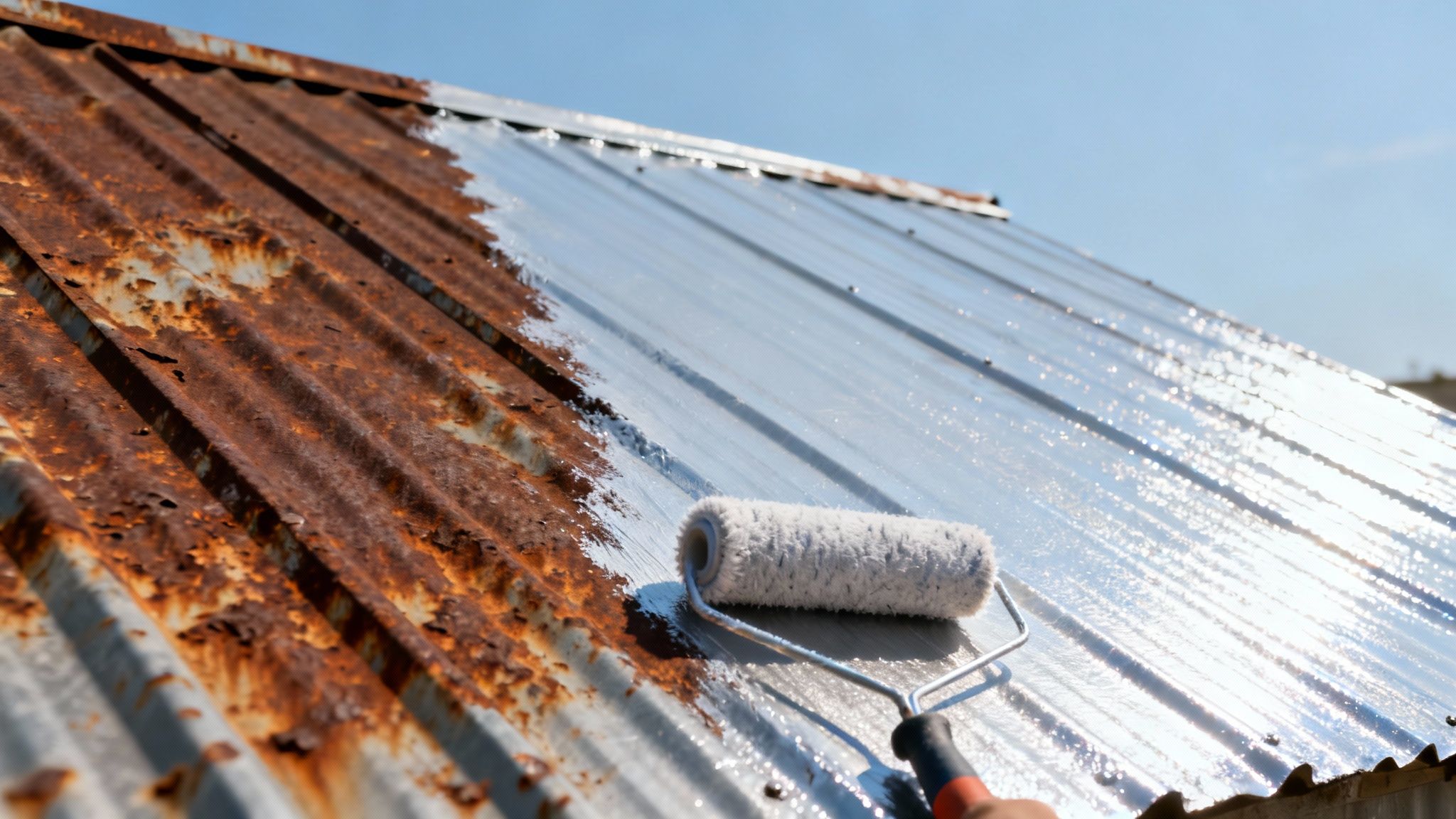
That brand-new metal roof on your property looks tough, like a solid shield that can take anything the Alabama weather throws at it. But over time, you might start seeing those ugly, reddish-brown streaks of rust. So, what gives?
Rust is just a sign of a chemical reaction called oxidation. It happens when the iron in your roof's metal gets exposed to oxygen and moisture. While most modern metal roofs have protective coatings to stop this, even a small scratch can compromise this barrier, letting the rusting process kick off. Think of it as a tiny crack in a suit of armor that lets the enemy slip right through.
Why Metal Roofs Get Rusted
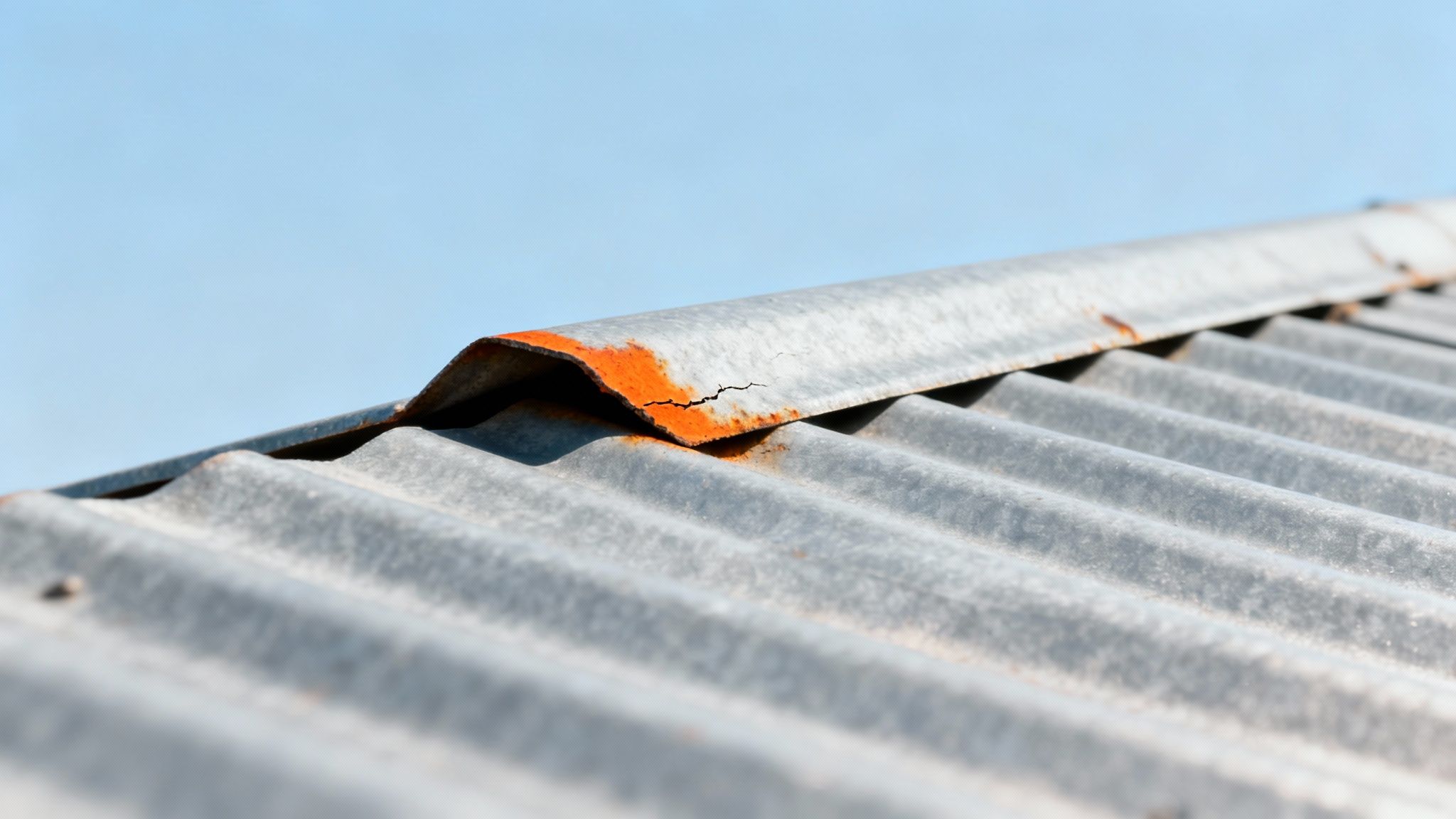
Understanding what causes rust is the first step in stopping it and making sure your roof lasts as long as it should. It almost always starts with a breach in that protective coating—the very thing designed to keep the core metal safe from the elements.
Once that coating is compromised, the clock starts ticking.
How Installation and Environment Play a Part
You can have the best materials in the world, but small mistakes during installation can undermine everything. For example, when metal panels are cut on-site, the raw steel core gets exposed. If those cut edges aren't sealed up properly, you've just created a perfect entry point for moisture.
The same goes for fasteners like screws and bolts. If they're driven in too tight, left too loose, or if the rubber washers are old and worn out, they create tiny gaps. Water loves to pool in these spots, and that’s where the corrosion process begins. It’s like leaving a window cracked open during a thunderstorm; sooner or later, water is going to get inside.
Rust isn't just a cosmetic problem; it's a warning sign. It tells you the protective layer of your roofing system has failed, and the structural metal is now at risk.
Of course, our local climate here in the Southeast has a lot to say about it, too. High humidity, frequent rain, and coastal salt spray all create a tougher environment for a metal roof. All that moisture speeds up the chemical reaction, turning a minor scratch into a noticeable rust spot much faster than you’d think.
Why the Type of Metal Matters
Not all metal roofing is created equal when it comes to fighting off rust. The specific metal and how it’s treated are hugely important. Steel, which makes up over 60% of the global metal roofing market, is a popular choice because it’s strong and affordable, but it’s naturally prone to rust. To get around this, manufacturers treat it with special coatings.
- Galvanized Steel: This is steel coated with a layer of zinc. The zinc basically acts as a bodyguard, corroding first to protect the steel underneath it.
- Galvalume Steel: A step up from galvanized, this coating is a mix of zinc and aluminum. It offers even better, longer-lasting protection.
- Aluminum and Copper: These are premium metals that are naturally resistant to rust. Aluminum forms its own protective oxide layer, while copper develops that classic green patina instead of destructive red rust.
Ultimately, how soon you see rust often comes down to the quality of these protective treatments. A basic, untreated steel roof in a high-corrosion area might show rust in just 5-7 years. On the other hand, a properly coated and installed steel roof can go for decades without a problem. To see a full breakdown, you can read the full market research about metal roofing materials.
How to Identify the Severity of Roof Rust
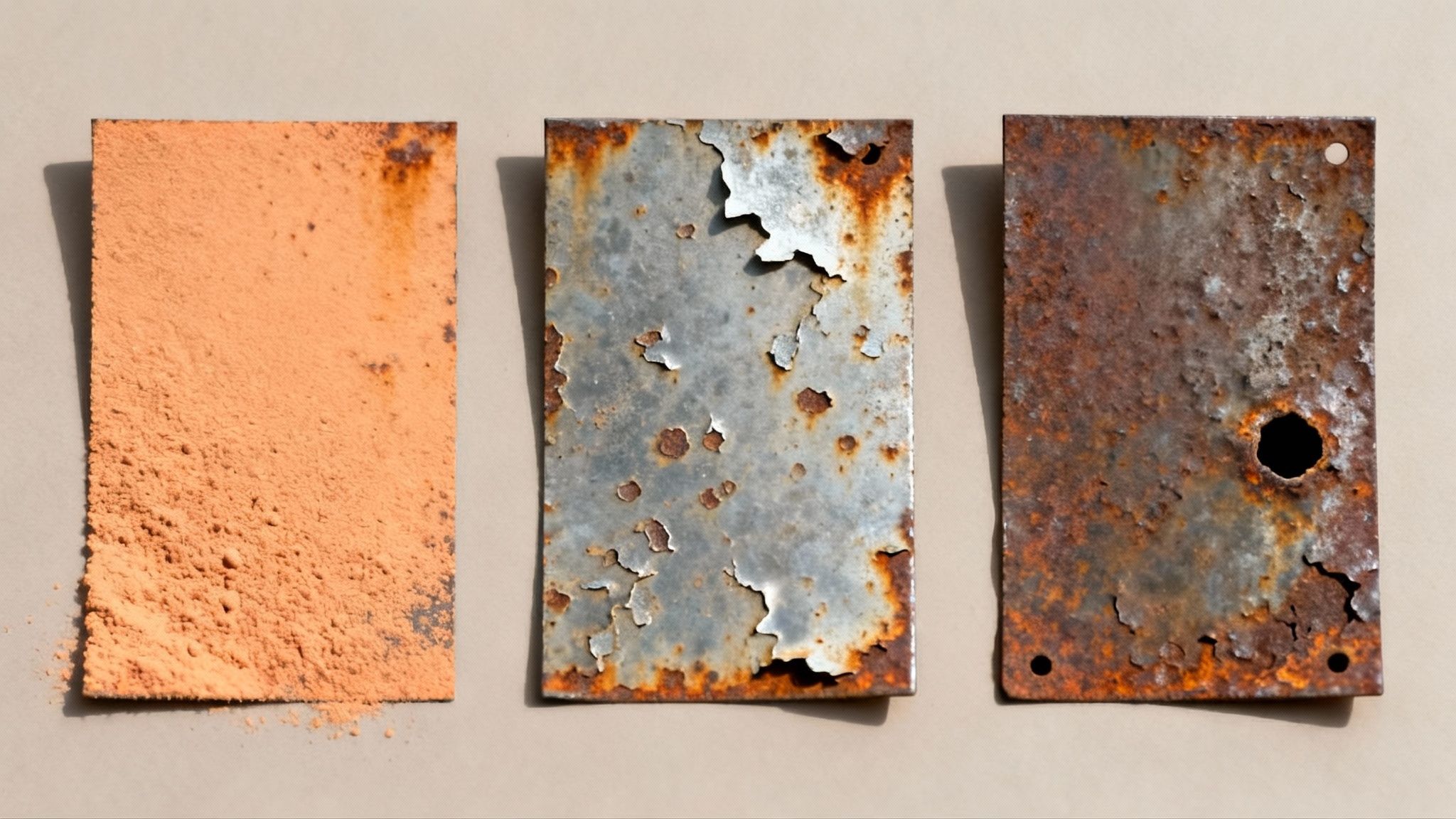
Spotting a bit of rust on your metal roof isn't automatically a sign of disaster. You just need to know what you're looking at. Think of it like a quick health check-up for your roof—figuring out the stage of the corrosion tells you what kind of "treatment" is needed.
Getting a handle on the severity is your first step toward making a smart, cost-effective decision. Not all rust is created equal. Some situations demand a professional right away, while others can be handled with some straightforward maintenance.
Stage 1: Minor Surface Rust
The earliest and easiest stage to deal with is minor surface rust. This usually looks like a light, powdery orange or reddish-brown stain on the roof panels, often around fasteners and screws. It's really just on the surface.
At this point, the rust is cosmetic. It’s a sign that the very top protective layer of your roof’s coating has worn away or been scratched, but the metal panel underneath is still solid. The good news? The structural integrity of your roof is still intact.
Surface rust is a warning sign, not a death sentence for your roof. It’s the perfect time to step in with preventative maintenance before a small issue becomes a big, expensive one.
Catching rust this early is a huge win. A simple fix involving cleaning, a light sanding, and applying a rust-inhibiting primer and touch-up paint is usually all it takes to stop the corrosion in its tracks.
Stage 2: Medium Rust and Pitting
If that early surface rust is ignored, it digs in deeper and becomes medium rust. Now we're talking about a more serious condition where the corrosion has started to eat into the metal itself. You'll see more than just a stain; the roof's texture will start to change.
Look for signs like flaking or bubbling paint and small, crater-like dots known as pitting. This is clear evidence that the rust has broken through the protective coating and is actively weakening the steel. It's officially moved beyond a cosmetic problem and is starting to cause structural degradation.
A simple paint job won't cut it anymore. These areas need more intensive prep work, like wire brushing or grinding, to get all the loose rust off. After that, you'll need a specialized rust converter and a tough, commercial-grade coating to halt the corrosion and properly seal the metal again.
Stage 3: Severe Structural Rust
This is the critical stage: severe structural rust. This is what happens when corrosion goes unchecked for a long time, completely compromising the roof's integrity. The signs are impossible to miss and signal a serious problem.
Here are the red flags for severe rust:
- Visible Holes: You can actually see daylight through the panels or find clear holes where the metal has rusted all the way through.
- Thinning Panels: Large sections of the roof might look warped, feel brittle, or seem much thinner than the surrounding areas.
- Extensive Flaking: Big chunks of metal are peeling or flaking off, showing deep, dark layers of rust underneath.
- Interior Water Damage: You've got active leaks, water stains on your ceilings, or signs of mold—a direct result of your roof no longer being watertight.
When you see signs like these, the roof is past the point of a simple repair or recoating. The panels are structurally shot, and that’s a major risk. A DIY fix is not only ineffective but also unsafe. This level of damage calls for an immediate professional assessment from a team like Higher Roof Solutions to see if specific panels or the entire roof needs to be replaced.
To make it even easier to know what you're dealing with, we've put together a quick reference chart. Use it to match what you see on your roof with the right course of action.
Rust Severity Levels and Recommended Actions
| Rust Stage | Visual Cues | Potential Risk | Recommended Action |
|---|---|---|---|
| Stage 1: Surface | Light, powdery orange or red-brown discoloration, mainly on the surface. | Low. Primarily cosmetic at this stage. No structural damage yet. | DIY-friendly. Clean, lightly sand, apply rust-inhibiting primer and touch-up paint. |
| Stage 2: Medium | Flaking paint, bubbling, small craters (pitting). Texture is rough. | Moderate. Corrosion is weakening the metal panel itself. | Requires thorough prep (wire brush/grinding), rust converter, and a durable sealant. Professional help is advised. |
| Stage 3: Severe | Visible holes, warped or thin panels, major flaking, interior leaks. | High. Structural integrity is compromised. Risk of major leaks and collapse. | Do not attempt DIY. Call a professional immediately for an inspection. Likely needs panel or full roof replacement. |
This table should give you the confidence to assess the situation. Remember, the sooner you act, the more options you have and the less it will ultimately cost to protect your property.
The Hidden Dangers of an Ignored Rusted Roof
It’s easy to dismiss a few orange streaks on your metal roof as a small cosmetic issue. Just an eyesore, right? Unfortunately, that’s a critical mistake. That rust is a slow-motion wrecking ball, silently eating away at the integrity of your entire roofing system.
When you ignore it, you’re letting a small, fixable problem snowball into a series of expensive, disruptive headaches. Think of that first breach in the roof's protective coating like a tiny crack in a dam. If you leave it alone, the pressure just keeps building until a total failure is all but guaranteed.
From Weakened Panels to Structural Damage
The real danger of unchecked rust is how it physically degrades the metal panels. Rust isn't just a layer sitting on top of the metal; it’s the metal itself breaking down into a weaker, brittle oxide. As the corrosion spreads, it hollows out the steel, thinning the panels from the inside.
Over time, this process leads to serious structural weakness. What was once a solid shield against high winds and heavy rain becomes fragile and compromised. Eventually, that corrosion will create outright holes, turning your roof into a sieve and giving water a direct path into your property.
This leads to the most immediate and destructive outcome: leaks. Water intrusion can quickly saturate your insulation, stain ceilings and walls, and even start to rot the wooden support beams and decking that make up your building’s core frame.
The Financial Fallout of Corrosion
The damage doesn't just stop with the roof. The financial consequences of an ignored rusted metal roof can be massive, hitting your budget from several different angles.
- Higher Energy Bills: Many metal roofs have special reflective coatings designed to bounce sunlight away and keep the building cool. Rust completely destroys these coatings. The roof then absorbs more heat, forcing your HVAC system to work overtime and driving up your energy costs.
- Decreased Property Value: A visibly rusted roof is a huge red flag for potential buyers and property appraisers. It screams neglect and hints at bigger issues like leaks and structural decay, which can seriously tank your property’s market value.
- Pest Infestations and Mold Growth: All that moisture from leaks creates the perfect breeding ground for mold and mildew. Not only are these fungi a major health hazard, but they’re also expensive to get rid of. On top of that, damp, rotting wood is an open invitation for destructive pests like termites and carpenter ants.
Ignoring rust is never a cost-saving measure. It’s a deferred payment with compounding interest, where a minor repair bill today becomes a major structural restoration project tomorrow.
This problem is far more common than most property owners think. In North America, an estimated 18% of metal roofs installed before the year 2000 have dealt with significant rusting. Industry data also shows that rust is the second most common reason for a full metal roof replacement, making up 22% of all cases—only storm damage is more frequent. You can dig into these trends and more roofing industry insights from the experts at McElroy Metal.
Taking action early isn't just about looks; it's a smart financial decision to protect your investment for the long haul.
DIY Rust Treatment Versus Professional Repair
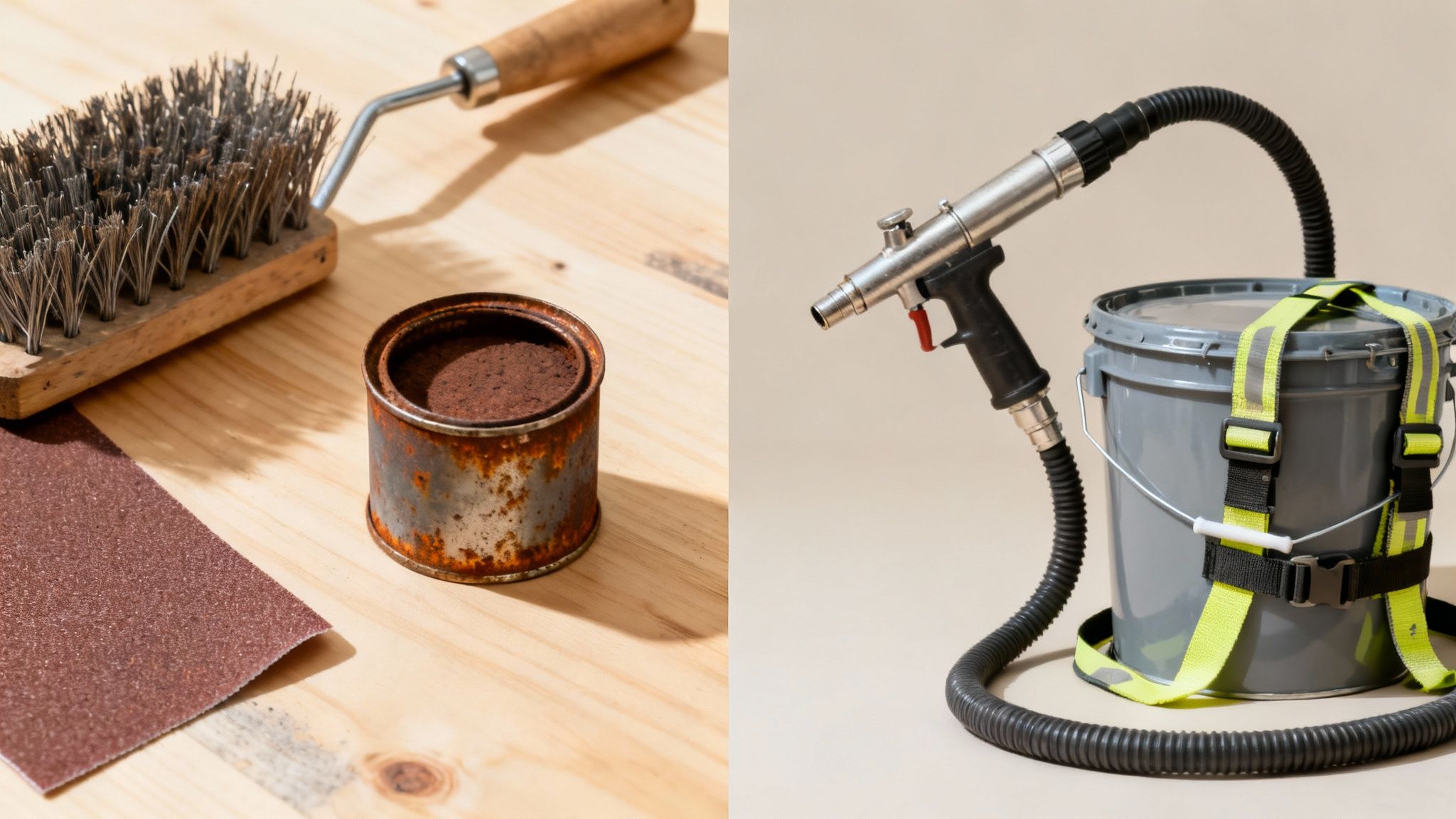
When you spot rust blooming on your metal roof, you’re at a crossroads. Do you roll up your sleeves and tackle it yourself, or is it time to call in the pros? The right choice hinges entirely on how bad the rust is. Make the wrong call, and you could either waste a perfectly good weekend on a problem that needs an expert or pay for a service call you could’ve handled yourself.
Think of it like a scratch on your car. A tiny surface scuff? That’s an easy DIY touch-up. But if that scratch goes down to the bare metal and starts to rust, you're headed to the body shop to stop the damage from spreading. Your roof is the exact same way—knowing when to switch from a minor fix to calling for backup is everything.
The DIY Approach for Minor Surface Rust
If you've caught the corrosion in its earliest stages—just small spots of surface rust—a DIY repair is a totally realistic and budget-friendly option. This is for those little, isolated patches you can get to safely and easily. Your mission is simple: get rid of the surface oxidation and reseal the metal so the rust can't creep any further.
To make it a successful weekend project, you just need the right gear and a serious focus on safety.
- Essential Tools: Grab a wire brush or some sandpaper, safety glasses, gloves, a quality rust-inhibiting primer, and touch-up paint that’s approved by your roof’s manufacturer to match the color and coating.
- Safety First: Never, ever work on a roof that's wet, icy, or steeply pitched. Always use a sturdy, well-secured ladder and wear shoes with a good grip. Your safety is worth more than any repair.
- The Process: Start by giving the rusted area a good scrub with the wire brush to knock off all the loose rust. Clean the spot, then hit it with the rust-inhibiting primer. Once that’s dry, apply the matching topcoat to bring back that protective seal.
This hands-on approach is fantastic for nipping small problems in the bud and stretching the life of your roof. But you have to be honest with yourself: a DIY patch is just that—a spot treatment, not a full-blown restoration.
When to Call a Professional Roofer
The line between a DIY job and a professional repair is pretty clear. If you see rust spreading over large areas, deep pitting that feels rough and cratered, or any sign the panels are getting thin, it’s time to put down the brush and pick up the phone. These aren't just cosmetic issues; they're signs of a serious problem that a little touch-up paint won't fix.
Attempting a DIY repair on severe rust is like putting a bandage on a broken bone. It might cover the problem, but it does nothing to fix the underlying structural damage and can often make things worse.
Professionals bring the heavy-duty equipment and expertise needed for advanced corrosion. They use techniques like sandblasting or power grinding to strip the rust all the way back to clean, bare metal—something that’s just not practical for a homeowner. More importantly, they apply commercial-grade elastomeric or silicone coatings that create a seamless, waterproof membrane over the entire roof. This doesn’t just stop the old rust; it provides a powerful, long-lasting shield against new corrosion.
A true professional will also hunt down and fix the root cause of the rust, whether it’s failing fasteners, leaky seams, or poor drainage.
Comparing DIY vs. Professional Roof Rust Repair
So, how do you decide what’s right for your roof? This table breaks down the key differences between going it alone and calling in a team like Higher Roof Solutions.
| Factor | DIY Repair | Professional Repair (Higher Roof Solutions) |
|---|---|---|
| Best For | Small, isolated spots of minor surface rust. | Widespread rust, medium pitting, or any severe structural corrosion. |
| Cost | Low initial cost, typically under $100 for materials. | Higher upfront investment, but offers long-term value and prevents costlier issues. |
| Time | A few hours to a full weekend, depending on the number of spots. | Minimal time commitment from you; professionals handle the entire project efficiently. |
| Effectiveness | Provides a temporary fix for minor issues. Does not address underlying causes. | Delivers a durable, long-term solution that can extend your roof’s life by 10-20 years. |
| Safety | Poses significant safety risks, including falls and improper handling of materials. | Professionals are fully insured, licensed, and trained in roof safety protocols. |
Choosing the right path for your rusted metal roof is about balancing cost, effort, and long-term results. While a hands-on approach can be satisfying for small fixes, professional expertise is the only reliable solution for protecting your property from more serious damage.
Modern Solutions for Roof Protection
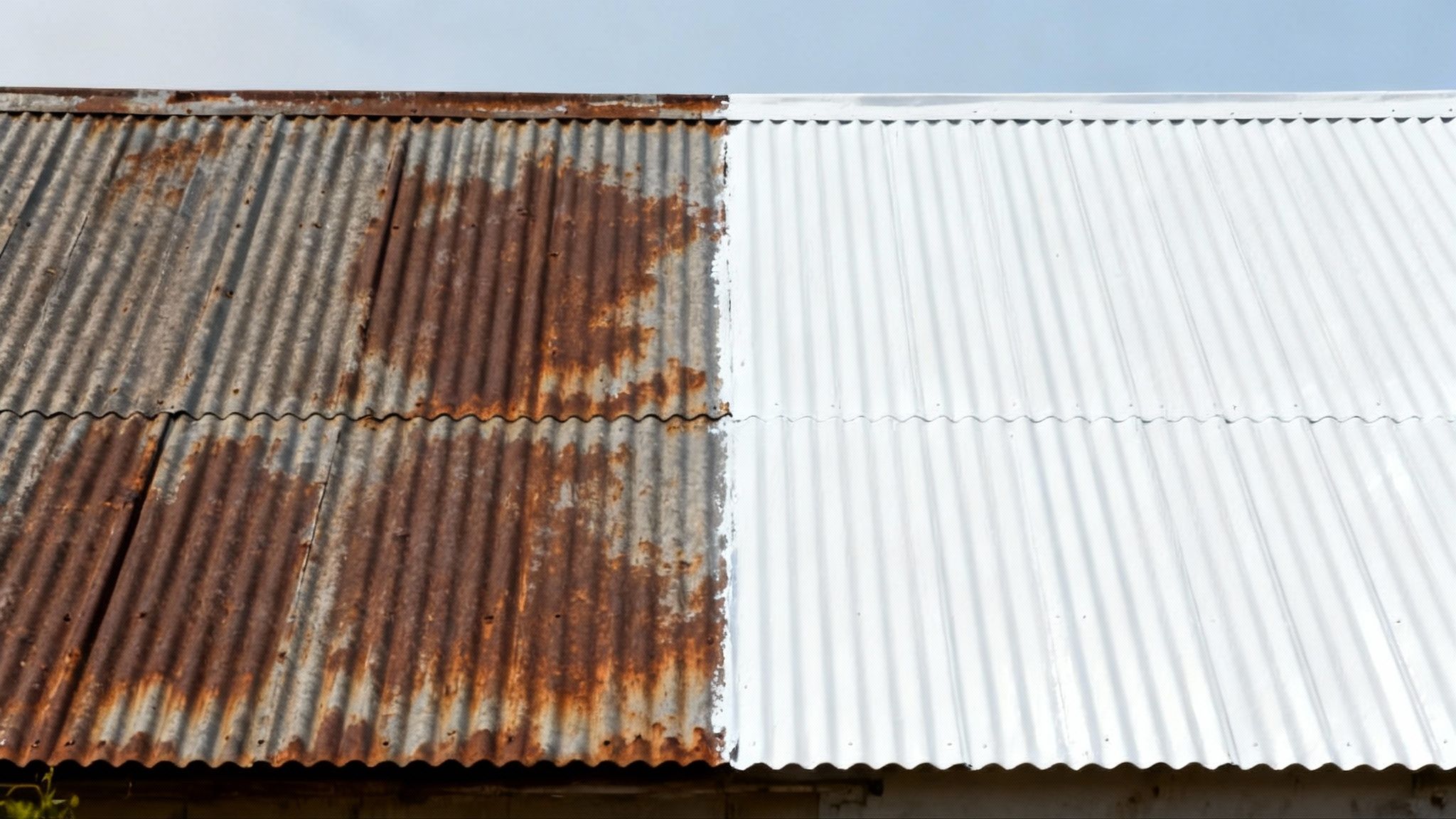
Dealing with a rusted metal roof today is about much more than just slapping on a temporary patch. It’s the perfect opportunity to upgrade your roof with advanced coatings that stop existing rust in its tracks and build a serious defense against future problems. These modern solutions create a seamless, waterproof barrier, giving your old roof a new lease on life.
Think of these coatings as high-performance armor for your building. They don't just cover up the rust; they chemically bond to the metal to halt the oxidation process. By sealing out the moisture and oxygen that rust needs to survive, they turn a failing roof into a long-lasting, resilient asset.
Choosing Your Roof's Shield
There are several powerful roof coatings on the market, each with its own unique strengths. Figuring out the right one for you comes down to your specific roof, your budget, and our local Alabama climate.
- Acrylic Coatings: A popular and cost-effective choice, these water-based coatings are great for reflecting sunlight and keeping your building cooler, thanks to their excellent UV resistance. They're available in a wide variety of colors, too.
- Silicone Coatings: Known for their incredible waterproofing power, silicone coatings are extremely durable and stand up to ponding water better than anything else. They're also highly flexible, so they expand and contract with your roof without cracking.
- Polyurethane Coatings: This is the heavy-duty option. Polyurethane coatings offer fantastic resistance to impacts and foot traffic, making them the ideal choice for commercial roofs that see a bit more action.
Each of these liquid-applied systems creates a single, solid membrane that gets rid of seams—which are the most common failure points on any roof. The result is a durable, watertight seal that protects the metal underneath for years to come.
The Power of Cool Roof Coatings
Beyond just stopping rust, many modern coatings deliver a major financial win through energy efficiency. Known as cool roof coatings, these highly reflective surfaces are designed to bounce most of the sun’s heat back into the atmosphere instead of letting it soak into your building.
A typical dark roof can bake in the summer sun, reaching temperatures over 150°F. A cool roof, on the other hand, can stay more than 50°F cooler. That huge temperature drop means your AC system doesn't have to work nearly as hard, leading directly to big savings on your energy bills.
Upgrading to a reflective coating isn't just a repair; it’s an investment in your building's efficiency. The energy savings alone can often help the project pay for itself over time.
This strategy is especially powerful here in the humid South, where rust has always been a major headache for property owners. In fact, studies show that up to 30% of metal roof replacements in these areas are a direct result of rust damage. Using modern, corrosion-resistant coatings is the proven way to stop that from happening.
Ultimately, coating your roof is a proactive move that extends its lifespan and makes it perform better. Beyond treating rust, getting a handle on regular maintenance is the key to long-term protection, a point well-made in this guide on 7 Things to Know About Maintaining a Roof.
When You Need a Professional Roof Inspection
While a proactive DIY approach is great for catching minor surface rust, the most important decision you can make for your property is knowing when to step back and call in a professional. Trying to tackle a widespread or severe rust problem on your own isn't just a losing battle—it can be downright dangerous and lead to much more expensive damage.
The key is learning to spot the warning signs that your rusted metal roof needs an expert eye. Think of a professional inspection as a diagnostic check-up for your most critical asset. It’s not about a sales pitch; it's about getting an honest, detailed assessment of your roof's health so you can make an informed decision. An expert can see underlying issues an untrained eye would easily miss, from failing fasteners to the subtle signs of thinning panels.
Red Flags That Demand a Professional Call
If you see any of the following, it's time to put down the binoculars and pick up the phone. These symptoms mean the corrosion has moved beyond a simple surface issue and could be compromising the structural integrity of your roof.
- Widespread Rust: The rust isn’t just in one or two spots but is covering a large area (more than 10-15%) of a roof section.
- Deep Pitting or Flaking: You can see or feel crater-like pits in the metal, or large flakes of rust are peeling away from the surface.
- Visible Holes or Thinning: Any sign of daylight peeking through the roof or panels that look warped and weak are urgent red flags.
- Interior Signs of Leaks: Water stains on your ceiling, damp insulation, or musty smells are direct proof that your roof is no longer watertight.
A professional inspection from a team like Higher Roof Solutions gives you certainty. We don't just glance at the rust; we investigate its root cause, assess the full scope of the damage, and give you a clear roadmap of your options—from targeted repairs to restorative coatings or a full replacement.
What to Expect from Our Free Inspection
Scheduling an inspection shouldn’t be intimidating. At Higher Roof Solutions, our process is straightforward and transparent, designed to give you total peace of mind.
We’ll perform a comprehensive evaluation of your entire roofing system, documenting everything we find with photos and explaining it all in plain language. Afterward, you’ll get a detailed, no-obligation report outlining your roof's condition and our honest recommendations.
Regular professional check-ups are the best defense. Understanding the benefits of regular roof inspections is the first step in preventing major rust damage before it starts. And when you're ready to find the right expert, our guide on how to choose a roofing contractor can help you select a trusted partner. Contact us today for your free, no-pressure inspection.
Got Questions About Your Rusted Metal Roof? We've Got Answers.
It's one thing to know why a metal roof rusts, but it's another thing entirely to know what to do about it. When property owners call us about rust, they usually have a lot of the same practical questions.
We’ve gathered the most common ones we hear right here to give you the straightforward answers you need to protect your investment.
Can You Just Paint Over a Rusted Metal Roof?
Absolutely not. It might seem like the easiest way to hide the problem, but painting directly over rust is a critical mistake. You're essentially just trapping moisture against the metal, which lets the corrosion keep spreading underneath. Before you know it, that new paint will bubble, flake, and fail, leaving you right back where you started, only worse.
Proper prep work is everything. To get a lasting repair, all the loose rust has to be physically removed, the bare metal needs to be treated with a high-quality rust-inhibiting primer, and then you can apply a durable top coat. For anything more than a tiny spot, professional surface prep is the only way to be sure the new coating will actually stick and protect the roof.
Painting over rust is like putting a bandage on an infected wound. It might cover the problem for a minute, but it doesn't stop the infection from spreading underneath.
How Much Does It Cost to Fix a Rusted Metal Roof?
The honest answer? It depends. The cost to repair a rusted metal roof can swing pretty wildly based on a few key things: how bad the rust is, the total size of your roof, and the specific repair method we use. For a small DIY patch on some light surface rust, you might get away with spending around $100 on materials.
But for more serious or widespread issues, you'll need a pro. A professional rust treatment and a commercial-grade restorative coating typically runs between $3 and $8 per square foot. If the corrosion is severe and has started to eat through the panels, you could be looking at a full replacement, which can cost anywhere from $8 to $16 per square foot, sometimes more. The only way to get a real number for your building is to have an expert get up there and put eyes on it.
Does a Warranty Cover Rust on a Metal Roof?
This is a big one, and it all comes down to the fine print in your original contract. Most manufacturer warranties for metal roofing will cover perforation—that means the rust has eaten a hole all the way through the panel—for 20 to 40 years.
What they almost never cover is surface rust. That's typically considered a maintenance issue, which puts the responsibility on the property owner. On top of that, things like a botched installation, using the wrong kind of screws, or leaving cut edges unsealed can void your warranty completely. Your best bet is to dig out that original paperwork and read it carefully to see exactly what is and isn't covered.
How Long Will a Recoated Metal Roof Last?
When it's done right, a professionally applied coating system can add another 10 to 20 years of life to your metal roof. These aren't just fancy paints; they are advanced acrylic, silicone, or polyurethane systems that create a seamless, flexible, and completely waterproof membrane over your entire roof. This stops existing rust in its tracks and shields the metal from future corrosion.
Choosing to recoat your roof is often a much smarter financial move than a full tear-off and replacement. You don't just solve the rust problem—you upgrade your roof's performance and get incredible long-term value.
Don't let a little rust turn into a major problem that compromises your entire building. If you're seeing signs of corrosion and want an honest, clear assessment, the team at Higher Roof Solutions is here to help. We provide detailed inspections and expert recommendations to protect your property.
Request your free, no-obligation roof inspection from Higher Roof Solutions today.