
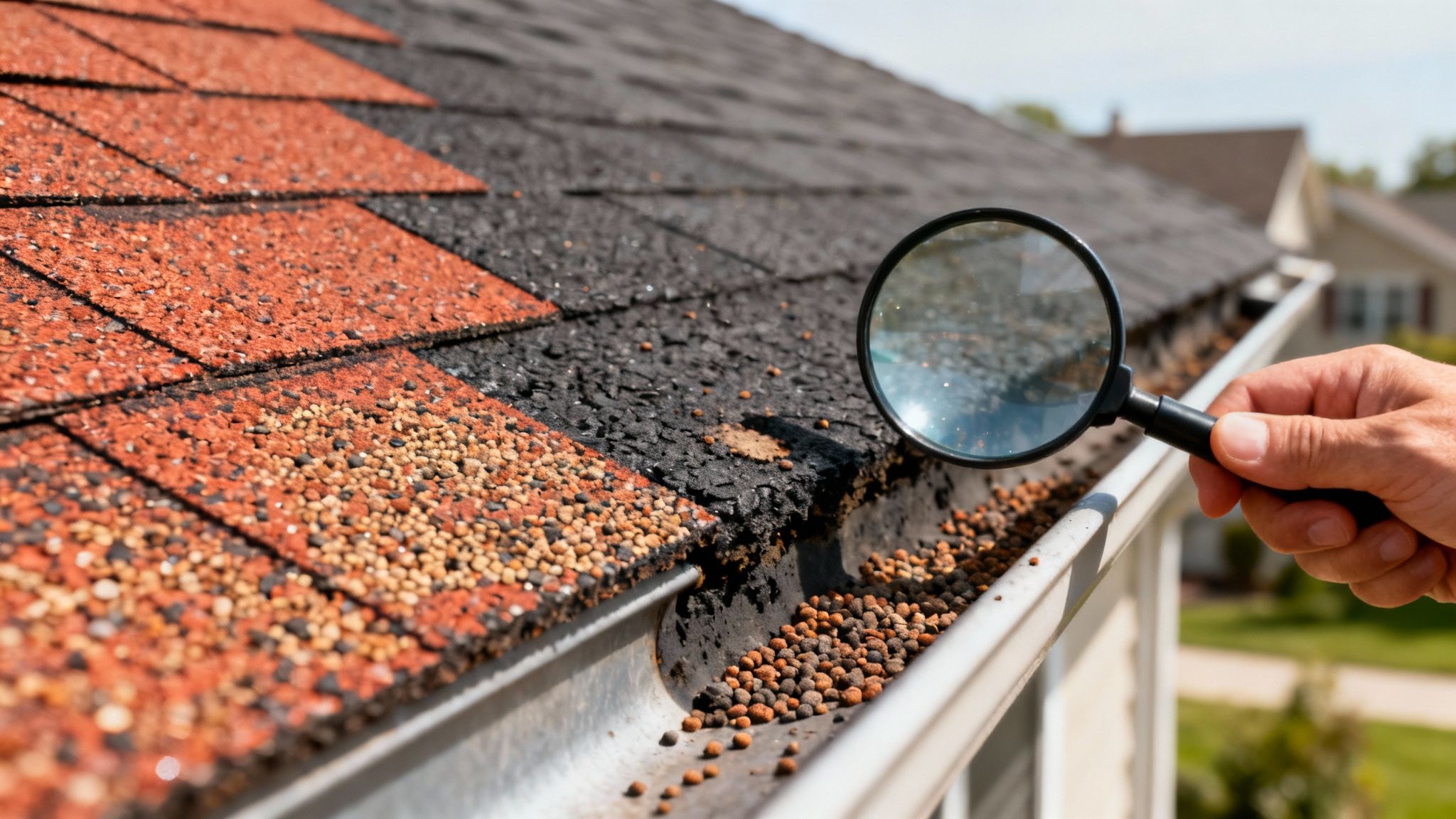
Finding a handful of tiny, sand-like particles in your gutters or on your driveway can be a bit unsettling. What you’re seeing is granule loss on shingles, and it means the protective mineral coating on your asphalt shingles is starting to come off.
While a little bit of shedding is totally normal, especially on a brand-new roof, seeing a lot of it over time is a clear sign that your roof’s first line of defense is wearing thin.
What's the Big Deal with Shingle Granules Anyway?
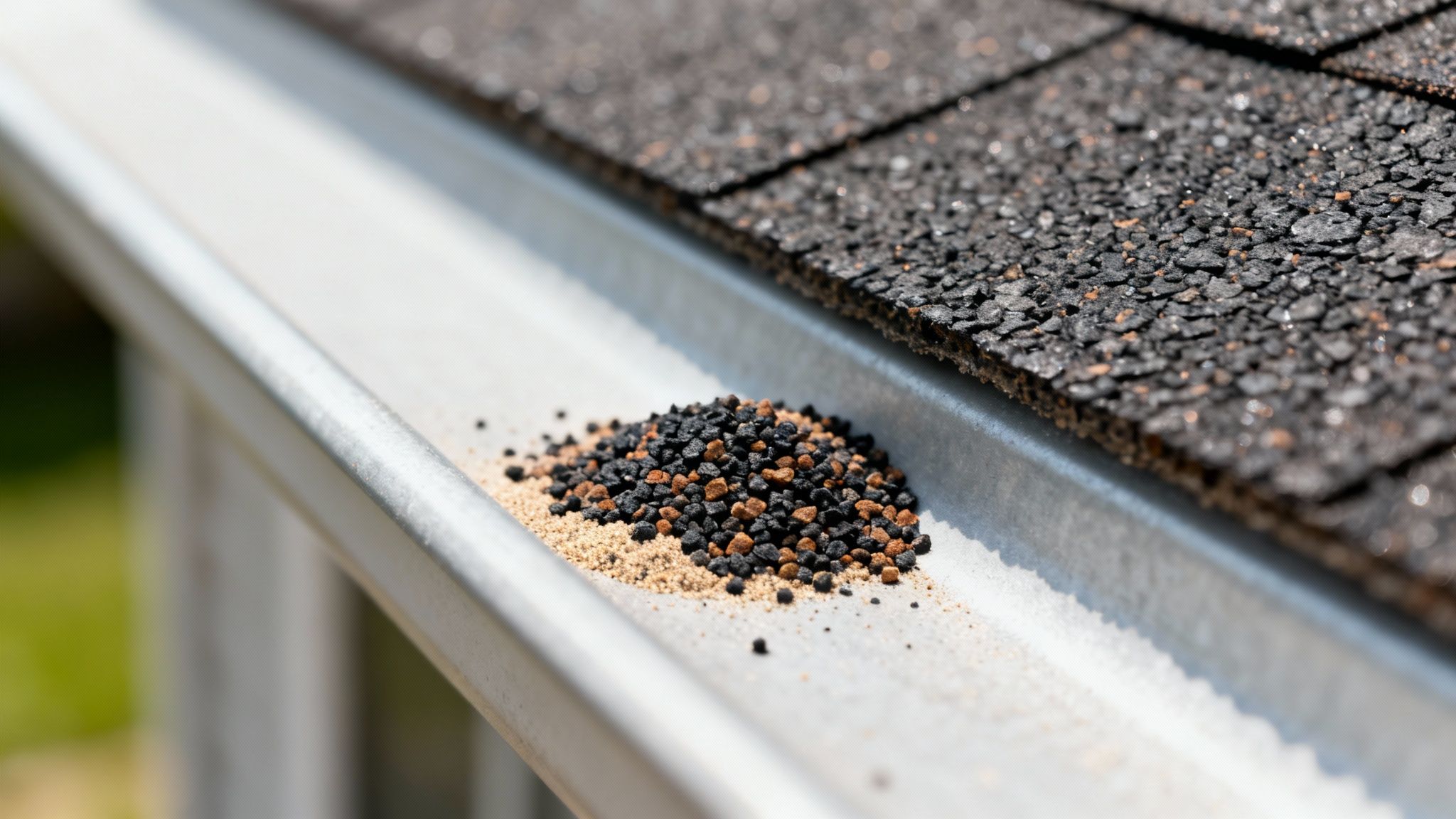
Without this tough outer coating, a shingle is basically just a mat of asphalt left exposed to the elements. The granules are what stand up to the daily grind of sun, rain, and wind, protecting the asphalt underneath from drying out and falling apart.
The Real Job of Shingle Granules
So, what are these little specks actually doing up there? Their role is a lot bigger than you might think, protecting both the durability and performance of your entire roof.Here’s what they’re responsible for:
- UV Protection: Granules are like a permanent, heavy-duty sunscreen for your roof. They block the sun's harsh UV rays, which would otherwise make the asphalt brittle, causing it to crack and fail fast.
- Fire Resistance: Ever wonder how shingles get their Class A fire rating? The granules are a huge part of it. They create a non-flammable barrier that helps protect your home from stray embers.
- Weather Durability: From pounding rain to hail storms, the granules take the hit. This gritty layer absorbs the impact, preventing punctures and other physical damage that could weaken the shingle.
- Curb Appeal: Let's be honest, looks matter. The color and texture of your roof come directly from these granules, giving your home its signature look.
Normal Shedding vs. A Real Problem
It’s really important to know the difference between normal granule shedding and a sign of trouble. When shingles are made, a few extra granules are always stuck on the surface. That’s why seeing some of this "shedding" in your gutters right after a new roof is installed is perfectly normal. This should stop after the first few good rainstorms.However, if your roof isn’t new and you’re still seeing a steady stream of granules washing away, that’s a red flag. It means the adhesive that holds them in place is failing, leaving the vulnerable asphalt layer exposed.
Manufacturers actually account for a bit of initial shedding. A new shingle can lose about 12-15% of its granules before the underlying asphalt mat is truly exposed. This built-in buffer helps show the difference between a roof "settling in" and one that's wearing out too fast.Believe it or not, about one-third of a shingle's total weight is just these granules. And while a hailstorm can knock some loose, roofing experts at places like Haag Engineering have found that this is often minor compared to the slow, steady loss from years of natural weathering.
Normal vs Concerning Granule Loss at a Glance
Not sure what you're seeing? Use this quick reference table to determine if the granules in your gutters are part of your roof's normal lifecycle or a symptom of a more serious problem.| Symptom | What It Looks Like | Likely Cause and Severity |
|---|---|---|
| New Roof Shedding | A small, even dusting of granules in gutters or downspouts shortly after installation. | Normal. This is excess material from the manufacturing process. It should stop after a few rainstorms. |
| Bald Patches | Dark, smooth spots on shingles where the asphalt is visible. The shingle looks "bare." | Concerning. The protective layer is gone, exposing the shingle to UV rays and moisture. This accelerates aging. |
| Piles in Gutters | Large accumulations or "piles" of granules, especially in corners or near downspouts. | Concerning. This indicates significant, ongoing loss, likely due to age, storm damage, or manufacturing defects. |
| Thinning Areas | You can see the black asphalt peeking through the granules across large sections of the roof. | High Concern. Widespread thinning means the roof is nearing the end of its life and is much more vulnerable. |
| Gutter "Sludge" | A thick, gritty sludge in your gutters made mostly of shingle granules. | High Concern. This points to a severe, long-term granule loss problem that needs immediate attention. |
So, What Causes Shingle Granules to Fall Off?
Knowing what those little granules do is one thing, but the real question is why they start coming loose in the first place. Granule loss isn't a single issue—it's more like a symptom that can point to a few different causes, from the simple passage of time to a sudden, nasty storm. Figuring out the root cause is the key to getting the right fix for your roof.Think of it like the grit on a piece of sandpaper. When the sandpaper is brand new, it’s rough and effective. But over time, with use and wear, that grit starts to break away. The bond holding the granules to your shingles works in a very similar way, and several things can weaken it.
Natural Aging and Weather Exposure
Honestly, the most common culprit behind granule loss is just plain old age. Your roof is out there taking a beating from the elements 24/7, and that constant exposure adds up. Year after year, the sun's UV rays bake the asphalt, making it brittle. Rain, wind, and changing temperatures cause the shingles to expand and contract. All this slowly but surely breaks down the adhesive, causing granules to shed little by little.This is a totally normal part of a shingle’s lifecycle. A roof that’s been up there for 15-20 years is definitely going to show some signs of granule loss—it’s just the roofing version of tire treads wearing thin after thousands of miles on the road.
Sudden Storm and Impact Damage
While aging is a slow, steady process, storm damage is the complete opposite. It’s fast, aggressive, and a leading cause of what we call "accelerated" granule loss on shingles. A perfectly healthy roof can become a major liability overnight.Here are the usual suspects when it comes to storm damage:
- Hail Storms: This is the big one. Hailstones act like thousands of tiny hammers pounding on your roof, literally knocking the granules loose on impact. You'll often see bruises or dents left behind where the underlying shingle mat is exposed.
- High Winds: You'd be surprised what strong winds can do. They can lift the edges of shingles, bending and flexing them until they crack. That movement is more than enough to dislodge granules, especially on older roofs where the shingles are already a bit stiff.
- Falling Debris: During a big storm, it’s not just rain and wind you have to worry about. Falling tree branches, twigs, and other debris can scrape across your roof, gouging the surface and physically tearing away that protective granule layer.
If you check your gutters after a bad storm and see a pile of granules that looks like coffee grounds, that’s not normal wear and tear. It’s a huge red flag that your roof took a direct hit and needs a professional inspection right away.
Physical Damage and Installation Issues
Mother Nature isn't always to blame. Sometimes, the problem is a bit more down-to-earth, stemming from human error or physical damage. For example, too much foot traffic can do a real number on an asphalt roof. Walking around up there literally grinds the granules off, which is why it’s best to stay off your roof unless absolutely necessary.A shoddy installation job can also set a roof up for failure from day one. If the shingles weren’t nailed down correctly or were bent and banged up during the install, the granules might not have ever bonded properly.
Finally, though it’s less common, you can sometimes get a manufacturing defect. A bad batch of shingles might leave the factory with weak granule adhesion, leading to major shedding in the first few years. This is often covered by a manufacturer’s warranty. Those little granules are big business—the global market for them was recently valued at USD 3.1 billion and is still growing, which shows just how critical they are for protecting homes. You can dig deeper into the roofing granule market data if you’re curious.
How to Safely Inspect Your Roof for Granule Loss
The trick is knowing where to look and what you’re looking for. Think of yourself as a detective on a case—your gutters and downspouts are the scene of the crime, and a pair of binoculars is your magnifying glass.
Start Your Inspection at the Gutters
Your gutters are ground zero for collecting lost shingle granules. They catch everything that washes down, which makes them the perfect place to start. The best time to check is right after a good rain, since the water will have carried all the loose particles down.What you find can tell you a lot about how serious the problem is.
- A Light Dusting: If you see a small, even layer of granules that looks like a sprinkle of pepper, that’s usually normal. This is especially true for newer roofs during their break-in period.
- Significant Piles: Scooping out handfuls of gritty, sand-like material is a red flag. It’s a clear sign of accelerated wear. Make sure to check the corners and right below roof valleys where water tends to concentrate the debris.
A great rule of thumb is to look at your downspout splash blocks. If you see piles of what looks like dark coffee grounds where the water drains out, that’s a dead giveaway for heavy granule loss on shingles.That material isn’t just dirt; it’s the protective armor of your roof washing away. Snapping a quick photo of the buildup can be incredibly useful if you end up calling a professional for an assessment.
Use Binoculars for a Safe Roof Surface Scan
After checking things at ground level, it’s time to look up—but stay on the ground. A decent pair of binoculars is your best and safest friend for this job. Climbing up on a ladder is risky, and walking on a damaged roof can make things even worse.Find a few different spots around your yard where you can get a clear view of the roof. Slowly scan the entire surface, keeping an eye out for specific visual clues that point to trouble.
Here’s a simple checklist to run through from the safety of the ground:
- Look for "Bald" Spots: These are the most critical signs. They look like dark, smooth patches where the granules have completely worn off, exposing the black asphalt underneath.
- Identify Discoloration: A healthy roof has a consistent color. If you spot areas that look faded, patchy, or just uneven, it means that protective granule layer is thinning out.
- Check for Uneven Textures: Scan for any spots that look different from the shingles around them. An area that looks shiny or wet, even on a dry day, has likely lost its gritty granule surface.
- Note Any Curling or Cracking: While this isn't granule loss itself, shingles that are curling up at the edges or cracking are already weak and much more likely to start shedding their granules.
Assessing the Severity of Granule Loss
Telling the difference is crucial for protecting your home without overreacting. Think of it like the tires on your car. A little bit of even tread wear over 50,000 miles is perfectly normal. But if you suddenly find a bald spot after a single road trip, you’ve got a much bigger problem on your hands. We need to take that same measured approach when looking at the granule loss on your shingles.
Distinguishing Minor Wear from Major Damage
First, let's figure out the pattern. Is the loss happening evenly across the whole roof, or is it concentrated in just one or two spots? An older roof might show a slight, uniform thinning over its entire surface—that’s just a sign of normal aging. It's your roof's way of telling you it's getting on in years.On the other hand, finding a ton of granules missing from one specific section, especially right after a hailstorm, points to direct damage. This is a much bigger deal because it means a specific part of your roof’s protective layer has been compromised.
If you clean out your gutters and find a thick, gritty sludge, pay attention. A sudden, heavy collection of granules is one of the clearest signs your roof has taken a significant hit and is actively deteriorating.This kind of rapid shedding leaves the asphalt mat underneath completely exposed. That exposure dramatically speeds up aging in that spot and creates a direct path for water to get in.
Critical Warning Signs to Look For
While you're checking things out from the ground, a few visual cues should set off alarm bells. These are the red flags that mean it's time to call in a professional for a closer look.Keep a sharp eye out for these high-priority warning signs:
- Exposed Black Asphalt: This is the big one. If you can see smooth, dark, or even shiny black patches on your shingles, the protective granules are completely gone. The exposed mat is now defenseless against UV rays, which will make it dry, brittle, and cracked in no time.
- Curling or Cracked Shingles: As shingles lose their granules, they get weaker and start to change shape. If you notice the edges curling up or see cracks running through the shingles, their structural integrity is shot.
- Widespread Discoloration: A roof that looks patchy and uneven in color is a sign of widespread granule loss. This thinning across a large area often means the roof is nearing the end of its useful life.
Severity Assessment Checklist for Granule Loss
To help you get a handle on what you're seeing, this checklist provides a straightforward way to classify your observations. It's a simple tool to help you gauge the severity and decide on the right next steps.| Observation | Low Concern (Monitor) | Medium Concern (Inspect) | High Concern (Urgent Action) |
|---|---|---|---|
| Gutter Contents | A light, even dusting of granules, like fine sand. | Small, noticeable piles of granules, especially after a storm. | Handfuls of granules or a thick, gritty sludge in the gutters. |
| Roof Surface Appearance | Color and texture look consistent across the whole roof. | Some patchy or slightly faded areas are visible with binoculars. | Obvious "bald spots" where the black asphalt mat is clearly exposed. |
| Shingle Condition | Shingles are flat, whole, and show no signs of physical damage. | A few shingles might have minor wear on the edges or a slight curl. | Multiple shingles are cracked, severely curled, or missing altogether. |
| Age of Roof | The roof is fairly new (less than a few years old). | The roof is in its mid-life range (10-15 years old). | The roof is old and near or past its expected lifespan (15+ years). |
Deciding Between Repair, Replacement, and Insurance
Once you’ve confirmed you have a significant granule loss problem, you’ve reached a fork in the road. This is the point where you shift from diagnosing the issue to choosing the right solution for your home.
The decision between a targeted repair, a full roof replacement, or filing an insurance claim really boils down to two things: the age of your roof and the extent of the damage.
Think of it like fixing up an old car. A small scratch might just need a little touch-up paint (that’s your repair). But if the engine is shot, a new paint job won’t fix the real problem—you need a whole new engine (your replacement). The same logic applies directly to your roof.
When a Simple Repair Is Enough
Sometimes, a small, focused repair is the perfect fix. If a single tree branch scraped granules off a handful of shingles, or a small area took a hit in a storm, just replacing those specific shingles makes perfect sense. This is the best route when the rest of your roof is still in great condition.A spot repair is your best bet when:
- The Roof is Young: If your roof is less than 10-12 years old, the surrounding shingles are likely strong enough to handle a patch without looking mismatched or creating new problems.
- Damage is Contained: The granule loss is isolated to one specific area, with no other "bald spots" or thinning shingles in sight.
- Shingles are Available: A pro can find shingles that are a close match to your existing roof's color and style, so the repair doesn't stick out like a sore thumb.
When a Full Replacement Is the Smarter Choice
Let's be honest, sometimes a repair is just putting a band-aid on a much bigger wound. If widespread granule loss on shingles is a sign that your roof is simply reaching the end of its life, a full replacement is the only responsible long-term investment. Pouring money into patching a roof that’s already past its prime just doesn’t make financial sense.A full roof replacement resets the clock on your home's protection. It's not just about fixing the current issue; it's about preventing future leaks, water damage, and the constant stress of wondering if your old roof will survive the next storm.This is especially true when you consider how much roofing technology has improved. Today’s global asphalt shingle industry, valued at around USD 8.6 billion, is always innovating. Companies are rolling out advanced products with far better granule adhesion to fight back against the very issues caused by weather and aging. Opting for a replacement means you get to take advantage of these modern, more resilient materials.
Navigating the World of Homeowners Insurance
Now, for the big question: will insurance pay for it? Many homeowners assume granule loss is covered, but the answer is almost always, "it depends on the cause."Homeowner’s insurance is there to protect you from sudden, accidental damage—what the industry calls “perils.” It’s not a maintenance plan for things that naturally wear out over time.
- What's Often Covered: If a hailstorm hammers your roof and knocks granules loose, or violent winds tear shingles away, that's considered sudden, accidental damage. In these scenarios, your policy will likely cover the cost of repairs or a replacement, after your deductible.
- What's Almost Never Covered: Granule loss from old age, a lack of maintenance, or normal wear and tear is not covered. Insurance companies see this as part of a homeowner's responsibility.
Getting through this process successfully requires good teamwork between you, your insurer, and your roofer. For tips on finding a trustworthy partner for this critical job, check out our guide on how to choose a roofing contractor. An experienced roofer can be your best advocate, making sure the damage is assessed correctly and fairly.
Preventing Premature Granule Loss
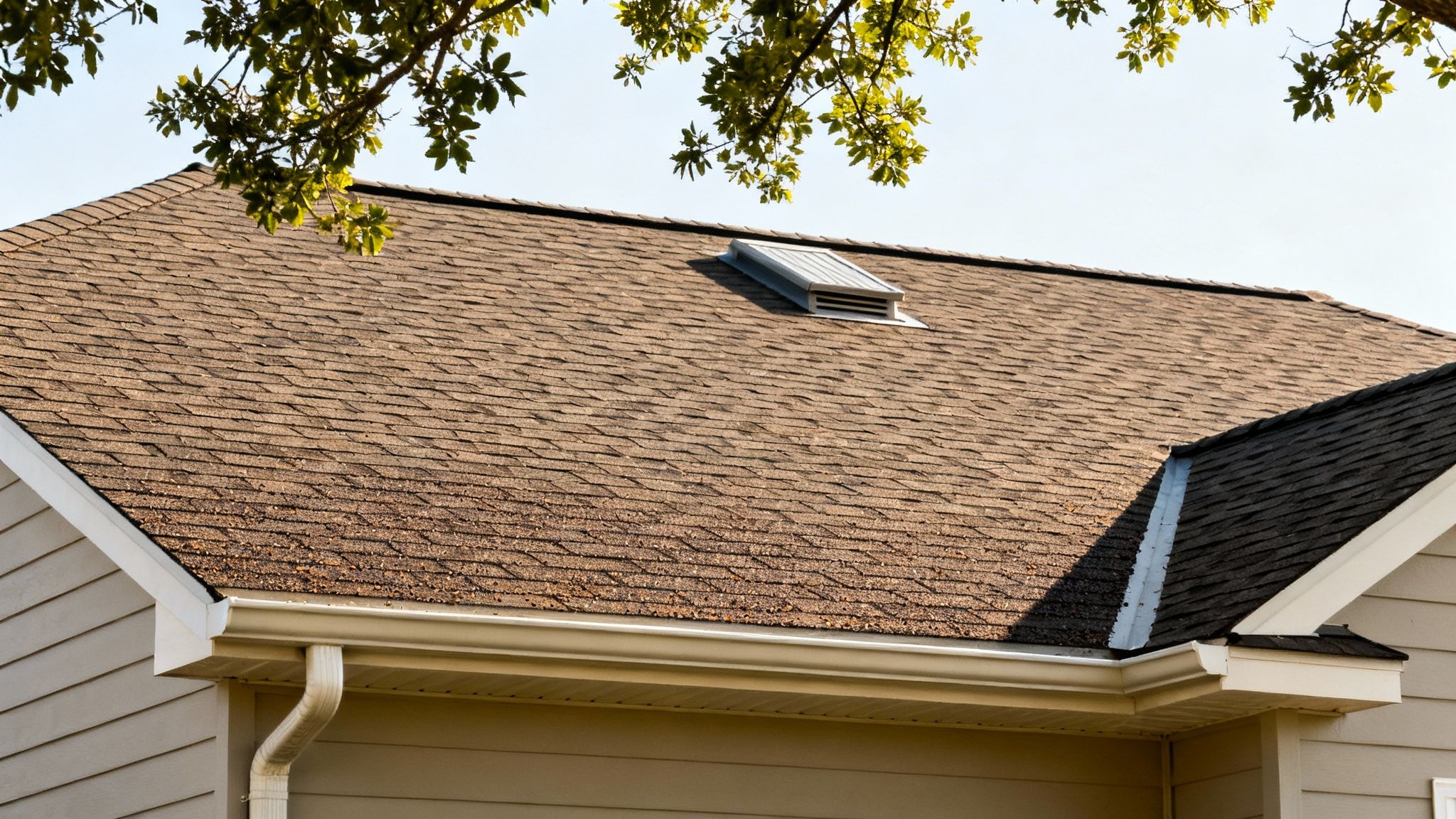
Rather than waiting for damage to show up, a simple annual checklist can keep your roof’s protective layer in fighting shape. These simple habits protect the crucial bond holding the granules to the asphalt, making sure your roof ages gracefully instead of failing prematurely. Think of it as preventative care for your home’s most important shield.
Your Annual Roof Maintenance Checklist
This isn't a routine that requires special skills or a ton of time—just a bit of attention once or twice a year. By knocking out these simple tasks, you’ll be tackling the most common culprits behind accelerated granule loss on shingles and keeping your roof in prime condition.Here are the three most important things every homeowner should do:
- Keep Your Gutters Clean and Clear: Clogged gutters are one of your shingles' worst enemies. When leaves, twigs, and gunk pile up, water has nowhere to go. It backs up onto your roof's edge, soaking the shingles. This constant moisture saturation is a killer—it weakens the asphalt and pries those protective granules loose right where your roof is most vulnerable.
- Trim Overhanging Tree Branches: Think of low-hanging branches scraping against your roof as constant sandpaper. Every time the wind blows, they grind away at the shingle surface, creating bald spots over time. Keeping branches trimmed back by at least a few feet puts a stop to this friction. It also prevents bigger limbs from falling and causing serious impact damage during a storm.
- Ensure Proper Attic Ventilation: Your roof can get cooked from both the outside and the inside. If your attic isn't properly ventilated, it traps super-heated air, which can rocket the temperature of your roof deck to over 150°F. This extreme heat literally bakes the shingles from underneath, drying out the asphalt and destroying the glue holding the granules. Good intake and exhaust vents let this heat escape, keeping your shingles cooler and much more durable.
The Value of Prevention
These aren't just weekend chores; they're a strategic defense plan for your home. Clean gutters stop water damage, trimmed branches eliminate physical abrasion, and good ventilation fights back against heat-related aging. When you put them all together, you create an environment where your shingles can do their job without fighting unnecessary battles.An hour or two of maintenance each year can be the difference between a roof that lasts 15 years and one that makes it to 25 years. It’s the single most cost-effective way to protect your investment.At the end of the day, preventing premature granule loss is about controlling what you can control. You can’t stop the sun from shining or the rain from falling, but you absolutely can eliminate the other factors that speed up wear and tear. A little bit of proactive care goes a very long way in protecting both your roof and your wallet.
Common Questions We Hear About Shingle Granule Loss
When you find a pile of what looks like sand in your gutters, it's natural to have questions. Granule loss on shingles can be alarming, but understanding what’s really going on is the first step. We’ve been helping homeowners in Birmingham with these exact issues for years, so here are some clear, direct answers to the questions we get asked most often.Is It Normal to See a Bunch of Granules After a New Roof Is Installed?
Yes, this is completely normal and something we tell all our clients to expect. During manufacturing, a surplus of granules are pressed into the asphalt to make sure every inch is covered. The ones that don't fully embed will wash off in the first few rainstorms. We call this initial "shedding."This process should taper off after a few months. If you’re still noticing a heavy flow of granules in your downspouts six months to a year later, that’s a sign to give your roofer a call. It’s worth a quick professional check-up just to make sure everything is okay.
Can I Just Sweep or Glue the Granules Back Onto My Roof?
That’s a definite no, unfortunately. Once those granules break away from the shingle's asphalt, the bond that held them in place is gone for good. Trying to sweep them back or stick them on with some kind of adhesive just won't work—it doesn’t restore the shingle’s protective power.The real fix isn't about reapplying old granules; it's about figuring out why they came off in the first place. This almost always means replacing the damaged shingles to get that protective layer back to 100%.Your focus should be on diagnosing the root cause and deciding if a simple, targeted repair will do the trick or if it’s time for a more serious solution to protect your home.
Are "Cool Roof" Shingles More Durable?
"Cool roof" shingles are designed with special granules that reflect more sunlight, which helps keep your roof—and your attic—from baking in the Alabama sun. This drop in temperature can be a huge benefit for your home.By easing up on the intense heat that cooks the asphalt day after day, these shingles can often maintain their granule adhesion a lot better over the long haul. While their main selling point is saving you money on your energy bills, that reduced heat stress can absolutely contribute to a longer, healthier life for your shingles.
Will a Small Bald Spot on a Shingle Cause an Immediate Leak?
Not necessarily, so you don't have to panic. The asphalt layer sitting under the granules is what actually waterproofs the shingle. A small bald spot simply exposes that layer, but it doesn't create an instant hole for water to pour through.However, that exposed asphalt is now defenseless against UV rays. The sun will start to dry it out, making it brittle until it eventually cracks. Think of a bald spot not as a five-alarm fire, but as a serious warning sign. Your roof’s main line of defense has been weakened, and it needs attention before a small issue turns into a big, expensive headache.
If you’re seeing signs of granule loss and aren’t sure what your next move should be, the expert team at Higher Roof Solutions can help. We provide honest assessments and clear solutions to protect your Birmingham home. Schedule your free, no-obligation inspection today.