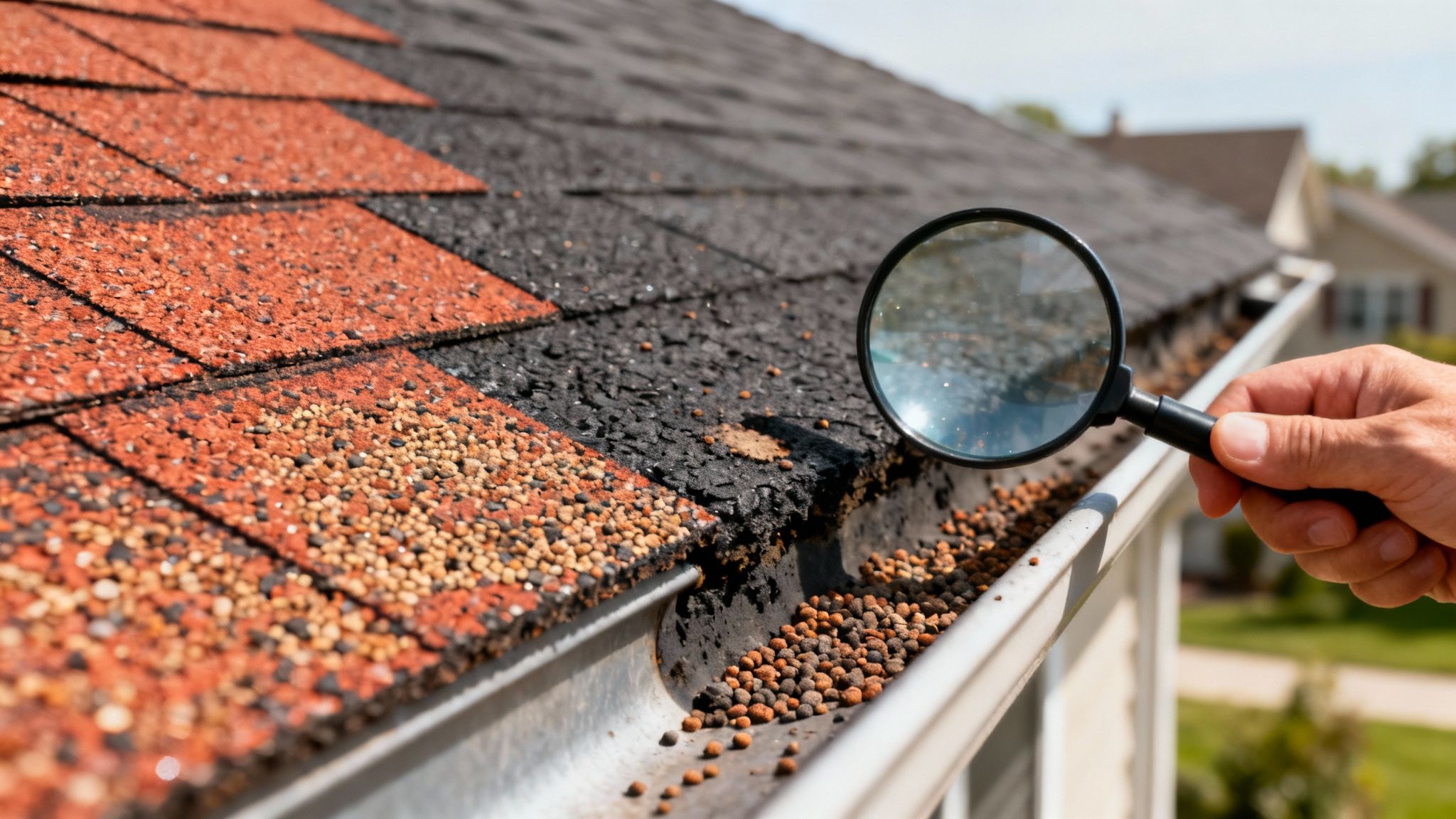
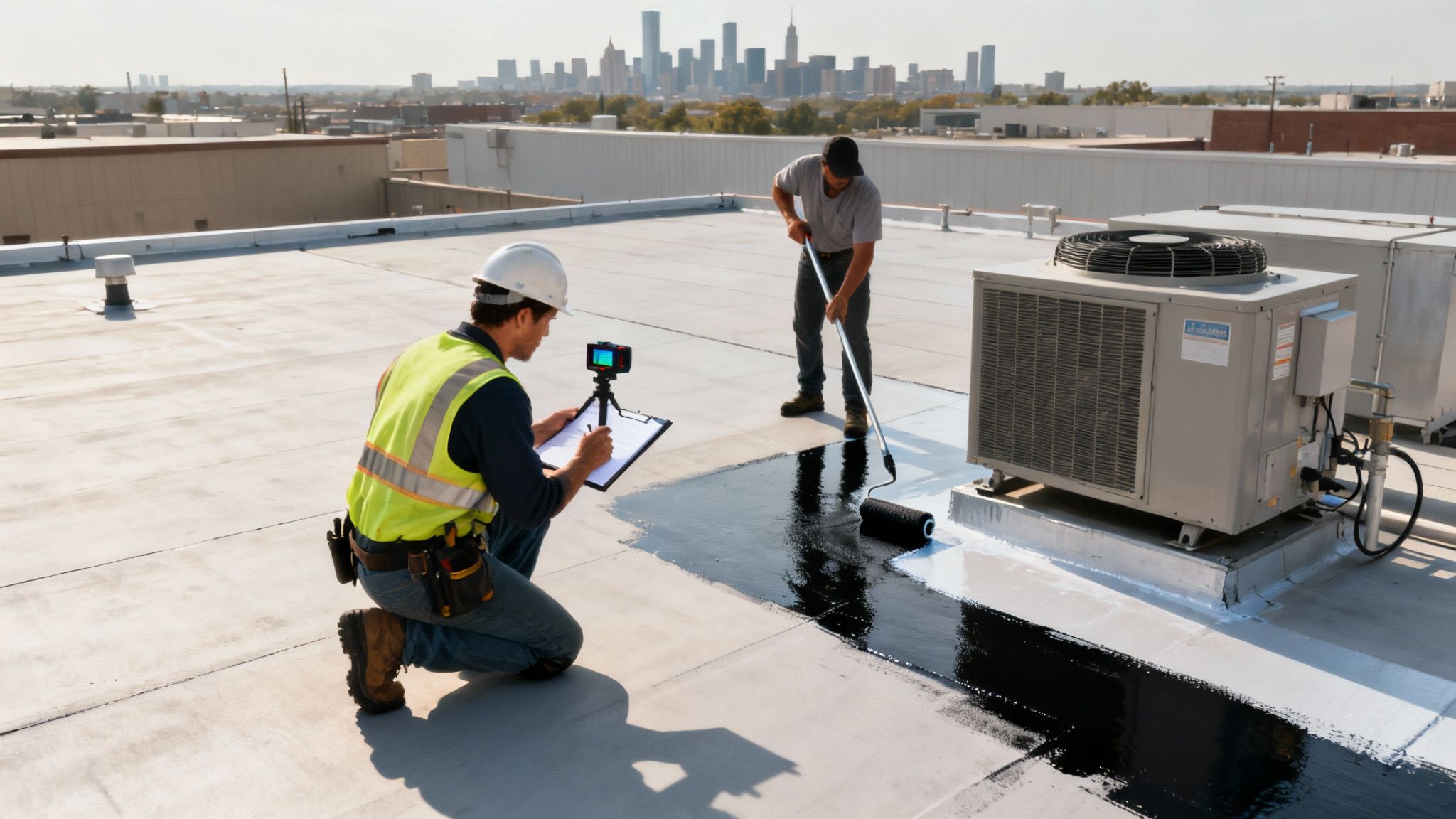
Think of commercial roof maintenance less as an expense and more as a strategic plan for managing one of your most critical assets. It’s a deliberate schedule of inspections and proactive repairs designed to catch small problems before they become catastrophic failures. This approach extends your roof’s life and, maybe more importantly, keeps you from making those expensive, panicked calls for emergency service.
The Real Cost of a Failing Commercial Roof
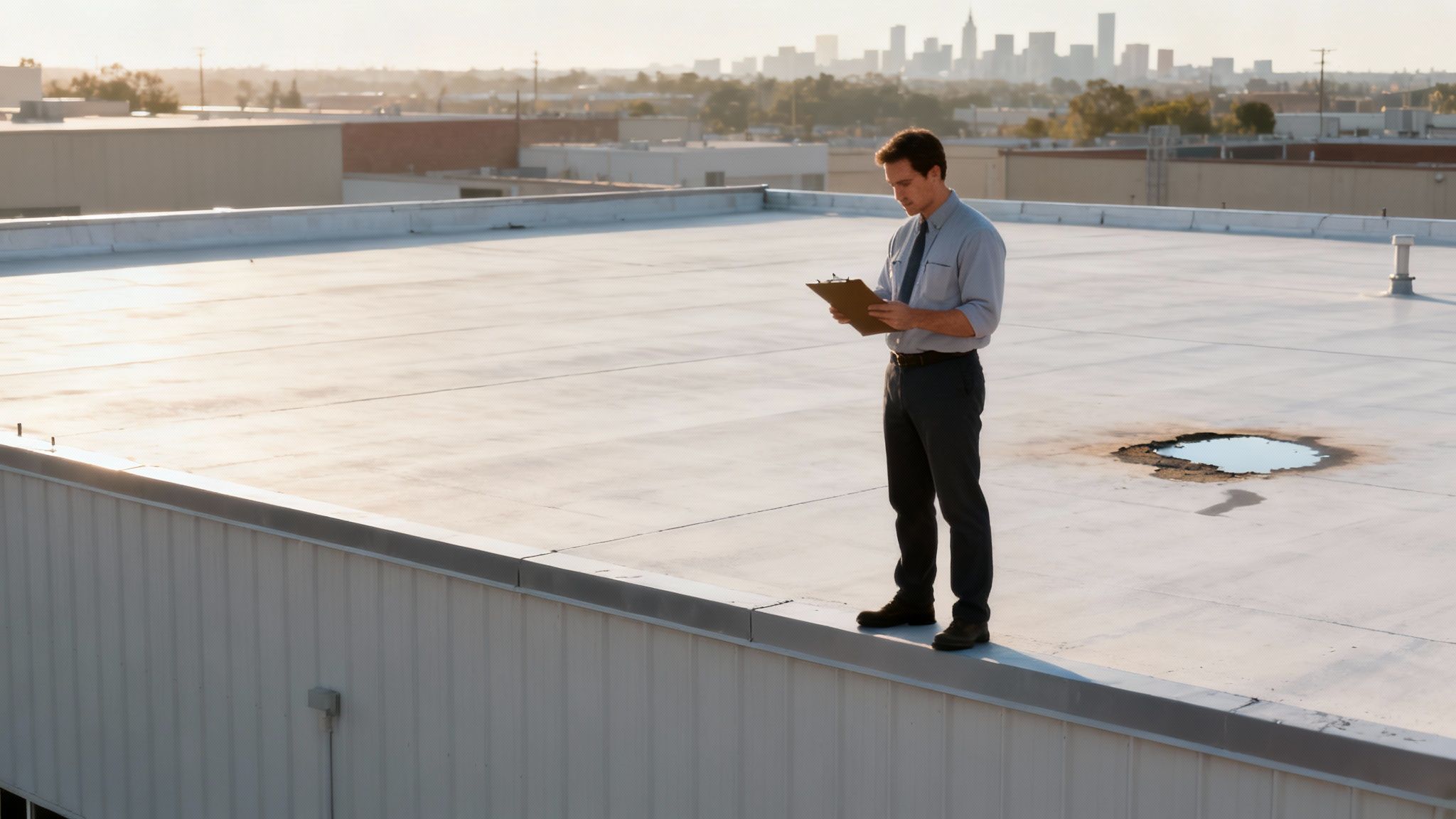
By the time you see a stain on a ceiling tile, the real damage has likely been happening for months. You’re not just dealing with a leak anymore. Suddenly, you’re looking at a mountain of unexpected costs:
- Interior Damage Remediation: Think beyond the ceiling tiles. We're talking about replacing soggy drywall and pulling out compromised insulation.
- Asset and Inventory Loss: Water doesn't care how expensive your equipment, electronics, or stored products are. It can ruin them in an instant, leading to direct financial hits.
- Business Interruption: A major leak can mean shutting down parts of your facility, or even the whole thing. That means lost revenue and cratered productivity while you scramble to get repairs done.
- Mold and Mildew Abatement: Where there’s trapped moisture, mold is sure to follow. It’s not just a health hazard; it requires specialized—and costly—removal services.
Proactive Upkeep Versus Reactive Repairs
The numbers don't lie. A structured maintenance program flips the script, moving your budget from unpredictable, five-alarm-fire repairs to controlled, planned upkeep. It's about treating your roof like the valuable asset it truly is.A landmark 15-year study really drives this point home. It found that proactive maintenance costs, on average, just 14 cents per square foot each year. The reactive, “fix it when it breaks” approach? That came in at 25 cents per square foot.
For a typical commercial roof, this difference adds up. A proactive plan could generate savings of more than $236,000 over the roof’s lifespan—that’s over $11,000 in your pocket every single year.
It’s a common myth that a roof only costs you money when it's actively leaking. The truth I’ve learned over the years is that the most expensive roof is always the one that’s been ignored.In the end, consistent maintenance is a core strategy for reducing the total cost of ownership for your entire facility. By investing small, regular amounts into inspections and minor fixes, you stop tiny issues—a clogged drain, a cracked seam—from spiraling into a premature, budget-destroying roof replacement. This isn't just about plugging leaks; it's about smart, long-term asset management.
Your Year-Round Roof Maintenance Plan
Every season throws something different at your roof, from the brutal freeze-thaw cycles of an Alabama winter to the relentless UV bombardment of our summers. Thinking in terms of a calendar year turns maintenance from a chore into a smart, strategic process. It ensures nothing slips through the cracks and you get every last year of service life from your roofing investment.
Spring: The Post-Winter Wake-Up Call
Spring is all about recovery. After months of ice, snow, and punishing cold, your roof is at its most vulnerable. This is the time for a really thorough inspection to see what kind of damage the winter months left behind.The main goal here is simple: find and fix any weak spots before the heavy spring rains show up and turn a small issue into a major leak. And remember, standing water is the number one enemy of any flat roof.
Your spring maintenance sweep should hit these key points:
- Clear the Drains: Get all the leaves, dirt, and gunk out of your drains, scuppers, and gutters. A single clog can cause massive water pooling, putting serious stress on your roof's membrane and the structure underneath.
- Inspect the Membrane: Look closely for any signs of winter's wrath. I'm talking about punctures from fallen branches, shrinkage pulling the membrane from the edges, or blisters and cracks from the freeze-thaw cycle.
- Check Flashings and Sealants: Pay close attention to the seals around every penetration—vents, pipes, HVAC units. The constant expansion and contraction from winter weather can crack sealants wide open, creating an easy pathway for water.
I’ve seen countless facility managers save thousands on emergency repairs simply by dedicating a few days each April to a meticulous post-winter walkthrough. It’s the single most important inspection of the year.This one seasonal check-up is the foundation for a healthy roof. You can dig deeper into the benefits of regular roof inspections to see just how much this simple routine can protect your building and your budget.
Summer: Defending Against Heat and UV Rays
That relentless summer sun brings a whole different set of problems. The combination of high temperatures and non-stop UV radiation can bake the life right out of roofing materials, making them brittle and weak. Summer maintenance is all about managing heat-related stress and prepping for those pop-up thunderstorms.Don’t forget about your roof’s reflectivity. A dirty, grimy roof surface absorbs a ton of heat, which makes your HVAC system work overtime and sends your cooling bills through the roof.
Focus your summer maintenance tasks here:
- Surface Cleaning: A professional, gentle power wash can strip away the accumulated dirt, restoring your roof's ability to reflect sunlight and making your building more energy-efficient.
- HVAC Check-Up: Make sure the condensation lines on your rooftop AC units are clear and draining away from the roof. A blocked line can create a constant puddle, leading to serious moisture damage over time.
- Sealant and Seam Review: Extreme heat causes materials to expand, which puts a lot of strain on seams and sealants. Check these areas for any signs of separation before a sudden downpour can exploit them.
Autumn: Clear Debris and Prep for the Cold
As things start to cool down, your maintenance focus needs to shift to preparation. Autumn means falling leaves, twigs, and all sorts of debris that can clog your drainage system and cause chaos.The primary mission is to get the roof completely clear of anything that could trap moisture or block drains before winter’s wet and icy weather arrives. This is how you prevent damaging ice dams and ensure water has a clear path off your roof.
Your autumn checklist should include:
- Full Debris Removal: Get everything off the roof surface. Pay extra attention to corners, crickets, and low spots where leaves love to pile up.
- Gutters and Downspouts: Make sure they are totally clear. They need to be ready to handle heavy rain and melting snow without backing up.
- Final Pre-Winter Look: Do one last visual inspection to catch any minor repairs you can fix while the weather is still mild. This is your last, best chance to button things up before winter.
Winter: Smart Monitoring and Safety First
Winter maintenance is less about hands-on work and more about being a vigilant, safe observer. The biggest threats are heavy snow loads and ice dams—those thick ridges of ice that form at the roof's edge and block melting snow from draining.Safety is everything this time of year. Only trained and properly equipped professionals should ever be on a commercial roof in winter conditions. A botched snow removal job can easily slice open a roof membrane, creating a much bigger problem than you started with.
Stick to these safe winter protocols:
- Watch the Snow Load: Keep an eye on how much snow is piling up, especially if you have an older building or one not designed for heavy accumulation.
- Call the Pros for Removal: If the snow load becomes a concern, hire a professional roofing contractor. They have the right tools and techniques to remove it without damaging your roof.
- Look for Ice Dams: Big, thick icicles hanging from the roof edge are a classic sign of an ice dam. That means water is backing up, and it could soon find its way inside your building.
Seasonal Commercial Roof Maintenance Checklist
This table provides a high-level overview of a proactive, year-round maintenance schedule, helping you stay ahead of potential issues no matter the season.| Season | Inspection Focus | Key Maintenance Tasks |
|---|---|---|
| Spring | Post-winter damage, drainage systems, membrane integrity. | Clean all drains, gutters, and scuppers. Inspect membrane for punctures, cracks, and blisters. Check all flashings and sealants around penetrations. |
| Summer | UV damage, heat stress on seams, HVAC drainage. | Perform surface cleaning to restore reflectivity. Check HVAC condensation lines. Review seams and sealants for heat-related expansion or deterioration. |
| Autumn | Debris accumulation, drainage obstruction, pre-winter prep. | Remove all leaves, branches, and debris from the roof surface. Ensure gutters and downspouts are completely clear. Conduct a final visual inspection. |
| Winter | Snow load, ice dam formation, safety hazards. | Monitor snow accumulation. Schedule professional snow removal if necessary. Watch for signs of ice dams (large icicles) and check for interior leaks. |
Different Roofs, Different Rules: Tailoring Your Maintenance Plan
Treating a modern TPO membrane the same way you’d care for an old-school built-up roof is a recipe for trouble. It’s inefficient and can even cause damage. When you match your maintenance tasks to the material, you start to notice the subtle signs of trouble long before they become catastrophic failures, squeezing every last year of service life out of your investment.
TPO and PVC Single-Ply Membranes
TPO and PVC are fantastic, popular choices for good reason—they're tough, energy-efficient, and generally cost-effective. Their biggest advantage is the heat-welded seams that create a single, continuous waterproof sheet. But that strength is also their most common point of failure if you're not paying attention.With these roofs, it’s all about the seams and the surface.
- Walk the Seams: Your inspections should involve literally walking the seam lines, looking closely for any hint of peeling, separation, or gaps. Give extra scrutiny to the seams around pipes, drains, and HVAC curbs, because that's where the most stress happens.
- Keep It Clean: That bright white surface is a huge perk for lowering your cooling bills. But when it gets covered in dirt, algae, and grime, that benefit disappears. A regular, gentle cleaning keeps that solar reflectivity high and can make a real difference in your building's energy use.
- Hunt for Punctures: While these membranes are durable, they aren't puncture-proof. Dropped tools, loose screws from an HVAC panel, or even heavy, repeated foot traffic can cause small tears. You need to actively look for these tiny gouges that let water seep in underneath.
I'll never forget finding a tiny, almost invisible screw hole on a TPO roof. It had been slowly leaking for months, completely saturating the insulation board below. A simple, proactive inspection saved that client from a full tear-off and a six-figure replacement bill.
EPDM Rubber Roofing
EPDM, a synthetic rubber membrane, is the old, reliable workhorse of the commercial roofing world. It's known for its incredible resilience and long lifespan. But even this tough material has its own maintenance needs, mostly centered around its adhesives and its tendency to shrink over decades.For EPDM, you need to keep your eyes on the edges, seams, and any signs of the membrane getting tired.
- Check for Adhesive Failure: Most EPDM sheets are glued down. Over years of sun and weather, that adhesive can start to give up, especially at the seams and along the perimeter flashing. Look for any spots that seem loose or are starting to lift away from the roof deck.
- Look for Shrinkage: EPDM can shrink a tiny bit over its life. That tension pulls the membrane away from walls and curbs, creating gaps. A classic sign is "bridging," where the membrane tents up at inside corners instead of laying flat.
- Watch the Surface: While it's highly UV-resistant, an older EPDM roof can start to look chalky or develop fine cracks ("crazing"). This isn't an emergency, but it's a clear signal the surface is aging and could really benefit from a restorative coating to extend its life.
Metal Roofing Systems
There's a reason people love metal roofs—they last an incredibly long time, often 30 to 45 years or more if you take care of them. But they aren't invincible. The three biggest enemies of a metal roof are rust, failed sealants, and loose fasteners.A solid metal roof inspection has to focus on these culprits:
- Tighten Every Fastener: Every single screw is a potential leak waiting to happen. You have to check that they're all tight and that the little rubber washers underneath aren't dry-rotted, cracked, or missing. One loose fastener can let a surprising amount of water in.
- Inspect All Sealant: The sealants used at panel seams, hips, and valleys get blasted by UV rays and will eventually break down. Look for any cracks or areas where it's pulling away, and get it resealed before it fails completely.
- Stop Rust Early: A little surface rust can often be treated, but corrosion that has eaten clean through the panel is a serious problem. If you're seeing signs of rust, our guide on rusted metal roofs is a great resource for figuring out the cause and the best way to fix it.
Built-Up Roofing (BUR) and Modified Bitumen
These are the classic, heavy-duty systems. Built-Up Roofs (BUR) are made of layered asphalt and reinforcing fabrics, while Modified Bitumen is the modern version with polymers added for flexibility. For both, your main concerns are surface weathering and trapped moisture.Your checklist for these roofs should include:
- Blisters: Trapped moisture or air under the membrane can heat up, expand, and create bubbles or blisters on the surface. These have to be handled by a pro who can properly vent and patch them without making the problem worse.
- "Alligatoring": This is a dead giveaway of an aging roof. The sun dries out the top asphalt layer, causing a pattern of cracks that looks just like alligator skin. It means the roof is losing its protective oils and is becoming brittle. If you let it go, widespread leaks are next.
- Ponding Water: The gravel or granular surface on these roofs can sometimes hide low spots. Any area where water sits for more than 48 hours after rain is a problem. That standing water acts like a magnifying glass for the sun's rays, accelerating deterioration and demanding a fix.
Smart Repairs and Strategic Roof Coatings
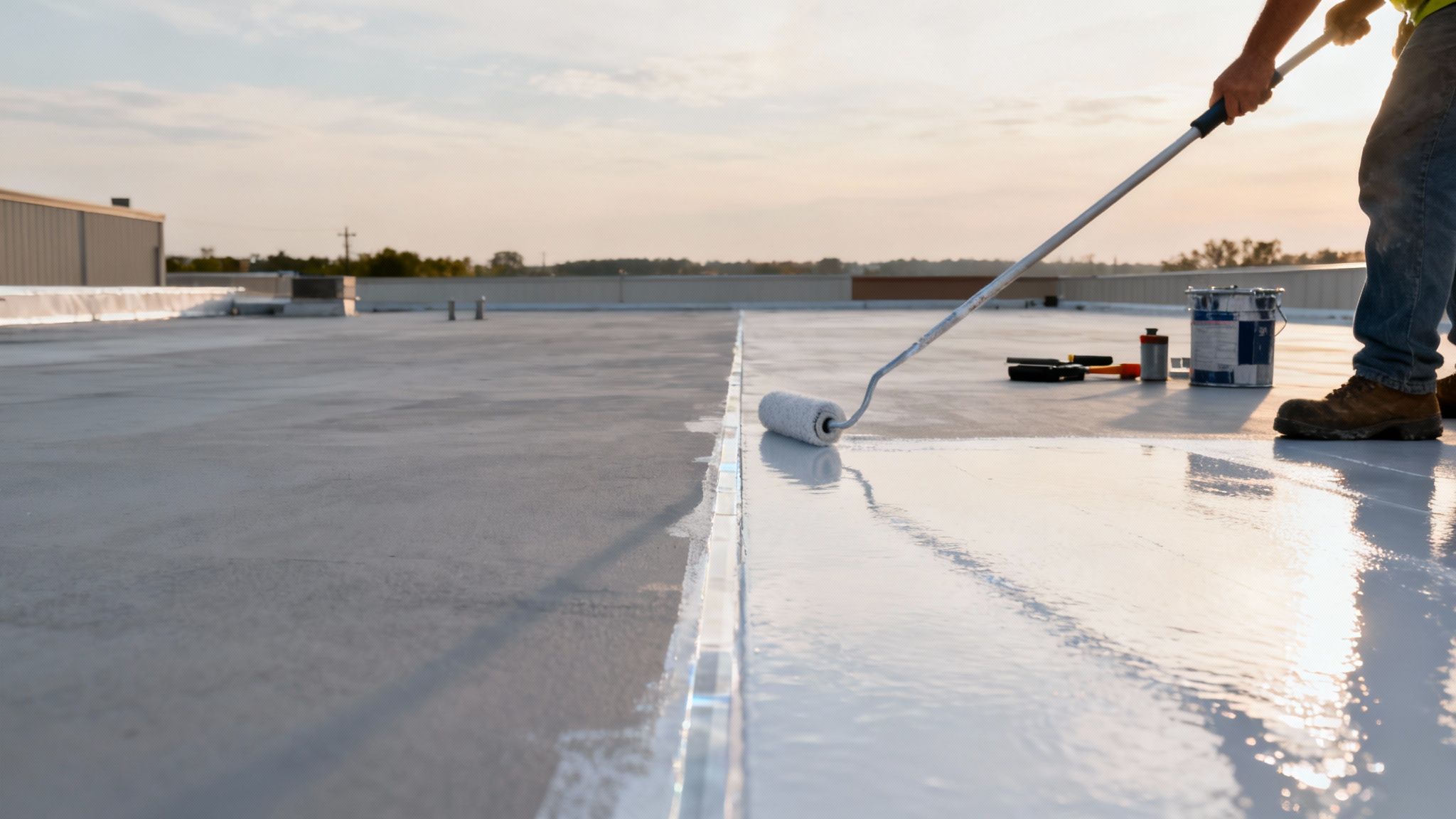
Think of minor repairs as the stitches that keep a small cut from becoming a major wound. They are quick, relatively cheap fixes that stop water intrusion dead in its tracks and prevent small flaws from spiraling into system-wide failures.
Handling Minor Repairs Proactively
Most catastrophic roof failures don't start with a bang. They start quietly, with something small and easily overlooked—a loose piece of flashing, a tiny puncture from a dropped tool, or a cracked bead of sealant around a vent pipe. Jumping on these issues right away is the single most effective thing you can do to prevent costly water damage and premature aging of your roof.These aren’t massive projects, but their impact is huge. A few of the most common proactive repairs you should always have on your radar include:
- Patching Punctures: On single-ply roofs like TPO or EPDM, small holes can be expertly cleaned and patched, restoring the membrane's integrity for good.
- Resealing Flashings: The metal flashings around curbs, vents, and parapet walls are high-movement areas. Sealants here dry out and crack over time, requiring a full removal and professional reapplication.
- Fixing Fasteners: On a metal roof, a single loose fastener with a deteriorated washer is a direct pipeline for water. Tightening and replacing these is a simple but absolutely vital task.
A small, unaddressed leak can saturate insulation in just a few months, dropping its R-value to zero and creating a perfect environment for hidden mold. The cost of a simple patch is pennies on the dollar compared to tearing out and replacing entire sections of wet, useless insulation.
Extending Roof Life with Strategic Coatings
While repairs target specific points of failure, roof coatings offer a more holistic, proactive solution. Don't think of a high-quality coating as just a coat of paint. It’s essentially a new, liquid-applied membrane that fully encapsulates your existing roof, creating a seamless, monolithic barrier against the elements.This approach, often called roof restoration, is a powerful tool to have in your maintenance arsenal. It perfectly bridges the gap between making small repairs and undertaking a full, disruptive, and incredibly expensive roof replacement. By applying a coating at the right time, you can often add another 10 to 15 years to your roof’s service life for a fraction of what a new one would cost.
It’s no surprise the market for these solutions is booming. The global commercial roof maintenance services market was valued at around $31.1 billion in 2023 and is projected to hit $43.3 billion by 2032. This growth is being driven by facility managers looking for sustainable, energy-efficient solutions—like coatings—that restore rather than replace.
Choosing the Right Protective Coating
Of course, not all coatings are created equal. The right choice for your building depends on your specific roof type, local climate, and what you’re trying to achieve. For specialized protection, it helps to understand different material properties, like the durability and flexibility found in elastomeric coatings. For instance, products like Titan Coatings Elastomer are engineered to offer robust solutions for a wide range of roofing challenges.Here’s a quick rundown of the most common coating types we see in the field:
| Coating Type | Best For | Key Benefits |
|---|---|---|
| Silicone | Flat or low-slope roofs where ponding water is an issue. | Incredible waterproofing, high UV resistance, and stays flexible in extreme temps. It actually cures with moisture. |
| Acrylic | A wide variety of roof surfaces, but especially great for sloped metal roofs. | Highly reflective for a "cool roof" effect, cost-effective, and easy to apply. Plus, its water-based formula is eco-friendly. |
| Polyurethane | High-traffic areas and roofs that might be exposed to chemicals. | Superior durability and impact resistance. Comes in aliphatic (UV stable top coat) and aromatic (base coat) versions. |
How to Choose a Commercial Roofing Partner
Your commercial roof maintenance plan is only as good as the team you trust to carry it out. Picking the right contractor isn’t just about finding someone to patch a leak. It’s about building a long-term partnership with a pro who gets your building’s specific needs and acts as a strategic manager for your most critical asset.
A great partner does more than just show up with a truck and some tools. They deliver detailed documentation, help you budget for future work, and provide the kind of insights that stop small issues from turning into budget-destroying disasters. This relationship is one of the smartest investments you can make for your property.
Verifying Credentials and Experience
Before you even start talking about a project, the first step is to vet a contractor’s basic qualifications. This isn't just about checking boxes; it's your first line of defense against shoddy work and major liability issues. Don't be shy about asking for proof.Make sure any potential partner has:
- Proper Licensing: They need to hold all the required state and local licenses, like those from the Alabama Home Builders Licensure Board. This is non-negotiable and proves they meet official standards.
- Comprehensive Insurance: Ask to see current certificates for both general liability and worker’s compensation. If an accident happens on your property without this coverage, it can quickly become your financial nightmare.
- Verifiable Experience: Look for a contractor with a solid history of working on your specific roof type, whether it’s TPO, metal, or EPDM. Ask them for case studies or local references you can actually call.
Key Questions to Ask Potential Contractors
Once you've confirmed the basics, it's time to dig a little deeper. The answers to these questions will tell you a ton about a company's process, professionalism, and whether they're truly committed to a partnership.A proactive, professional contractor will have solid answers ready for these questions:
- How do you document your inspections? You want a partner who provides detailed written reports, complete with high-resolution photos and clear, actionable recommendations. A vague, one-page summary just doesn't cut it.
- What does your emergency response plan look like? A dedicated partner should have a clear protocol for handling urgent problems like storm damage, including guaranteed response times.
- Can you provide a sample maintenance agreement? This is the document that outlines the scope of services, how often they'll visit, and what it all costs. Reviewing it upfront helps you understand exactly what you're paying for.
Choosing a contractor based on the lowest bid for a single repair is a classic short-term mistake. A lasting professional relationship built on a maintenance agreement almost always delivers a higher ROI by preventing future, more expensive failures.Getting these details right is crucial. You can dive deeper into this topic in our guide on how to choose a roofing contractor.
Maintenance Agreements vs. One-Off Quotes
It's so important to understand the difference between a one-time repair quote and a long-term maintenance agreement. A repair quote is purely reactive; it's designed to fix a problem that has already happened.A commercial roof maintenance agreement, on the other hand, is proactive. It’s a structured plan where your contractor regularly inspects, cleans, and services your roof to prevent problems from ever starting. While it requires an upfront investment, this approach consistently saves money over the building’s lifespan by extending your roof’s service life and helping you avoid the sky-high costs of emergency repairs and operational downtime.
Answering Your Top Questions About Roof Maintenance
Even the most buttoned-up maintenance plan can leave facility managers with questions. It's only natural. Getting straight answers is the key to making smart, confident decisions that protect both your building and your bottom line.These aren’t just hypotheticals—they’re the real-world problems that pop up when you’re responsible for a high-value asset like a commercial roof. Let’s dig into some of the most common questions we get from property owners right here in Alabama.
How Often Should a Commercial Roof Be Inspected?
At the bare minimum, you need a professional setting foot on your roof twice a year. Think of it as a spring check-up to assess any winter damage and a fall prep session to clear debris and brace for the colder, wetter months ahead.But that’s not the whole story. Your own team should be doing quick visual checks every month or so, just looking for obvious trouble like clogged drains or new debris. And here’s the most important part: you always need a professional inspection right after a major storm. High winds, hail, or heavy snow can cause sneaky damage that only a trained eye will spot.
A huge mistake we see is people thinking, "no leaks means no damage." After a hailstorm, tiny fractures in a roof membrane might not leak for months, but the clock is already ticking. A quick inspection can find that damage early, turning a potential roof replacement into a simple, manageable repair.
What's the Difference Between a Roof Repair and a Roof Coating?
This one is all about being reactive versus proactive.A roof repair is a targeted fix. It’s like surgery—we go in and address a specific problem. That could mean patching a puncture, sealing a seam that’s come apart, or replacing a piece of bent flashing. It’s a direct solution to a known issue.
A roof coating, on the other hand, is a full-blown restoration. We apply a seamless, liquid membrane over the entire roof surface. While a repair plugs one hole, a coating acts like a shield for the whole system, protecting it from countless future problems. It adds years of life by waterproofing, boosting durability, and even improving energy efficiency.
Does a Manufacturer Warranty Actually Cover Maintenance?
This is easily the most expensive misunderstanding in the roofing world. The short answer is almost always no. A manufacturer's warranty is there to cover defects in the roofing materials themselves—not problems caused by neglect, storm damage, or a lack of basic upkeep.In fact, it’s usually the other way around. Most warranties demand that you perform and document regular commercial roof maintenance just to keep the warranty active. If a problem pops up and you can’t prove you’ve been taking care of the roof, the manufacturer can—and likely will—deny your claim. Don’t think of the warranty as a get-out-of-jail-free card; it’s a safety net for product failure, not a replacement for a solid maintenance program.
What Are the Must-Follow Safety Rules for Roof Maintenance?
On any job site, safety is non-negotiable. Period. Any work happening on a commercial roof has to follow strict rules to protect the crew, your property, and anyone on the ground below. Before a single tool comes out, we create a safety plan specific to your building.Here are the absolute fundamentals:
- Proper PPE is a Must: Everyone on the roof needs the right Personal Protective Equipment. That means non-slip footwear, high-visibility vests, and, where OSHA requires, personal fall arrest systems.
- Secure the Access Points: All ladders and roof hatches have to be stable and secure. The areas around them need to be clear of any potential hazards.
- Mark the Danger Zones: When working near a roof edge without a high parapet wall, warning lines are set up to create a clear visual boundary. Everyone knows where the safe zone ends.
- Weather Calls the Shots: Work stops immediately in bad weather. Rain, high winds, and lightning make for an unacceptably dangerous environment. No exceptions.
Navigating the world of commercial roof maintenance is a lot simpler when you have an expert in your corner. At Higher Roof Solutions, we provide the detailed inspections, proactive repairs, and honest advice that Birmingham businesses rely on to protect their properties. If you have more questions or need a professional set of eyes on your roof, we’re here to help. Request your free inspection today.